
REVIEW · HISTORICAL TOURS
Buenos Aires: San Telmo, History, Bars, and Tango!
San Telmo tells its stories on the sidewalk. This 150-minute walk connects tango venues, old cafés, comic art, churches, market stalls, and the streets where Buenos Aires began. I especially like the small group of no more than six and the way guide Miguel brings together everyday culture and major events. The tour also gives you a useful local view of tango, including the difference between a tanguería and a milonga.
I also like the route’s variety. You move from the Otto Wulff building to Mafalda, from antique shops on Defensa Street to the domes of the Russian Orthodox Church, then finish at Nápoles. The main drawback is the amount of walking, with limited accessibility for wheelchair users and people with mobility impairments. The tour is in Spanish, so you should be comfortable following a two-and-a-half-hour explanation in that language.
Five things that make this San Telmo walk special
- Mafalda and the comic-strip street: Meet one of Argentina’s best-known comic characters in the neighborhood where street art and local culture overlap.
- A close look at tango culture: Learn how a tango dinner show differs from a milonga, with stops near El Viejo Almacén and other tango landmarks.
- San Telmo Market and Plaza Dorrego: See two essential neighborhood sights, with time for browsing, photos, and a taste of the district’s old commercial character.
- Bars and pizzerias along the way: The route includes notable cafés and historic food stops, especially Bar Nápoles.
- Miguel’s personal guiding style: His Spanish explanations cover facts, figures, customs, and stories, with extra care for people who are not native Spanish speakers.
- Buenos Aires beginnings at Lezama Park: The walk reaches the site linked to the city’s first founding before ending at the National Historical Museum area.
Why San Telmo rewards a walking tour
San Telmo is one of Buenos Aires’ oldest neighborhoods, and it works best on foot. Its attractions are not gathered in one tidy complex. They appear around corners, above shopfronts, inside churches, and along streets where a quick ride would leave you with only a blurred view.
This tour gives you a useful two-and-a-half-hour framework. You do not simply see a market, a church, and a park as separate stops. You learn how tango, immigration, old trade, popular art, religion, and national history overlap in one district.
I like that the experience is not built around a single grand monument. The appeal is the accumulation of smaller details: a narrow house, a comic-strip character, a former prison, an old bar, and a church with unusual blue domes. If you want a quick introduction to San Telmo before exploring independently, this route makes good sense.
The group limit matters. With only six participants, Miguel can explain a detail without shouting across a crowd. He can also notice when someone needs a point repeated. One of the strongest points in the feedback is his effort to make Spanish understandable for non-native speakers.
More history tours with a drink around the world:
- London Small Group Tour of Historical Pubs
★ 5.0 · 10,422 reviews - Prague Historic Pub Tour with Drinks Included
★ 5.0 · 2,084 reviews - Soho Music & Historic Pubs Tour
★ 5.0 · 1,993 reviews
Starting beside Santo Domingo
The meeting point is next to the Santo Domingo Convent, at the corner of Avenida Belgrano and Defensa. This is a practical place to begin because the first part of the walk immediately puts you among old San Telmo buildings and major historical sites.
Your first scheduled stop is the Otto Wulff building. You have time for a photo and a guided explanation, with about 15 minutes here. The building gives the tour an early architectural focus and helps set the tone: San Telmo is not only about tango and antiques. Its streets also contain distinctive façades and layers of city history.
From there, you visit the Santo Domingo Convent and the Basilica of Nuestra Señora del Rosario de la Defensa y Reconquista de Buenos Aires. This is another 15-minute stop. You should expect a guided visit and time for photographs, not a long religious service or a detailed museum visit.
The church matters because it brings Buenos Aires’ colonial and religious past into the route. It also gives you a quieter change of pace after the street-level architecture. Wear shoes that are comfortable for standing as well as walking.
Mafalda, narrow houses, and tango signs
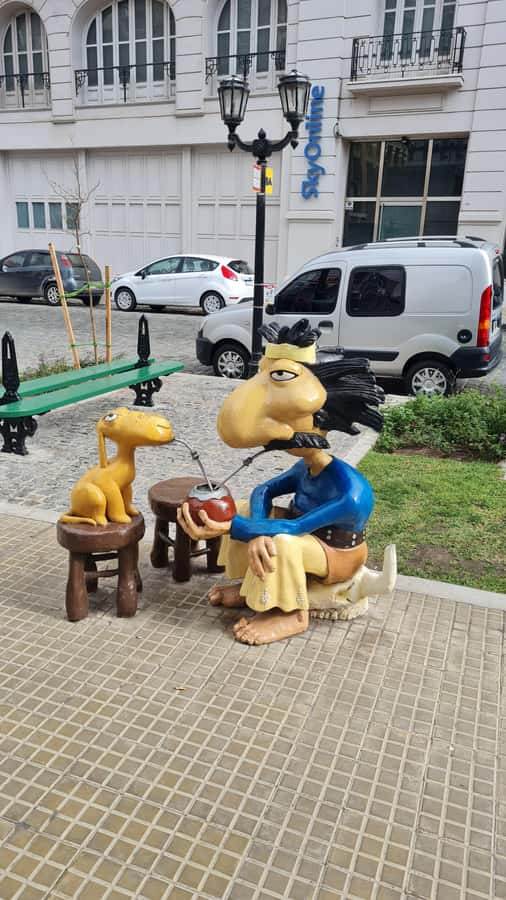
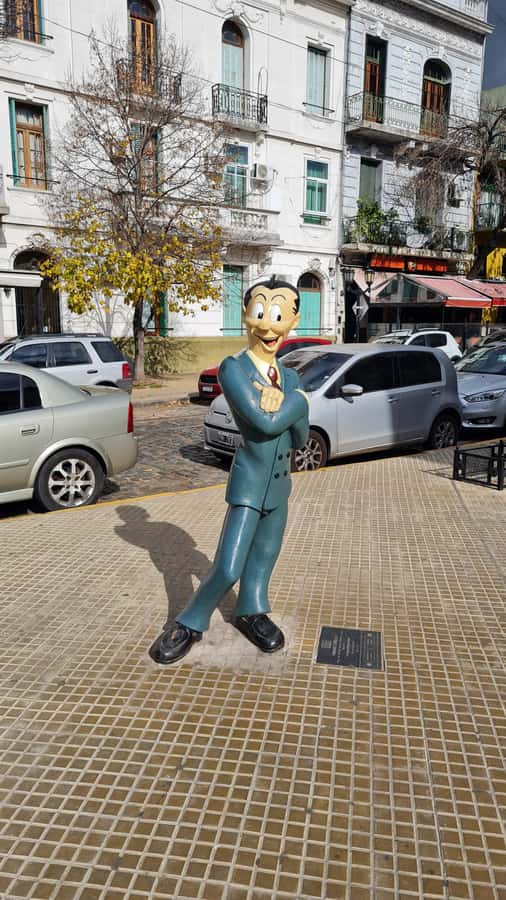
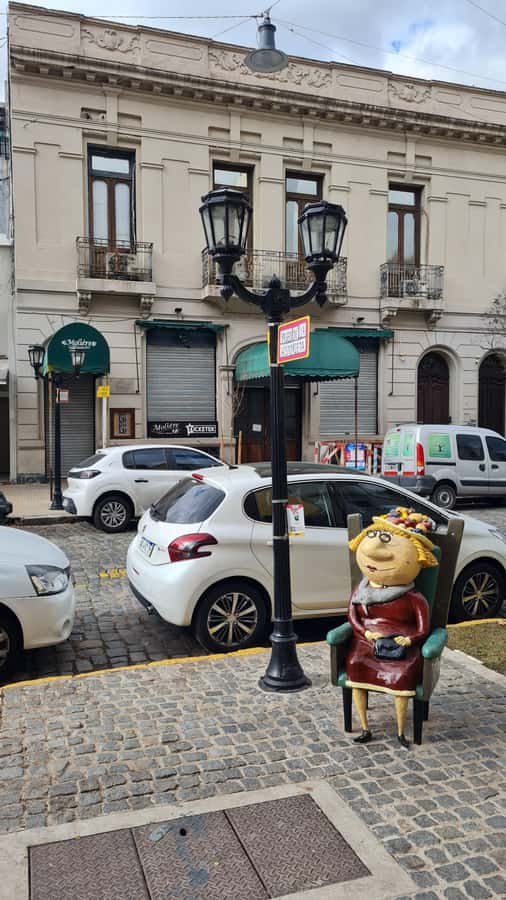
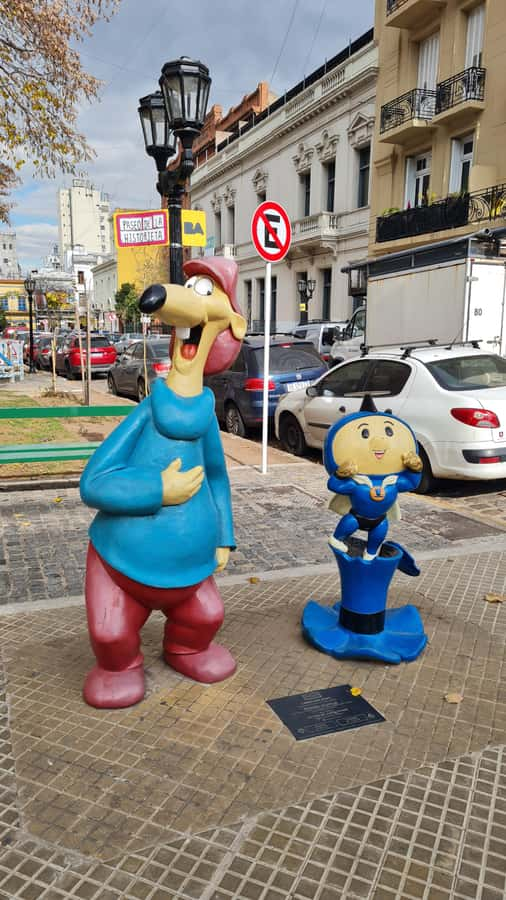
The walk then turns toward one of San Telmo’s most recognizable popular-culture sights: the Mafalda Statue. The stop lasts about 20 minutes and includes walking, sightseeing, and an explanation from Miguel.
Mafalda is an Argentine comic character known well beyond the country. Seeing the statue gives you a small but memorable link to local humor and social commentary. This is not just a quick photo stop if you are interested in how Buenos Aires presents its cultural icons in public spaces.
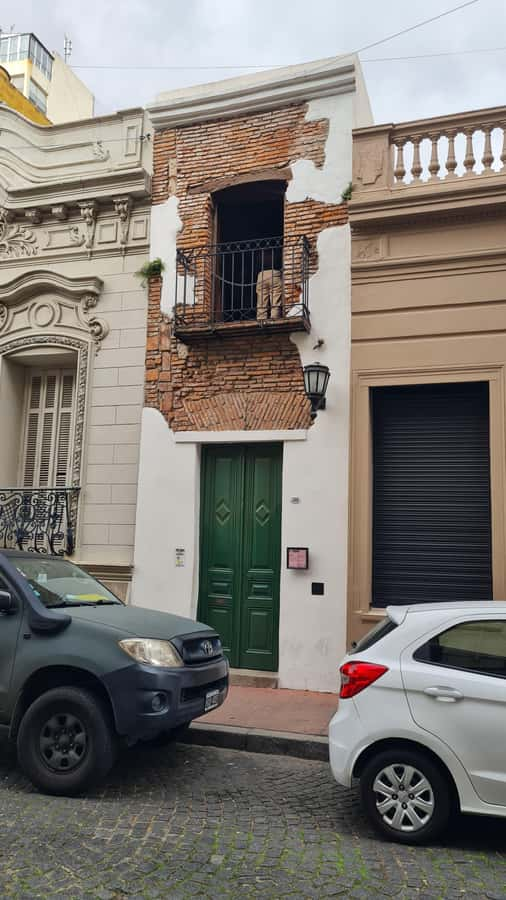
The route also includes the comic-strip street, the narrowest house, and the entrance to the catacombs. These details are exactly why walking works here. You can pass a major attraction and then turn your attention to something tiny and easy to miss.
Some of these stops are viewed from outside or passed along the route, so expectations matter. You are not signing up for a long interior examination of every site. Instead, Miguel uses each place to add a story to the neighborhood.
Near El Viejo Almacén, you get another look at Buenos Aires’ tango identity. The stop is short, about five minutes, and is mainly for a photo and explanation. It is useful context before the later discussion of bars, tango halls, and different tango settings.
Architecture, public buildings, and Defensa Street
The walk continues past the Faculty of Engineering and the Ministry of Agro Industry, with about 10 minutes devoted to each. These stops add civic and architectural detail to a route that could otherwise become a parade of cafés and souvenir shops.
You may especially appreciate this section if you like cities as working places, not just sightseeing backdrops. The buildings show how San Telmo fits into the wider story of Buenos Aires’ institutions and public life.
Defensa Street is one of the route’s main threads. Its antique shops give you a chance to see the neighborhood’s trading character, and the street links several major stops. You might find furniture, decorative objects, old signs, and souvenirs, though the tour does not promise shopping time at every shop.
This is a good place to keep your pace flexible. If you like browsing, you may wish you had more time than the schedule allows. The tour’s value is the explanation and overall route, not a long shopping session.
A few more boozy trips around the world worth a look
- Budapest: Unlimited Prosecco, Beer and Aperol Spritz Cruise
★ 4.8 · 37,304 reviews - Amsterdam Luxury Canal Cruise + Unlimited Drinks & Bites option
★ 5.0 · 30,518 reviews - Amsterdam: Heated Canal Cruise with Unlimited Drinks & Bite
★ 4.5 · 21,431 reviews - Prague: Medieval Dinner with Unlimited Drinks
★ 4.4 · 19,847 reviews
San Telmo Market and Plaza Dorrego
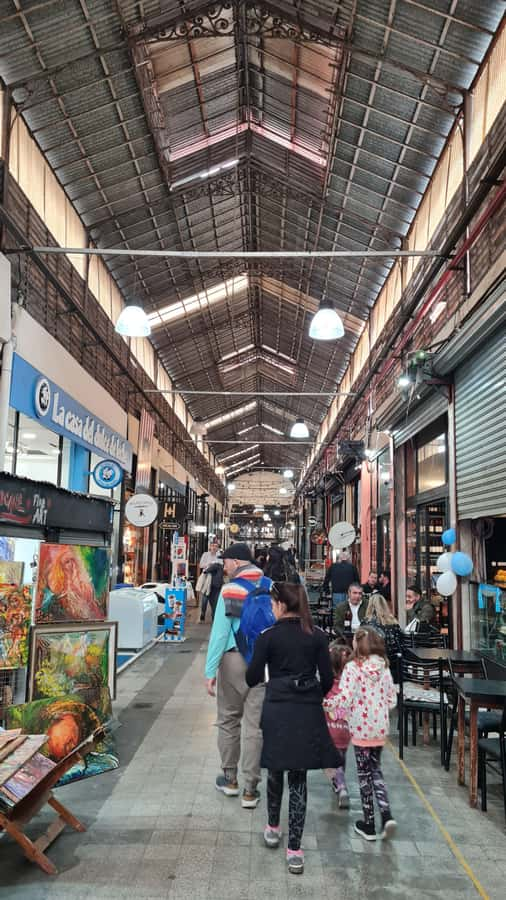
San Telmo Market receives about 15 minutes. You visit with Miguel, have time for sightseeing, and can browse the stalls. The market is housed in a structure associated with Gustave Eiffel, which gives the stop extra architectural interest.
Do not treat this as a standard modern food hall. The point is the building, the neighborhood setting, and the mix of food, objects, and local atmosphere. You might find something to eat or buy, but the tour does not include a meal or a guaranteed tasting.
The short time here is enough for orientation and selected browsing. It is not enough to inspect every stall at leisure. If the market is a priority for you, note what catches your eye and return later.
Next comes Plaza Dorrego, with about 10 minutes for photographs and an explanation. This square is central to San Telmo’s public life and is one of the places where the neighborhood’s old character is easiest to feel. It also gives you a natural pause between market browsing and the next group of historical stops.
The nearby Parish of San Pedro González Telmo gets a shorter stop of about five minutes. You pass by, take photos, and hear the key points rather than spending a long period inside. The church helps explain how the neighborhood took its name and gives the route another connection to religious history.
From a former women’s prison to Lezama Park
The walk passes the former San Telmo women’s prison, also known as the former National Penitentiary and museum site. This stop lasts about five minutes. It is a brief look, but it adds a less polished side to the neighborhood’s past.
I appreciate the inclusion of a former prison because it keeps the tour from becoming only a parade of attractive façades. San Telmo contains difficult chapters as well as elegant buildings, tango posters, and antique shops. You should expect an explanation and a photo opportunity, not a full museum visit.
The route then reaches Lezama Park. The guided portion here is listed at about five minutes, so this is another overview rather than a long park visit. The site is important because it is connected with the first founding of Buenos Aires and includes a notable monument.
The park gives the walk some breathing room. After narrow streets and dense buildings, you get an open public space and a chance to understand the city’s earliest story in a broader setting. If you want to explore the park at leisure, plan to return after the tour.
Blue domes and the National Historical Museum
The Russian Orthodox Church of the Holy Trinity is a short stop, about five minutes, but its domes make it one of the route’s more eye-catching sights. The church adds a clear reminder that Buenos Aires was shaped by communities from well beyond Spain and Italy.
The visit is listed as a guided pass-by, so you should not expect an extended interior tour. Still, it is a valuable contrast with the earlier Catholic sites. Miguel’s explanations help connect the building to the wider cultural mix of the city.
The route continues toward the National Historical Museum, where you stop for about 10 minutes. This is another photo and guided stop rather than a full museum admission visit. The location provides a fitting historical link after Lezama Park and the former prison.
At this point, the route has covered architecture, faith, popular culture, civic buildings, food, tango, and the city’s beginnings. That range is the walk’s main strength. You get a broad introduction without spending the entire afternoon in one building.
Bars, pizzerias, and the finish at Nápoles
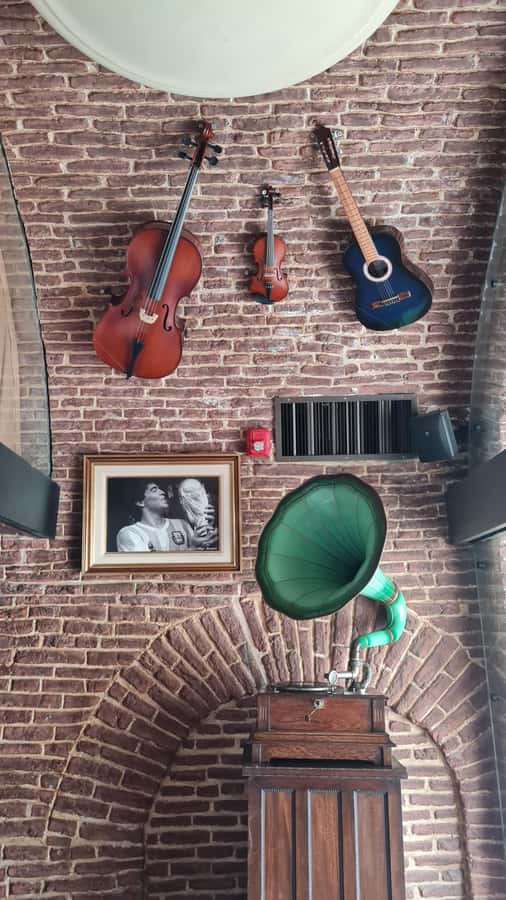
Food and drink are part of the experience, but you should understand the format. The tour stops at notable bars around the city, including Bar Nápoles, and points out historic pizzerias. These are cultural stops and explanations, not a meal package.
The final stop is Nápoles, where you have about 10 minutes for a visit, guided comments, and photographs. The venue is especially useful for understanding Buenos Aires’ bar culture. It also gives the tour a relaxed ending after so much historical material.
The route includes several places associated with tango, including Michelangelo and El Viejo Almacén. Miguel explains the difference between a tanguería and a milonga, an important distinction if you plan to attend tango events later.
A tanguería is generally linked with a staged tango show, often built for an audience. A milonga is associated with social tango dancing. The tour helps you avoid treating every tango venue as the same thing.
There is no promise of a live tango performance during this walk. You are visiting locations, hearing stories, and learning how tango fits into San Telmo. If your main goal is an evening show, book one separately. If you want context before choosing a show, this tour is more useful.
What the $20 price gets you
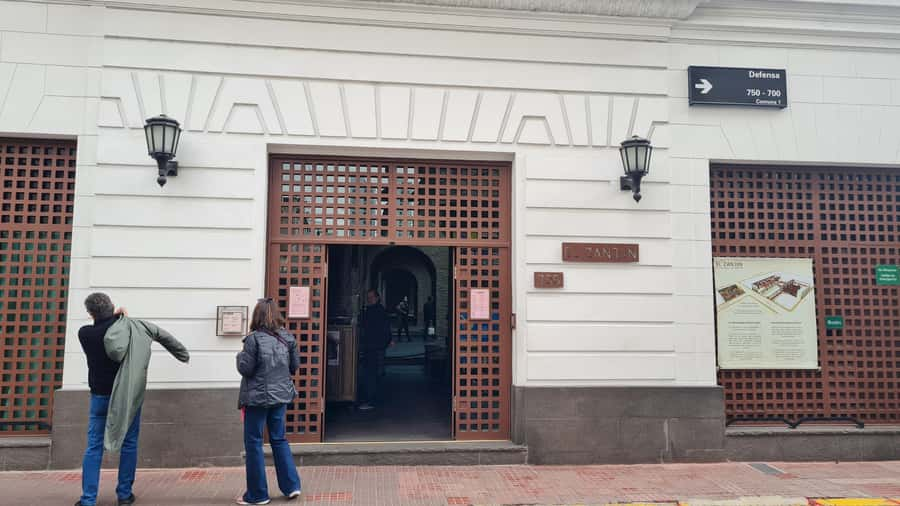
At $20 per person, the price is modest for a 150-minute guided walk in a small group. You are paying for a route that connects many separate sights, plus Miguel’s explanations in Spanish and the chance to ask questions without being lost in a large crowd.
The value is strongest if you would otherwise wander San Telmo without knowing what you are seeing. The market, Plaza Dorrego, Mafalda, Lezama Park, and the church domes are easy enough to locate. The harder part is understanding how they fit together, and that is where a local guide earns the fee.
The price does not include food, drinks, or a tango performance. You should budget separately if you want to eat at Nápoles, stop at a pizzeria, or attend a tango show later.
The schedule is fairly full. You cover many stops in 150 minutes, but several visits last only five or 10 minutes. I would choose this tour for orientation and context, not for long museum visits or slow shopping.
Language, pace, and practical preparation
The live guiding language is Spanish. One of the strongest points about Miguel is his effort to explain clearly to people who are not native Spanish speakers. Still, you should have enough Spanish to follow a walking explanation, ask basic questions, and understand meeting instructions.
Wear comfortable shoes. The route includes a lot of walking, with time spent on streets, in plazas, around market stalls, and near historic buildings. Bring water, sunscreen, a hat, and comfortable clothing, especially if the day is sunny.
A 10-minute restroom pause is included during the two-hour guided walk. That is helpful, but it is not a substitute for planning ahead before the start.
The tour is not suitable for wheelchair users or people with mobility impairments. Some areas may be difficult to access, and the route’s frequent street stops, walking sections, and historic settings can make movement harder.
Cancellation is flexible up to 24 hours before the start for a full refund, and you can reserve now and pay later. Those terms are useful if your Buenos Aires schedule is still shifting.
Who should book this San Telmo experience?
I would choose this walk if you want a compact introduction to one of Buenos Aires’ oldest districts, especially if you care about local stories more than a checklist of major attractions.
It suits you best if you:
- Enjoy walking through neighborhoods rather than riding between sights.
- Want context about tango before choosing a show or milonga.
- Like architecture, comic art, churches, markets, and old bars in equal measure.
- Prefer a group of six or fewer.
- Can follow Spanish explanations.
- Want a guide who can adjust explanations and answer questions.
I would think twice if you have limited mobility, dislike walking in the sun, or want extensive time inside museums and churches. I would also skip it if your only goal is a tango performance, since the tour visits tango-related locations but does not promise a show.
Should you book it?
For $20, this is a strong-value introduction to San Telmo. The route has plenty of stops, but its real strength is Miguel’s personal explanation of tango, comic culture, bars, churches, and Buenos Aires’ early history.
Book it early in your stay if you want a neighborhood orientation and ideas for later meals, markets, museums, and tango evenings. Choose another activity if you need English guiding, step-free access, or long visits at individual attractions.
FAQ
Where does the tour begin?
It begins next to the Santo Domingo Convent, at Avenida Belgrano and Defensa. Guide Miguel will be waiting there.
Where does the tour finish?
The tour finishes at Nápoles.
How long does the experience last?
The experience lasts 150 minutes, or two and a half hours. A 10-minute restroom pause is included during the guided walk.
What language is the tour conducted in?
The live tour guide speaks Spanish. Miguel makes an effort to explain clearly to non-native Spanish speakers.
How large is the group?
The tour is limited to six participants.
Does the price include food or drinks?
The supplied details do not state that food or drinks are included. The route stops at bars, Nápoles, and historic pizzerias, but you should expect to pay separately for anything you order.
Does the tour include a tango show?
No live tango performance is promised. The walk visits tango-related locations and explains the difference between tanguerías and milongas.
What should I bring?
Bring comfortable walking shoes, water, sunscreen, a hat, and comfortable clothing.
Is the tour suitable for wheelchair users?
No. The activity is not suitable for wheelchair users or people with mobility impairments, and some areas may not be accessible.
Just added around the world
- Deluxe Catamaran to Isla Mujeres with Open Bar from Cancun★ 4.5 · 32 reviews
- Discover Isla Mujeres tour with snorkel, buffet and open bar★ 3.0 · 10 reviews
- Amazing tour to the beauty Isla Mujeres with Snorkel and open bar★ 4.0 · 7 reviews
- Catamaran Tour to Isla Mujeres from Cancún with Bar and Lunch★ 4.5 · 22 reviews
- Deluxe Catamaran tour to Isla Mujeres with Open Bar and Lunch★ 4.5 · 6 reviews
- Discover Isla Mujeres: Catamaran, Snorkeling, and “Ice Bar”★ 3.5 · 6 reviews
- Catamaran Tour to Isla Mujeres, Open bar, Lunch, Snorkeling, Beach Club Included★ 4.0 · 15 reviews
- Brewery Tour / Craft Beer Tasting Cancun Mexico★ 5.0 · 11 reviews
Historical Tours, compared.
Prague Historic Pub Tour with Drinks Included
Read our review →
Southern Flavors Food, Pub Crawl, and History Walking Tour
Read our review →
Boston Freedom Trail History Pub Crawl Small-Group Tour
Read our review →
Royal Historic Pubs Walking Guided Tour in London
Read our review →Browse the lists this tour appears in