
REVIEW · SEOUL BOOZY TOURS
Learn and Craft Makgeolli in a Traditional Brewery
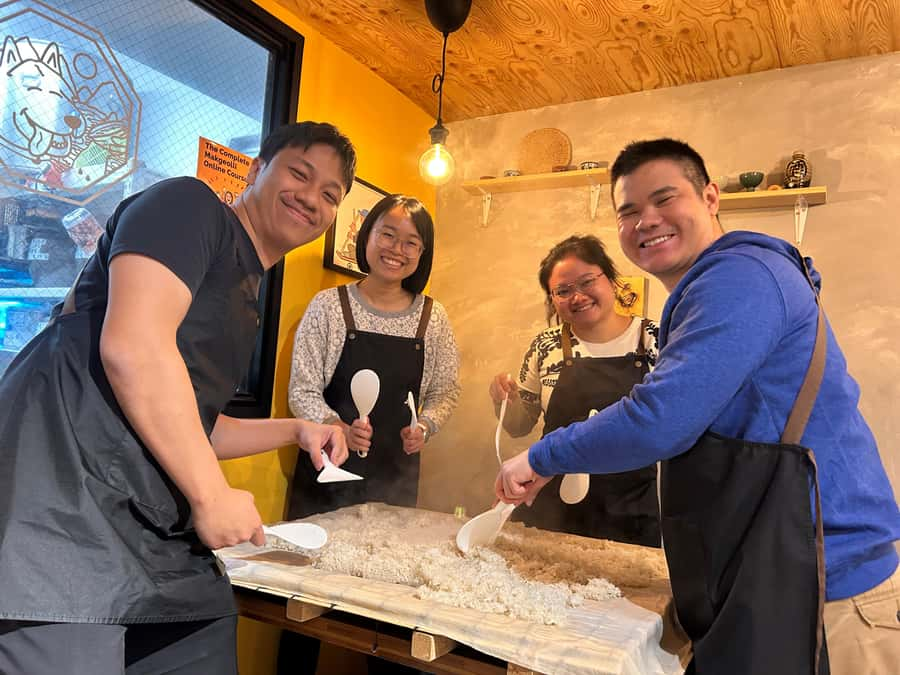
Makgeolli turns rice into a story. This small-group class in a traditional Korean market lets you taste, learn, and make your own rice wine under the guidance of Joe Kim, a brewery founder and certified Korean alcohol sommelier. I like the hands-on brewing and the serious tasting session, which goes well beyond a quick demonstration. The main consideration is simple: you need to be comfortable sampling several alcoholic drinks in two hours.
I also like the take-home kit, which gives the class a life beyond the brewery. You will leave with makgeolli to ferment at home, enough to yield about 1.5 liters, or a finished bottle if you cannot take the fermenting vessel. The class packs a lot into a short time, so anyone hoping for a slow, relaxed workshop may find the pace brisk.
Key points to know before you book
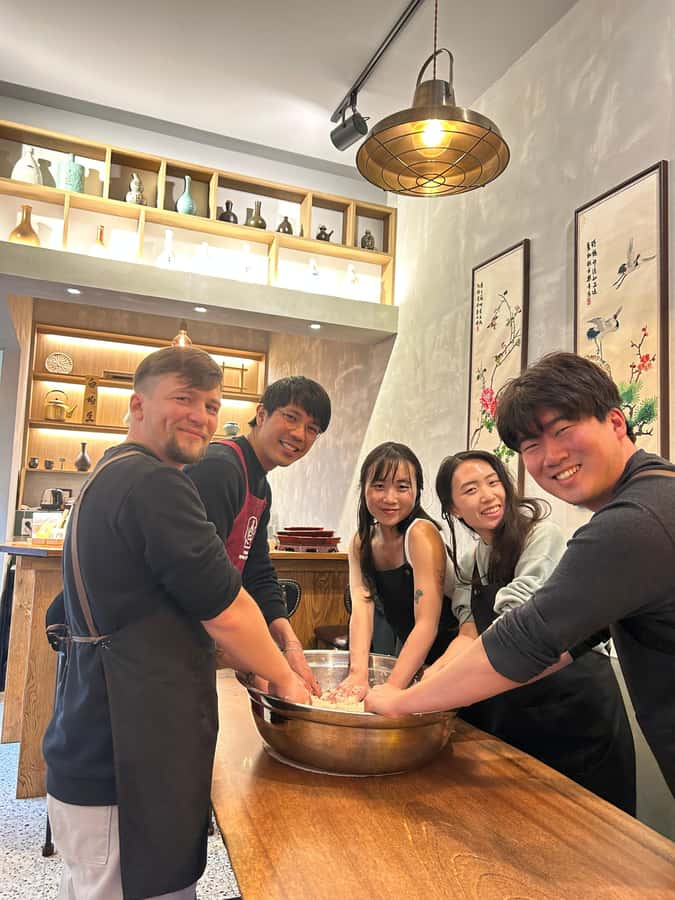
- You make your own makgeolli: The class explains ingredients and tools, then guides you through the basic brewing process.
- Joe Kim leads the session: The instructor is the brewery owner, a certified Korean alcohol sommelier, and the author of an English guide to brewing Korean rice wine.
- Tastings are part of the lesson: You sample craft and commercial makgeolli, premium rice wines, and soju, including a blind tasting.
- The class takes place inside Ahyeon Market: The brewery is reached from Ahyeon Station on Seoul Subway Line 2.
- You take home a fermenting project: Your kit should yield about 1.5 liters, or you can receive a finished bottle if carrying it away is not practical.
- The group is small but the class is full: Ten people is the maximum, which allows hands-on work but leaves little room for a leisurely pace.
Why makgeolli makes a good Korean food experience
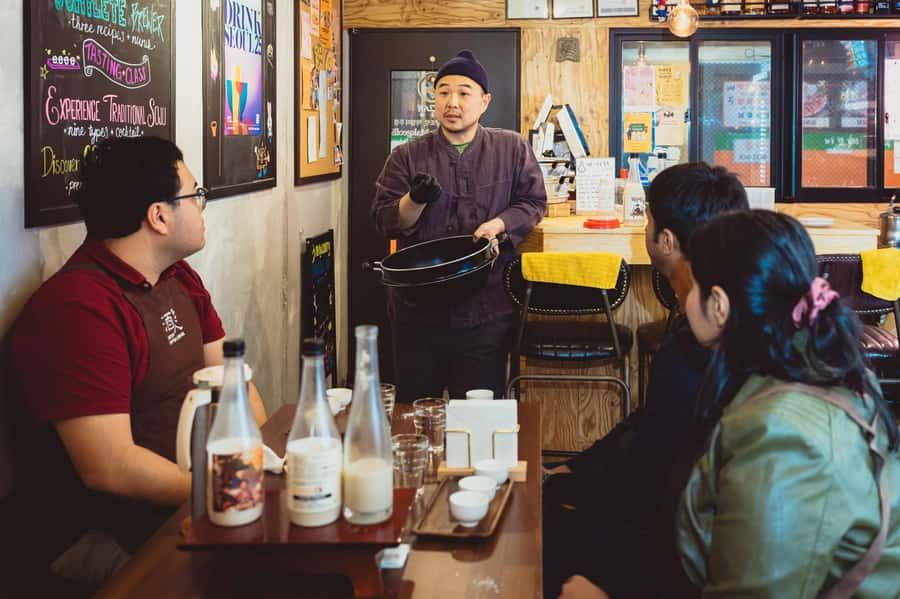
Makgeolli is Korea’s traditional rice wine, usually known for its pale, cloudy appearance and gentle sweetness. It is not simply a drink to order with a meal. Its taste can change with the rice, fermentation, sweetness, acidity, alcohol level, and production method.
That is why this class offers more than a standard tasting. You are asked to compare different types of makgeolli, then connect those differences to the brewing process. Commercial bottles and craft versions may look similar at first, but the class helps you pay attention to the details in the glass.
I like this approach because it gives you a useful way to understand a drink that can otherwise seem unfamiliar. You are not just told that one bottle is better than another. You taste several styles and learn what separates a mass-produced rice wine from a smaller-batch product.
The class also includes soju. That adds a second important part of Korean drinking culture, but it also means you should plan your transportation carefully. You will be sampling several alcoholic drinks, so public transportation is the sensible choice. Driving is not suitable after the session.
More brewery visits around South Korea:
- Seoul: Craft Makgeolli Brewery Tour & Tasting Experience
★ 5.0 · 16 reviews - Cologne: Brewery Tour with 3 Kölsch Beer Tastings
★ 4.7 · 3,108 reviews - Pilsen: Pilsner Urquell Brewery Tour with Beer Tasting
★ 4.7 · 2,419 reviews
Finding Baekusaeng Makgeolli in Ahyeon Market
The meeting point is Baekusaeng Makgeolli, located inside Ahyeon Market at 346-35 Ahyeon-dong, Mapo-gu, Seoul. The market setting is part of the appeal. You are not attending a polished hotel seminar or a generic cooking studio. You are going to a working makgeolli brewery inside a traditional Korean market.
From Ahyeon Station on Line 2, take Exit 4 and walk straight until you see Mega Coffee. Turn left, continue walking, and look for the market entrance on your left. Once inside, find the brewery logo on the shop.
Allow enough time to locate the entrance. The directions are clear, but a market setting can take a little more attention than a large tourist attraction with obvious signs. There is no subway pickup, so you are responsible for making your way to the brewery.
You can also use a bus or taxi to Wedding Town bus stop, written in Korean as 웨딩타운버스정류장. If you take a taxi, show the driver the Korean name and ask to be dropped at that stop. The activity ends back at the brewery, so you do not need to arrange a second meeting point.
Meeting Joe Kim, the brewery owner and instructor
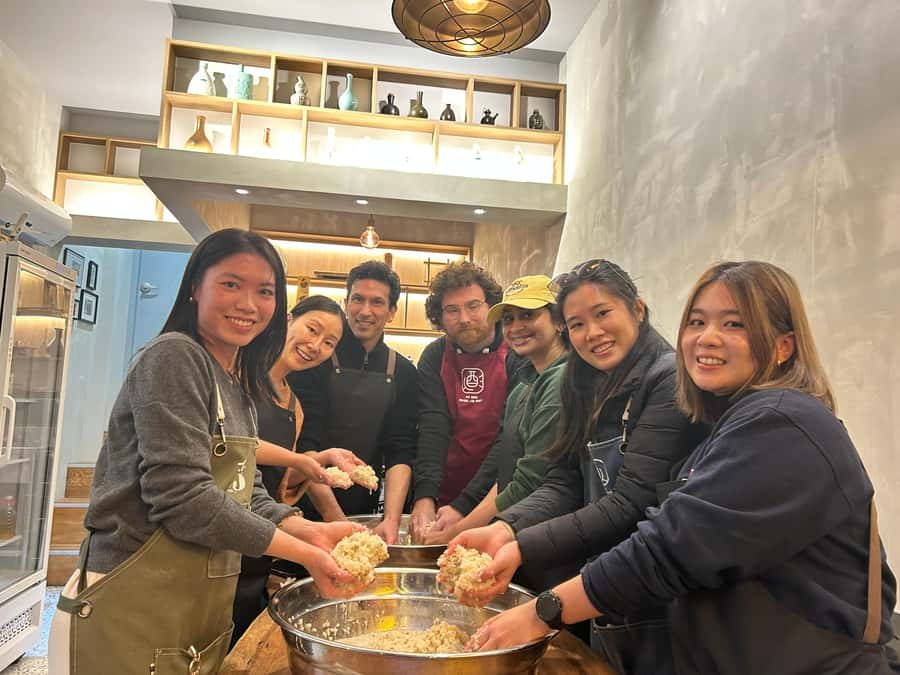
Joe Kim leads the class. He is described as a certified Traditional Korean alcohol sommelier, brewery owner, and author of the first complete English guide to home brewing Korean rice wine.
That background matters because the class covers both culture and technique. Joe is not there only to demonstrate a recipe. You will hear about the history and theory behind Korean traditional alcohol, then put the information to work as you choose ingredients, use the tools, and prepare your own batch.
English is one of the teaching languages, along with Korean and Spanish. The small-group limit is ten people. That is a useful size for a practical activity because you can follow the process without being lost in a large crowd.
The session is also praised for being genuinely instructional rather than a performance you watch from the sidelines. You should expect to take part in the work, ask questions, and handle the process yourself. With only two hours available, the pace may be energetic. The benefit is that you get a lot of material in one sitting. The trade-off is that there is not much time for a long pause between stages.
The tasting comes before the brewing
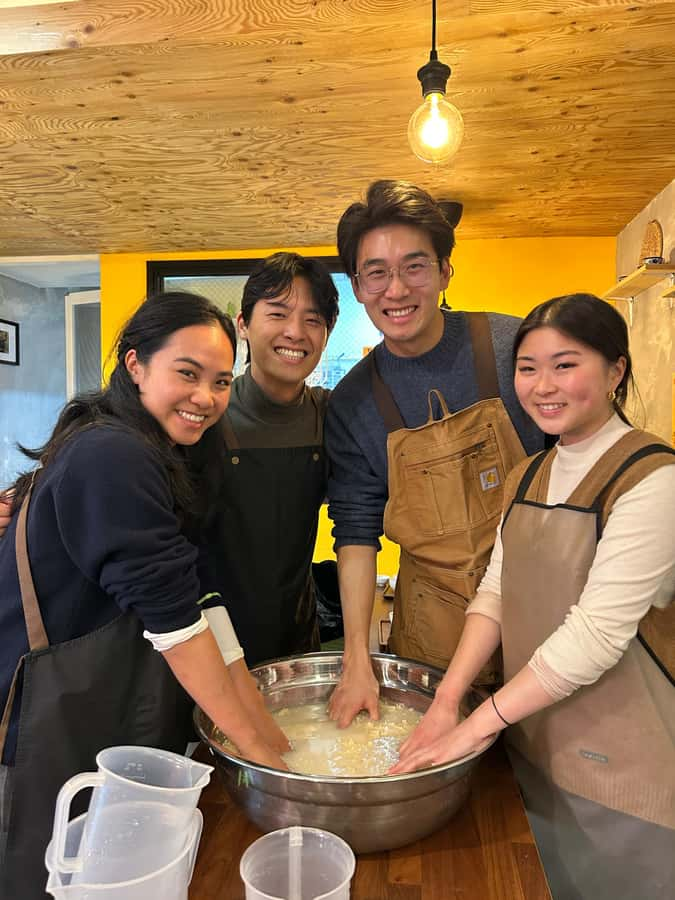
The tasting section gives you a foundation for the rest of the class. You sample different makgeolli styles, including craft and commercial versions, as well as premium Korean rice wines. A blind tasting is included, so you can focus on aroma and flavor without relying on a label or price.
This is one of the strongest parts of the experience. Many alcohol tastings simply present several glasses and offer a few broad descriptions. Here, the tasting is linked to the brewing lesson. You can start thinking about sweetness, texture, strength, and finish before you begin making your own batch.
Light snacks are included. They are useful because you will be drinking, but they should not be treated as a full meal. If you need substantial food before or after the activity, plan that separately in Ahyeon or elsewhere in Seoul.
The soju sampling adds variety, though it also makes the alcohol warning important. This is not a class where you taste one small sip and spend the rest of the time watching a demonstration. You should be ready to sample many kinds of makgeolli and soju.
The activity is not suitable for anyone under 21 or for pregnant women. Smoking indoors and the use of alcohol or drugs outside the class rules are not allowed.
A few more boozy trips around South Korea worth a look
- Seoul: Pub Crawl
★ 4.7 · 903 reviews - The Seoul Pub Crawl Official
★ 5.0 · 838 reviews - Drinking and Eating through the Alleys of Seoul
★ 5.0 · 364 reviews - Seoul: Anthony Bourdain-Inspired BBQ and Pub Experience
★ 5.0 · 186 reviews
Choosing ingredients and tools for home brewing
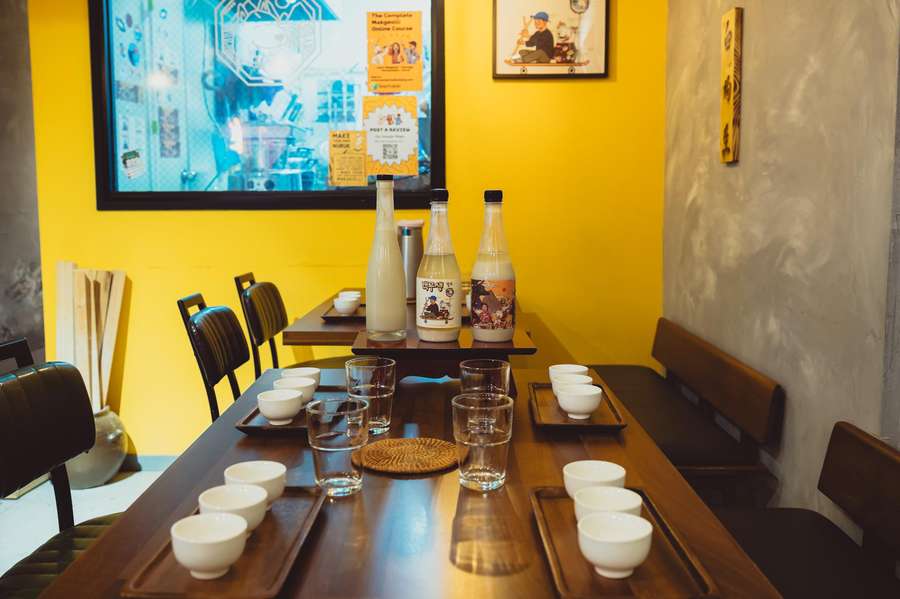
Once the tasting is underway, the class turns to the practical side of makgeolli. You learn how to choose suitable ingredients and which tools to use.
This section is especially useful if you are curious about making traditional rice wine after returning home. The class does not leave you with a bottle and a vague memory of what happened. It explains the basic setup required to repeat the process.
The equipment discussion may be one of the less flashy parts of the session, but it has real value. Home brewing can become confusing when you do not know which tools are essential and which are optional. Learning what you need before buying equipment can save money and prevent a failed first attempt.
You then use the information to craft your own homemade makgeolli. The exact recipe and step-by-step timing are not specified in the available details, so you should expect instruction tailored to the class rather than a promise of a fixed recipe format. The central idea is clear: you take an active role in preparing your own batch.
Making your own makgeolli in a small group
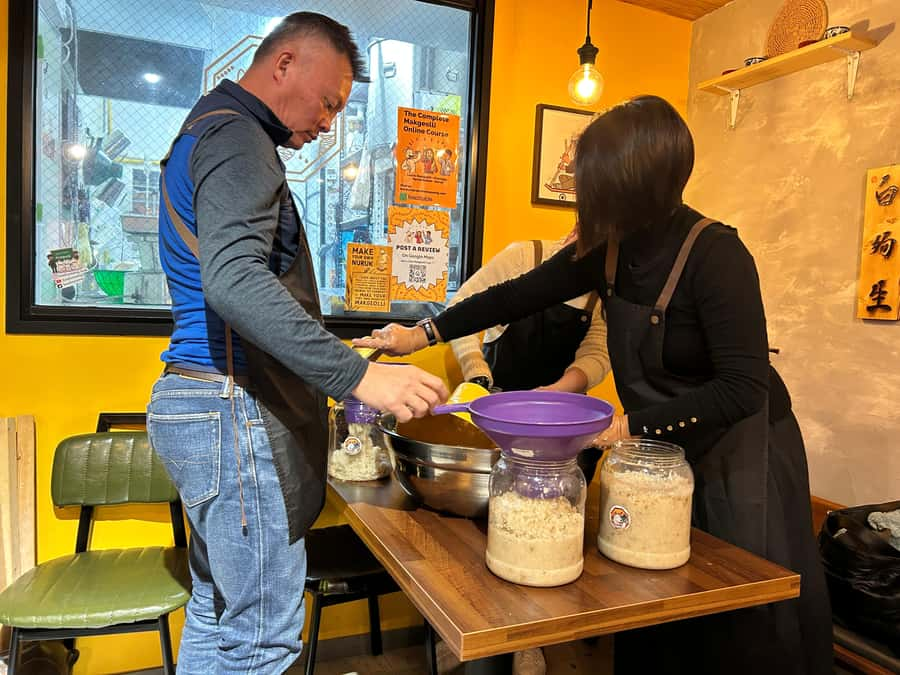
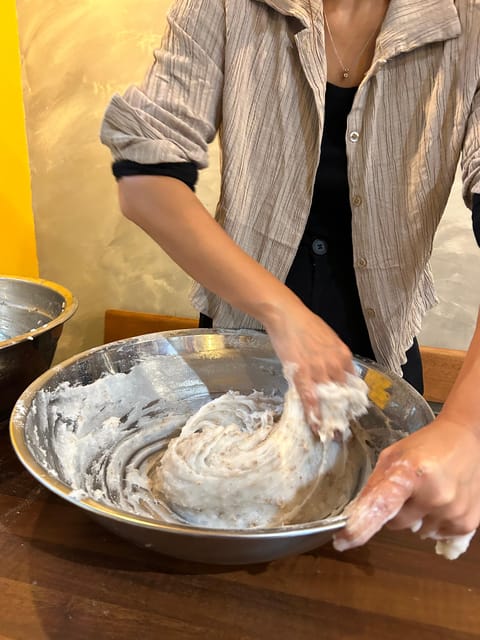
The hands-on portion is the point of the class. You are not just tasting the finished drink. You are preparing makgeolli that will continue fermenting after you leave.
The group limit of ten helps here. A much larger class would make personal participation harder, especially when everyone is working with ingredients and vessels. Ten people is still enough for a social atmosphere, but small enough for the instructor to keep the process moving.
The two-hour length makes this a good fit for a Seoul itinerary. You can add it to a day of sightseeing without giving up half a day. At the same time, the time limit means you should arrive ready to concentrate. The class covers theory, history, tasting, tools, ingredients, and brewing in a short window.
You take home a vessel containing makgeolli that should yield about 1.5 liters when the process is complete. Bring a reusable bag. This is not a minor suggestion, since the vessel is part of what you carry away.
If you cannot take the fermenting makgeolli with you, the brewery can provide a finished bottle instead. That option is useful if you are staying in a small hotel room, moving to another city, or flying soon after the class. It also avoids the trouble of transporting a fermenting container.
What the take-home kit adds to the experience
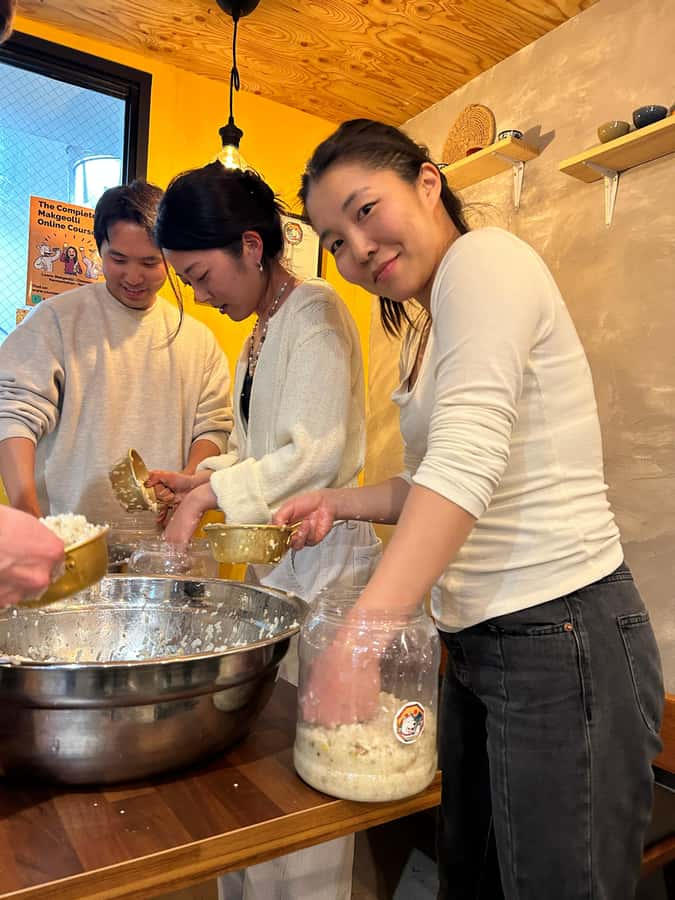
The home kit gives you a reason to keep thinking about the class after you leave Seoul. A normal tasting ends when the glasses are empty. Here, you have a project that continues at home.
For people interested in food, fermentation, or Korean drinks, that is a strong part of the $80 price. You receive the class, tastings, snacks, and a product that should produce about 1.5 liters of makgeolli. The value is less compelling if you only want a quick drink tasting or do not have a practical way to carry the vessel.
The finished-bottle option keeps the class accessible for people with difficult travel plans. Still, anyone choosing the kit should bring a sturdy reusable bag and think about how it will fit into the rest of the trip.
You should also remember that fermentation takes care after the class. The available information confirms that you take home makgeolli to ferment, but it does not specify a detailed storage schedule or fermentation timeline. Ask Joe for the handling instructions you will need before leaving.
Is $80 a fair price?
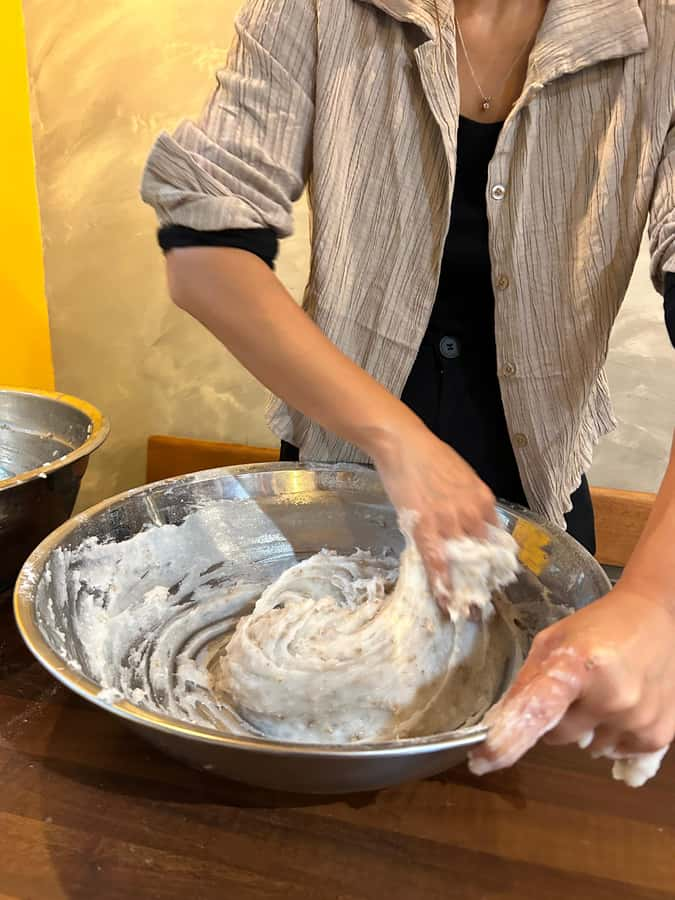
At $80 per person, this is not a budget drink stop. The price makes more sense when you count the full package: a two-hour lesson, instruction from Joe Kim, multiple makgeolli tastings, soju, blind tasting, light snacks, hands-on brewing, and a take-home makgeolli project.
The class is a good value if you want context and participation. You are paying for a guided introduction to Korean traditional alcohol, not only for a flight of drinks. The English-language teaching and the home brewing element are also useful for international visitors who want to continue learning after the trip.
It is less suitable if you want a cheap cultural activity with no alcohol, or if you would rather spend two hours at a restaurant trying one bottle with a meal. The alcohol tastings are central to the experience, not an optional extra.
The high rating and the praise for Joe’s teaching fit the structure of the activity. The strongest point is the combination of clear explanation and actual participation. You will not simply sit through a lecture, but you also will not be left to guess what each step means.
Who will enjoy this class most
I would recommend it to you if you fit one or more of these descriptions:
- You enjoy Korean food and want to understand a traditional drink beyond its name.
- You are curious about fermentation and want to try making rice wine at home.
- You prefer small classes where you can participate rather than watch.
- You want an activity led by a specialist with a personal connection to the brewery.
- You can handle several alcohol samples and will use public transportation.
- You have space in your luggage, or can accept a finished bottle instead of taking home the fermenting vessel.
I would think twice if you are looking for a quiet, alcohol-free workshop, a full meal, or a slow class with plenty of spare time. The schedule is packed, and the drinking component is substantial.
Practical tips for a smoother visit
Arrive with enough time to find the market entrance. Ahyeon Station and Exit 4 are the key landmarks, with Mega Coffee helping confirm that you are heading in the right direction.
Wear practical clothing and bring a reusable bag. The bag is specifically needed for taking your makgeolli vessel away, and a secure carry option will make the journey easier.
Do not drive afterward. The class includes several makgeolli samples and soju, and public transportation is convenient from the meeting point.
Eat something beforehand if you need more than light snacks. The class includes food, but the supplied details do not describe it as a full meal.
Finally, ask questions during the brewing portion. The class covers many subjects in two hours, and the most useful information for you may be the advice connected to your own setup, ingredients, and plans for carrying the brew home.
Should you book Learn and Craft Makgeolli?
Book it if you want an active cultural class, not just a drink tasting. The mix of blind tasting, craft and commercial comparisons, soju, brewing instruction, and a take-home batch gives the $80 price real weight.
The best reason to go is Joe Kim’s teaching style and the chance to make something yourself. The main caution is the pace and the amount of alcohol. If those suit you, this is a focused and unusual way to understand Korean drinking culture inside a traditional market setting.
FAQ
Where does the makgeolli class take place?
The class takes place at Baekusaeng Makgeolli inside Ahyeon Market in Seoul. The address is 346-35 Ahyeon-dong, Mapo-gu.
How do I reach the brewery by subway?
Take Seoul Subway Line 2 to Ahyeon Station, then use Exit 4. Walk straight to Mega Coffee, turn left, and continue until you see the market entrance on your left. The brewery has its logo on the shop.
How long does the class last?
The activity lasts two hours. Starting times depend on availability.
What does the class include?
It includes explanations of ingredients and tools, hands-on makgeolli brewing, craft and commercial makgeolli tastings, premium rice wines, a blind tasting, soju sampling, light snacks, and a take-home makgeolli vessel.
Can I take the makgeolli home?
Yes. Your makgeolli should yield about 1.5 liters after fermentation. Bring a reusable bag. If you cannot take the fermenting vessel, the brewery can provide a finished bottle.
Is the class suitable for everyone?
The class is not suitable for people under 21 or pregnant women. You should also avoid driving because the activity includes many alcohol samples.
Just added around South Korea
- Busan Pub Crawl★ 4.5 · 44 reviews
- Seoul: Showflix Korean Musical Pub★ 4.6 · 6 reviews
- Seoul: Premium Pub Crawl with Open Bottles★ 4.9 · 129 reviews
- Seoul: LGBTQ+ Pub Crawl and Drag Show with Local Drag Queen★ 4.6 · 8 reviews
- The Seoul Pub Crawl [official]★ 4.5 · 117 reviews
- Seoul: Craft Makgeolli Brewery Tour & Tasting Experience★ 5.0 · 16 reviews
- Seoul: Korean Drinking Games Night (non-drinkers welcome)★ 4.9 · 122 reviews
- Busan: Pub Crawl with Friends★ 4.6 · 147 reviews
Breweries, compared.

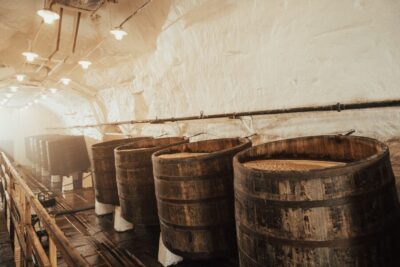
Pilsner Urquell Brewery Tour with Beer Tasting
Read our review →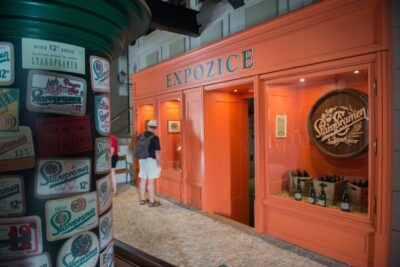
Staropramem Brewery Self-Guided Tour with Tasting
Read our review →
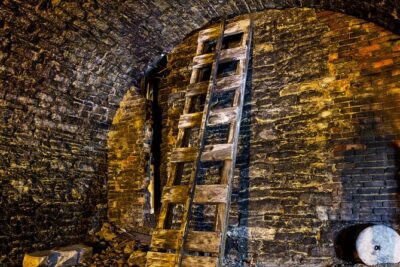
Hidden Brewery Caverns Tour in Cincinnati with Beer Tasting
Read our review →
Düsseldorf: Brewery Tour with Alt Beer Tastings
Read our review →
Classic Mike’s Bike Tour daily @ 11.30 incl Beer Garden & Surfers
Read our review →
Browse the lists this tour appears in