
REVIEW · TOKYO BOOZY TOURS
Japanese Speaking Experience Meet the locals Friend Cafe Shibuya
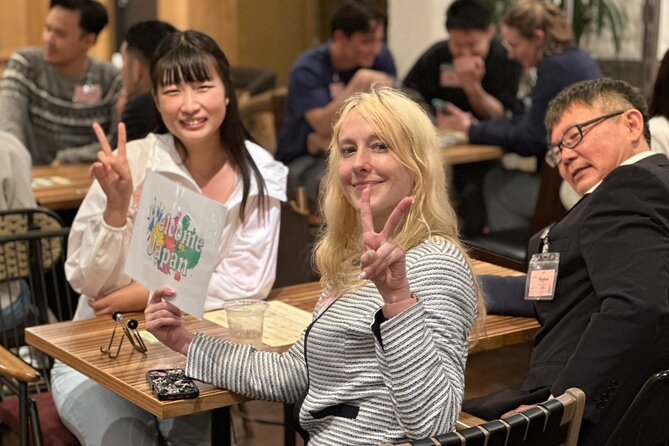
Tokyo gets easier over a shared drink. This two-hour language exchange brings Japanese locals and international visitors together in small groups, with seats changing every 15 minutes. I like the friendly rotation system and the fact that complete beginners are welcome, so you do not need polished Japanese to join in.
The main tradeoff is the setting. This takes place in a pub below Shibuya Bowling Cafe, so background noise can sometimes intrude, and your drink is not included in the $29 price. You must also be at least 18.
If you want a low-pressure way to meet people before a night out, this is a smart pick. It works best if you are willing to speak up, make mistakes, and help someone else practice English in return.
Key points at a glance
- Six short conversation rounds: The evening alternates between 15 minutes of English and 15 minutes of Japanese.
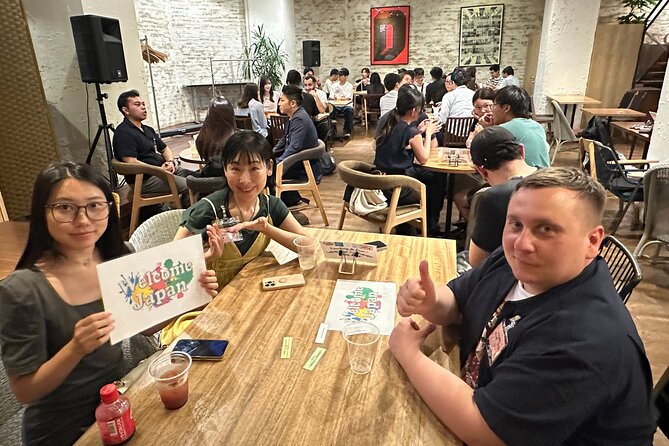
- Small mixed groups: Staff place three or four people together, combining Japanese and international participants.
- Seats change several times: You get more than one chance to meet people instead of being stuck with one group.
- Topic cards keep conversation moving: Useful when introductions finish and your mind goes blank.
- Beginners can join: You do not need to speak Japanese to take part.
- A drink costs extra: The $29 ticket covers the event, but you must buy at least one drink at the venue.
A language exchange built for shy beginners
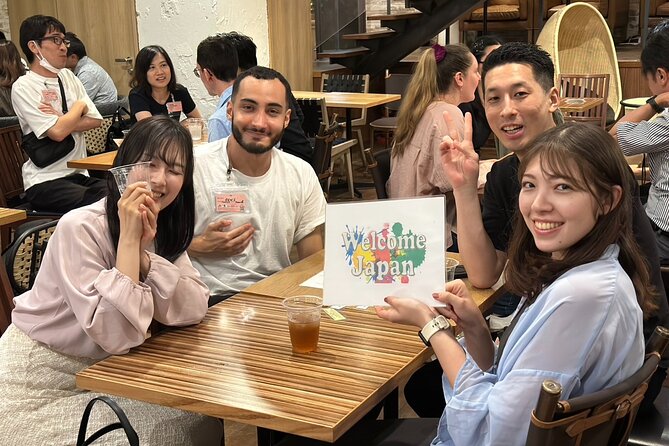
Many language events sound friendly until you walk in and discover that everyone already speaks fluently. This one takes a more practical approach. Staff divide the room into small groups of three or four, mixing Japanese and international participants. Topic cards give you an easy starting point.
That structure matters. You are not expected to walk up to a room full of strangers and create a conversation from nothing. The card might help you talk about food, travel, daily life, or other simple subjects. If your Japanese is limited to greetings and a few phrases, you can still take part.
The event also works in both directions. You may be practicing Japanese, but someone at your table may be working on English. That makes the exchange feel more balanced than a one-sided lesson. You get help with a phrase, then return the favor.
I especially like the short time limit. Fifteen minutes is long enough to get past a stiff introduction, but short enough to prevent an awkward conversation from dragging on. If one group does not click, the next seat change gives you a clean start.
Other drinks-included trips people book around Tokyo:
- Tokyo Bar Hopping Tour in Shinjuku (All-You-Can-Drink + Dinner)
★ 5.0 · 3,587 reviews - Best of Shinjuku: Izakaya Food Tour (4 Stops, 14+ Tastings)
★ 5.0 · 1,863 reviews - Tokyo: Shinjuku Local Bar and Izakaya Guided Walking Tour
★ 4.9 · 1,794 reviews
Finding the B1F meeting point in Shibuya
The meeting point is Shibuya Bowling CafeShibuya EST, at 1-chome-14-14 Shibuya. The cafe is on the basement level, B1F, and the venue is near public transportation.
You receive a mobile ticket, which is useful when you are already moving around Tokyo with your phone in hand. Allow enough time to find the building and get downstairs. Reception begins 10 minutes before the event starts, giving you a short window to check in and buy your drink.
The listed Monday schedule runs from 7:30 PM to 9:30 PM. That timing makes the event easy to attach to an evening in Shibuya. You can treat it as your main activity, or use it as a social start before continuing elsewhere.
Do not arrive expecting food and drinks to be waiting for you. The ticket includes the event fees and taxes, but not food or alcohol. You must buy at least one drink at the bar when you arrive. If you do not drink alcohol, the available nonalcoholic option is not specified, so ask at the venue.
The first 15 minutes: English conversation
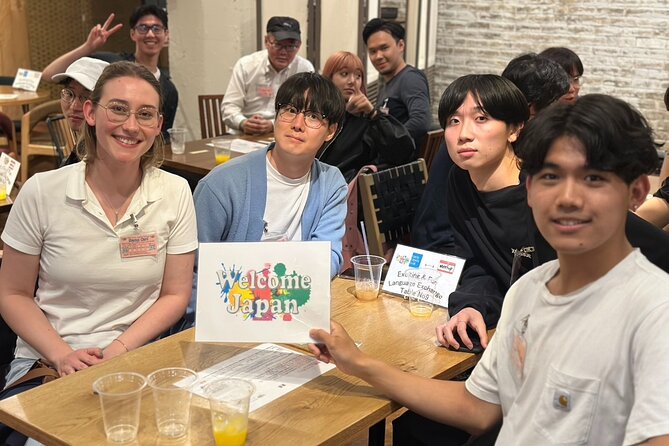
After check-in, staff place you in your first small group. The opening round is English conversation, which gives Japanese participants a chance to practice while international participants can settle in and meet the people around them.
For many English speakers, this is the easiest part of the evening. You can introduce yourself, explain where you are from, and ask simple questions. But do not treat it as a free language class. The purpose is social exchange, not private tutoring.
If you are a Japanese speaker, use this round to slow down and give everyone room to speak. If you are practicing Japanese later, you will appreciate the same patience from others. Short sentences and clear questions work better than trying to show off.
The staff also help keep the groups moving. Rikiya has been singled out for making people feel more comfortable and organizing the meetup well. That kind of guidance is useful in a room where some people arrive alone.
Switching to Japanese without pressure
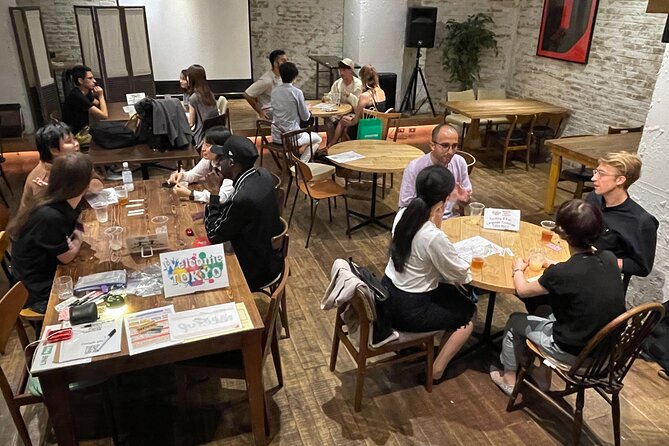
The second round changes to Japanese. This is where the experience becomes useful for beginners. You have already met the group, learned the basic rhythm, and had a chance to hear everyone’s names. The switch feels less abrupt than starting in Japanese with total strangers.
You are not required to be fluent. The instructions make clear that people who cannot speak Japanese can still join if they are interested. Use simple phrases, ask someone to repeat a sentence, or rely on the topic card when you get stuck.
A useful goal is not to hold a perfect conversation. Try to produce a few sentences, understand a few replies, and leave with one phrase you can use again. You will gain more from steady participation than from worrying over every grammar mistake.
For English speakers, the Japanese round is also a reminder that the exchange depends on generosity. Speak clearly, avoid correcting every small error, and let the other person finish. You are there to make conversation possible, not to grade it.
Same place, a completely different kind of round:
- Shibuya Meltdown Nightlife Tour: All-You-Can-Drink Bar Hopping
★ 5.0 · 1,058 reviews - Tokyo: Pub Crawl and Bar Tour
★ 4.5 · 951 reviews - Tokyo: Shinjuku Local Bar & Izakaya Crawl Tour
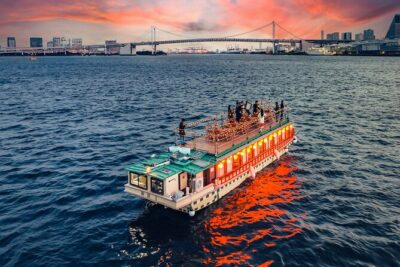
★ 5.0 · 890 reviews - Tokyo Bay Yakatabune Dinner/Day Cruise with Japan Show and Drinks
★ 4.5 · 473 reviews
Seat changes after two rounds
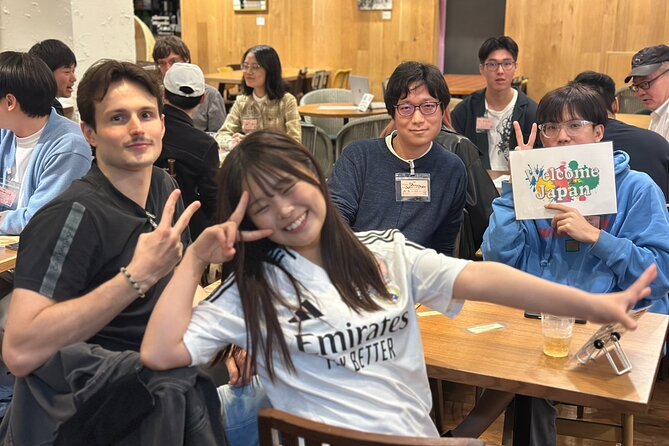
After the first English and Japanese sessions, there is a five-minute break and a seat change. This is one of the strongest parts of the setup. You do not spend the full night with the same three people, and you get repeated chances to find a better conversational match.
The schedule then repeats:
- English conversation for 15 minutes
- Japanese conversation for 15 minutes
- Five-minute break and seat change
- English conversation for 15 minutes
- Japanese conversation for 15 minutes
- Closing group photo
The full program takes about two hours, including reception, breaks, and the final photo. You should expect to speak with several different people during the evening, not simply watch others socialize.
The rotation can also feel a little mechanical. Every 15 minutes, just as a conversation begins to warm up, the group changes language or seats. That is useful for meeting more people, but less ideal if you prefer one long, relaxed conversation.
Topic cards save awkward pauses
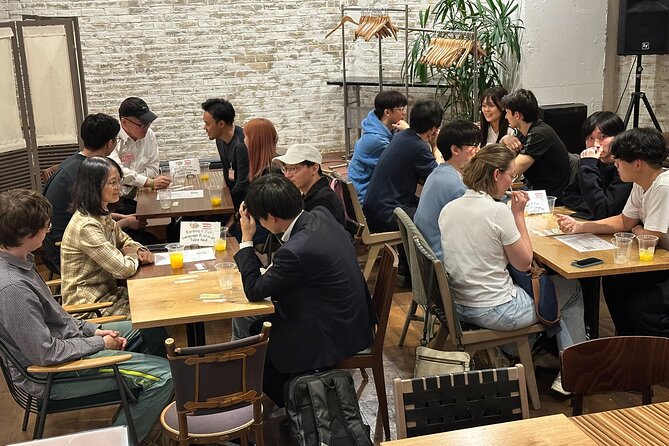
Conversation cards may sound like a small detail, but they can make or break a language exchange. A blank table creates pressure, especially when you are speaking in a language you are still learning. A card gives everyone something concrete to answer.
Use the cards as prompts, not a script. Answer the question, then ask a follow-up. If the topic is food, do not stop at naming a favorite dish. Ask what the other person likes, where they eat it, or what they would recommend in Tokyo.
The cards also help mixed-language groups. One person may be comfortable discussing a topic in English but need simpler Japanese. Another may understand more than they can say. A shared prompt gives the group a common subject while each person works at a different level.
Some online comments specifically praise the use of tablets or materials that shift between Japanese and English. The exact format may vary, but the practical point is the same: you have language support when the conversation needs a nudge.
The sound level and pub setting
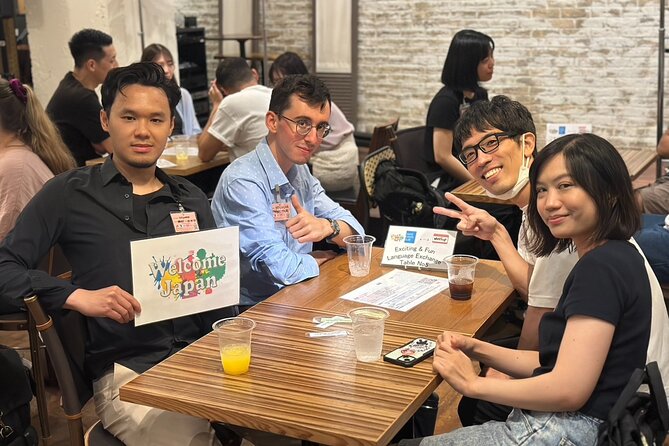
The venue is part of the appeal and part of the limitation. You are meeting in a pub inside a bowling cafe, not a quiet classroom. One person found the bowling noise distracting, and you should plan for some background sound.
That may not bother you if you enjoy a casual social setting. A pub feels less formal than a school, and the drink helps create a natural reason to sit down and talk. It also makes the activity easy to continue into a larger night in Shibuya.
Still, noise matters if you are a nervous beginner or have trouble hearing unfamiliar accents. Sit close to your group, speak clearly, and do not hesitate to ask someone to repeat themselves. If quiet concentration is your main goal, a private lesson would suit you better.
The pub setting also means this is an adults-only activity. Anyone under 18 cannot participate. Alcohol is optional in spirit, but at least one drink purchase is required, and the cost is separate from the ticket.
What the $29 price really covers
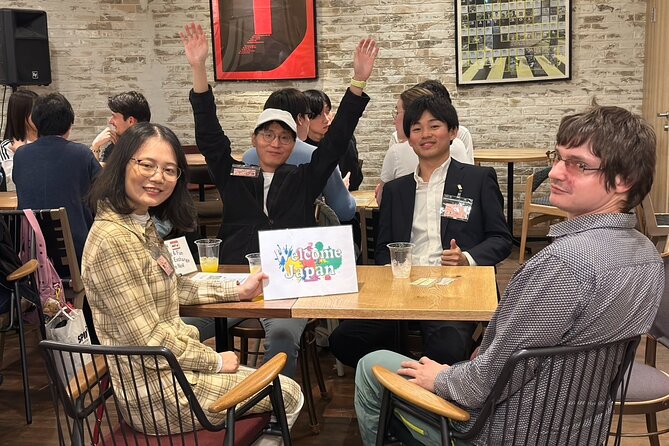
At $29 per person, the value comes from structure and access to a social group, not from sightseeing or a meal. You are paying for staff organization, small-group matching, topic cards, seat changes, and a guided two-hour format.
That is reasonable if you would otherwise struggle to meet Japanese locals or international friends in Tokyo. A bar conversation can happen for free, but you may not get a balanced language exchange, scheduled language changes, or a staff member helping people mix.
The value is weaker if you already have a Japanese-speaking friend or only want formal instruction. This is not advertised as a lesson, and there is no indication of private coaching. You also need to budget for your drink, so the final cost is higher than the ticket alone.
For a solo visitor, the organization is the main benefit. You can arrive alone and still have a clear way into the room. For couples or friends, it offers a planned activity, but try not to stay in your own pair the whole night. The point is to meet new people.
Who will enjoy this most
I would recommend this event to:
- Beginner Japanese learners who want real conversation practice
- English speakers happy to help Japanese participants practice
- Solo visitors looking for a social evening
- People staying in or near Shibuya
- Anyone who likes short, structured conversations
- Adults who want an easy start to a night out
It may be less suitable if you dislike group activities, do not want to buy a drink, or need a quiet room. It also may not satisfy advanced Japanese speakers seeking detailed grammar correction or long discussions with one person.
The atmosphere appears designed to be welcoming rather than intimidating. Simple activities, topic prompts, and active hosts help people join in without needing a bold personality. You still need to participate, though. Sitting quietly will limit what you get from the price.
Practical timing and cancellation advice
The published activity runs on Mondays from 7:30 PM to 9:30 PM, with the stated operating dates extending through July 12, 2026. Check the date you want before booking, since the listed schedule is specific.
Confirmation arrives at booking, and the mobile ticket is convenient for entry. The maximum group size is 20, which is small enough for the seat rotation to work without becoming a huge party.
You can cancel for a full refund up to 24 hours before the local start time. Changes or cancellations inside that 24-hour window are not accepted for a refund. If your Tokyo plans are still uncertain, keep that cutoff in mind.
Should you book this Shibuya language exchange?
Book it if you want a friendly, organized way to practice Japanese and meet people without committing to a full night out. The short rounds, changing seats, topic cards, and beginner-friendly approach give you several chances to find your footing.
Skip it if you want a silent study session, a guided sightseeing tour, or one-on-one language teaching. Also remember the extra drink cost and possible bowling noise.
For most adults who enjoy social activities, the $29 price is fair. Arrive ready to speak a little, listen patiently, and change groups with an open mind. You may leave with more than new vocabulary: you may have a few new names in your phone and a better sense of how people connect in Tokyo.
FAQ
Where does the Japanese language exchange take place?
It takes place at Shibuya Bowling CafeShibuya EST, 1-chome-14-14 Shibuya, Tokyo 150-0002, Japan. The cafe is on B1F.
How long does the activity last?
The experience lasts approximately two hours, from 7:30 PM to 9:30 PM on the listed Monday schedule.
Is the experience suitable for Japanese beginners?
Yes. Beginners are welcome, and you can participate even if you cannot speak Japanese.
How are the conversation groups organized?
Staff place attendees into small groups of three or four people, mixing Japanese and international participants.
How often do the groups change?
Staff change seats after conversation blocks so you can speak with several different people during the event.
How long is each conversation round?
Each English or Japanese conversation round lasts 15 minutes.
Are drinks included in the ticket?
No. Drinks and food are not included. You must buy at least one drink at the venue, and that purchase is separate from the activity price.
Can anyone under 18 participate?
No. The activity is for people aged 18 and over because it takes place in a pub.
Can I cancel for a refund?
Yes. You can receive a full refund if you cancel at least 24 hours before the local start time. Cancellations or changes made less than 24 hours before the start are not accepted for a refund.
Just added around Tokyo
- Tokyo: Toshimaya Sake Brewery Tour with Sake Tasting★ 5.0 · 6 reviews
- Tokyo: Sushi Cooking Class with Sake Tasting★ 4.8 · 55 reviews
- Tokyo: The Best Izakaya Tour in Shibuya★ 4.7 · 15 reviews
- Tokyo: Shinjuku Izakaya and Golden Gai Bar Hopping Tour (2h)★ 4.9 · 67 reviews
- Tokyo: Shinjuku Nightlife Tour with Karaoke and Bar Hopping★ 4.1 · 4 reviews
- Tokyo: Sushi and Ramen Cooking Class with Sake Pairing Set★ 5.0 · 81 reviews
- Tokyo: Shinjuku Hidden Japanese Bar Tour (Neon Light City)★ 5.0 · 4 reviews
- Tokyo: Shinjuku Golden Gai Bar Hopping that only locals know★ 5.0 · 5 reviews
Tokyo Boozy Tours, compared.
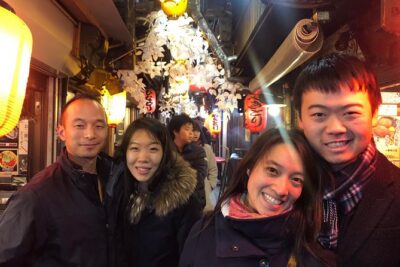
Tokyo Bar Hopping Tour in Shinjuku (All-You-Can-Drink + Dinner)
Read our review →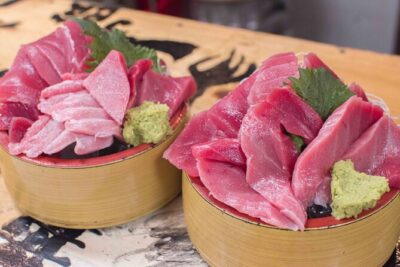
Best of Shinjuku: Izakaya Food Tour (4 Stops, 14+ Tastings)
Read our review →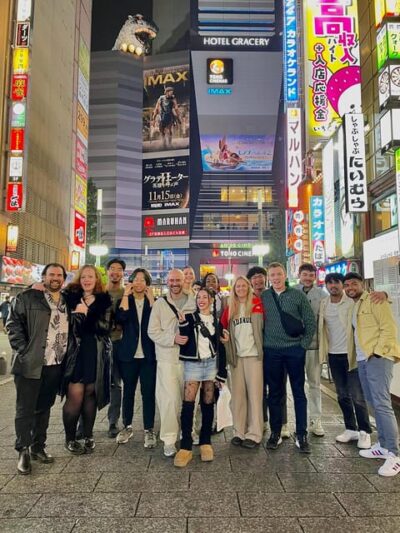
Shinjuku Local Bar and Izakaya Guided Walking Tour
Read our review →
Shibuya Meltdown Nightlife Tour: All-You-Can-Drink Bar Hopping
Read our review →

Tokyo Bay Yakatabune Dinner/Day Cruise with Japan Show and Drinks
Read our review →
Shinjuku Bar Hopping with All-You-Can-Drink & Dinner
Read our review →Browse the lists this tour appears in