
REVIEW · KYOTO BOOZY TOURS
Kyoto: Gion Evening Walk with Hidden Gems, Geisha & Sake
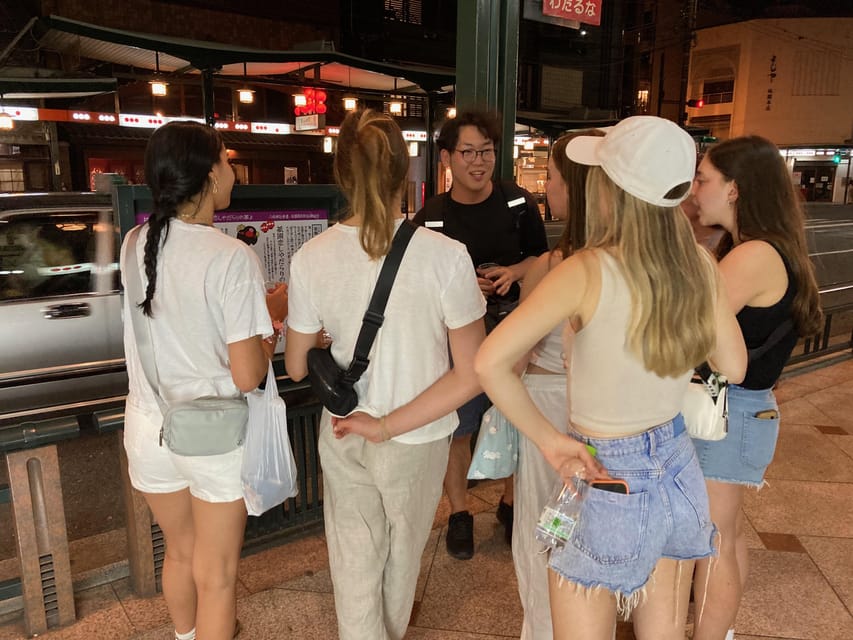
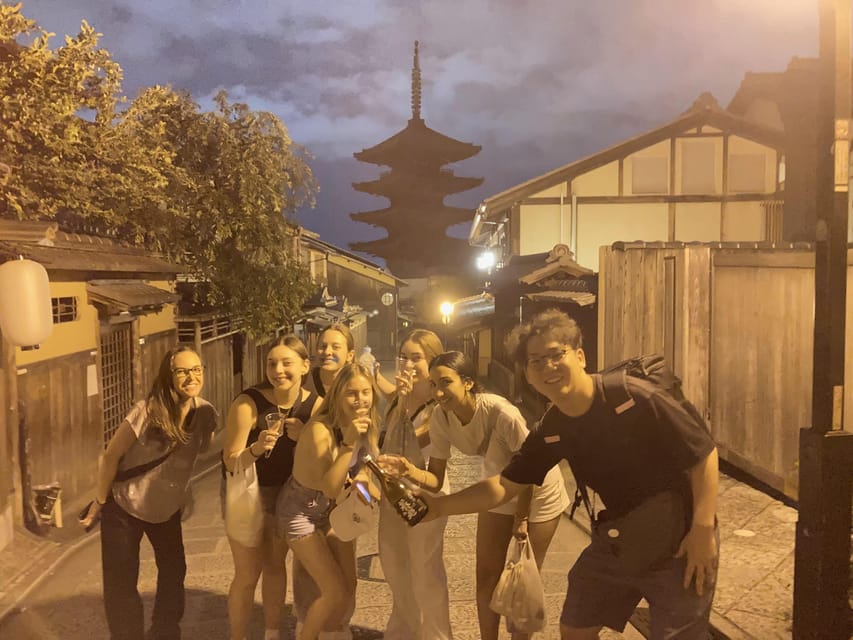
Gion changes after sunset. This 90-minute walk pairs quiet lantern-lit streets with useful stories about Geiko, Maiko, shrines, and Kyoto life. I like the small group, capped at 10 people, and the included local sake, which gives the evening a friendly, social feel. The main drawback is the tight schedule: you see several important places, but each stop receives only about 10 to 15 minutes.
I also like the relaxed route and the practical help with photos. Guides such as Shumpei and Nick have been praised for being warm, funny, and easy to talk with, which matters when you want more than a memorized speech. Just arrive on time, since the group may leave promptly from Shijo Kiyamachi.
Key points to know before booking
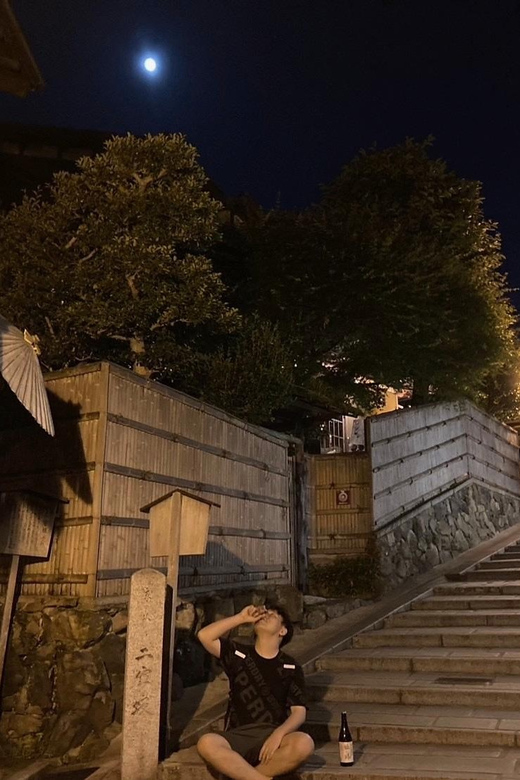
- Lantern-lit Gion after dark: See Hanamikoji Street, Ninenzaka, and nearby shrines when the daytime crowds have thinned.
- Small group of up to 10: The format gives you room to ask about Geiko, Maiko, food, anime, or what to do next in Kyoto.
- Sake included: You receive local sake to enjoy during the walk, adding a casual tasting element to the sightseeing.
- Four major stops in 90 minutes: The route includes Yasui Kompira-gū Shrine, Hōkan-ji Temple, Ninenzaka, and Yasaka Shrine.
- A respectful evening outing: Low voices are expected in residential and sacred areas, and comfortable shoes are essential.
Why Gion works best after sunset
Gion is famous for its traditional wooden buildings, tea houses, narrow lanes, and Geiko and Maiko culture. During the day, the area can feel crowded and highly photographed. At night, the mood changes. Lanterns soften the streets, the pace slows, and the old architecture has more room to speak for itself.
This tour is designed around that change. You are not rushing from one major attraction to another by vehicle. You walk through the district, stopping for short explanations and photographs. That makes the experience especially useful if you want an introduction to Gion before exploring more of Kyoto on your own.
The guide also adds context that is easy to miss. You learn about Geiko and Maiko traditions, local customs, and the difference between Shinto and Buddhist sites. The explanations are intended to be plain and conversational, not a long academic talk.
The included sake helps create a social tone, but it should not be treated as a serious tasting class. It is one cup during a walking tour, a pleasant extra rather than the main event. The group format also means you can chat with fellow participants, and some past groups continued for food or another drink after the walk.
More Sake Tastings in Kyoto
- 3-Hour Kyoto Insider Sake Brewery Tour with Tastings & Pairings
★ 5.0 · 917 reviews - Kyoto: Izakaya Bars Guided Walking Tour
★ 4.9 · 815 reviews - Kyoto: Insider Sake Brewery Tour with Sake and Food Pairing
★ 5.0 · 704 reviews
Meeting your guide in Shijo Kiyamachi
The meeting point is at Shijo Kiyamachi, close to the center of Kyoto’s evening activity. Look for a guide holding an Otatrip Guide sign between McDonald’s and the Japanese restaurant Kikunoi Roan, a little south along Kiyamachi Street.
Give yourself time to find this exact spot. The directions are specific, but busy streets and restaurant signs can still slow you down. The tour starts promptly, and a late group may have to catch up or miss the departure.
The walk finishes at Yasaka Shrine, not back at the starting point. That one-way route is useful because you can continue into Gion, head toward nearby restaurants, or make your own way to the next Kyoto sight. You should still check your route afterward, since the experience does not include transportation.
Hanamikoji Street and the first look at Gion
The opening portion takes you into Gion, including Hanamikoji Street, perhaps the district’s best-known lane. Traditional tea houses line the route, giving you a close look at the buildings associated with Kyoto’s entertainment districts.
This is where a guide can make a real difference. Without context, Hanamikoji can look like a handsome old street with closed doors. With an explanation of Geiko and Maiko life, the buildings and customs become easier to understand.
Keep your camera ready, but keep your manners ahead of your photographs. Gion is also a living neighborhood, and the tour specifically asks you to keep voices low around homes and sacred places. You may see Geiko or Maiko during your evening, but there is no guarantee. One past participant did see two, yet that should be considered a fortunate possibility rather than a promised feature.
The 15-minute Gion portion gives you an introduction rather than a complete study of the district. If you want a long look at tea house culture or a dedicated Geiko performance, this is not that kind of outing.
Yasui Kompira-gū and the power stone
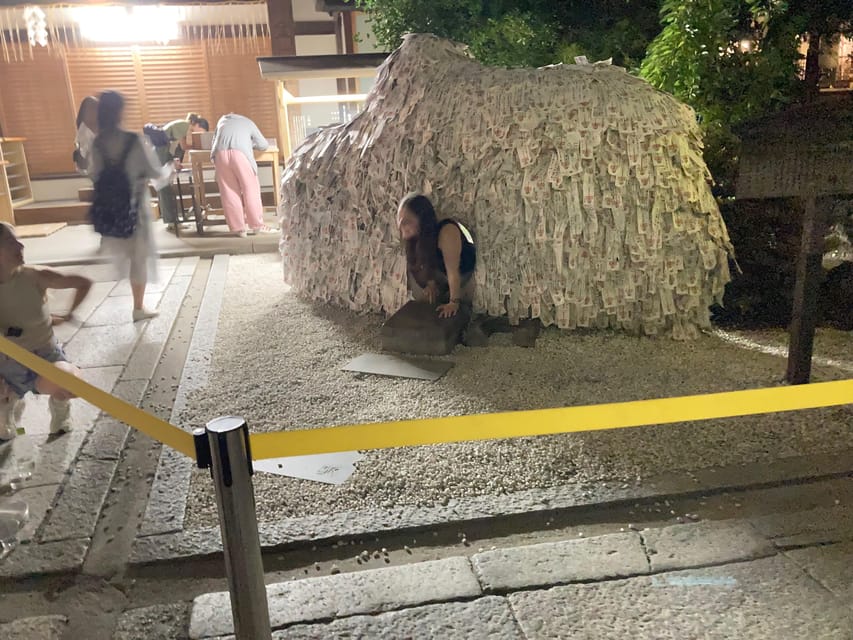
The next stop is Yasui Kompira-gū Shrine, visited for about 10 minutes. The shrine is known for its unusual power stone, connected with cutting unwanted ties and forming better ones.
That idea gives the stop a personal quality. You are not simply looking at another old religious building. The guide can explain how local people relate to the stone and how Shinto practices fit into everyday life.
This stop also helps broaden the evening beyond the familiar postcard views. Gion is not only tea houses and photogenic streets. It includes places where people come to pray, make decisions, and ask for change in their lives.
As with the other sacred sites, behave quietly and follow the guide’s instructions. The tour is short, so listen closely if you want to understand why this shrine is different from the larger landmarks later in the route.
More sake tastings around Kyoto:
- Kyoto Sake Brewery & Tasting Walking Tour
★ 5.0 · 623 reviews - 1.5-Hour Kyoto Insider Sake Experience with 7 Tastings & Pairings
★ 5.0 · 297 reviews - Kyoto: Insider Sake Experience with 7 Tastings and Snacks
★ 5.0 · 266 reviews - Kyoto: Afternoon Japanese Izakaya Cooking Class
★ 4.9 · 241 reviews
Hōkan-ji Temple and Yasaka Pagoda
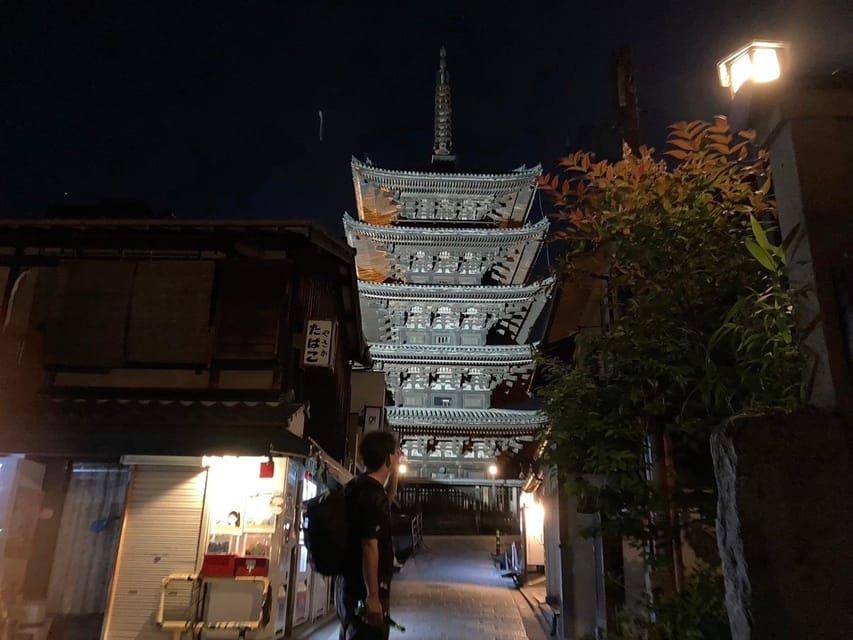
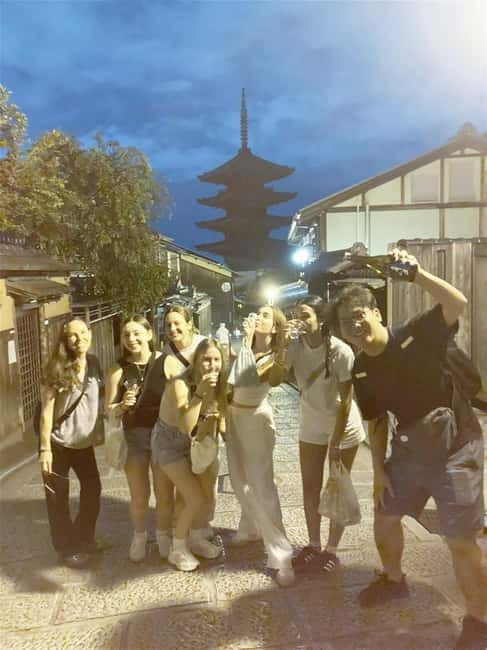
Hōkan-ji Temple is home to the five-story Yasaka Pagoda, one of Kyoto’s most recognizable sights. The tour allows around 10 minutes for a visit and photo stop.
The pagoda is especially appealing at night, when it is lit and the surrounding streets are less crowded than they can be during the day. This is one of the strongest reasons to choose an evening walk instead of a daytime circuit. You get a cleaner view and a calmer setting without spending extra time waiting for an open path through the crowd.
The short visit does have limits. You should expect to see the pagoda from the outside and hear about the temple, not a long temple tour. If your main goal is entering every historic building, this itinerary may feel too compact.
The guide’s photo help is useful here. You can ask for assistance with framing or have a group photo taken, rather than trying to manage the camera while keeping up with the walk.
Ninenzaka’s wooden streets

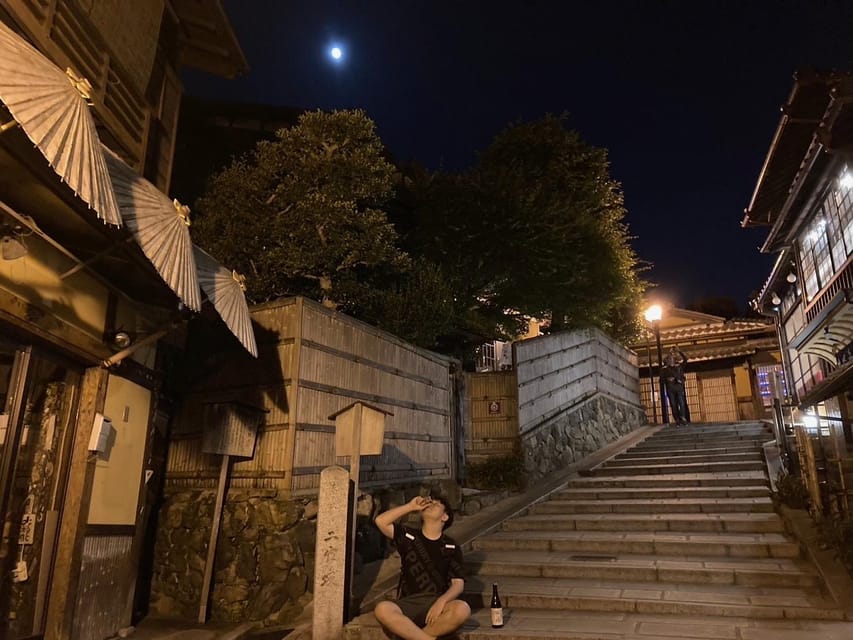
From Hōkan-ji, the route continues to Ninenzaka, a sloping cobblestone street lined with traditional wooden townhouses. In daylight, the area is a popular shopping and sightseeing stop. At night, the closed shops and subdued lighting create a more old-fashioned mood.
This is one of the tour’s most atmospheric sections. The slope and wooden facades give you a strong sense of Kyoto’s older street design, even though the visit is brief. A guide can point out what you are seeing and help connect the street to the wider Gion area.
Cobblestones and slopes are also the practical challenge here. Wear comfortable shoes with good support. People with back problems may find the walking route unsuitable, and anyone hoping for a completely flat stroll should take note.
Because the tour moves through public streets, conditions can vary. Rain may make the stones slick, but it can also leave the streets unusually quiet and reflective. Bring suitable clothing and keep your pace steady.
Ending at Yasaka Shrine
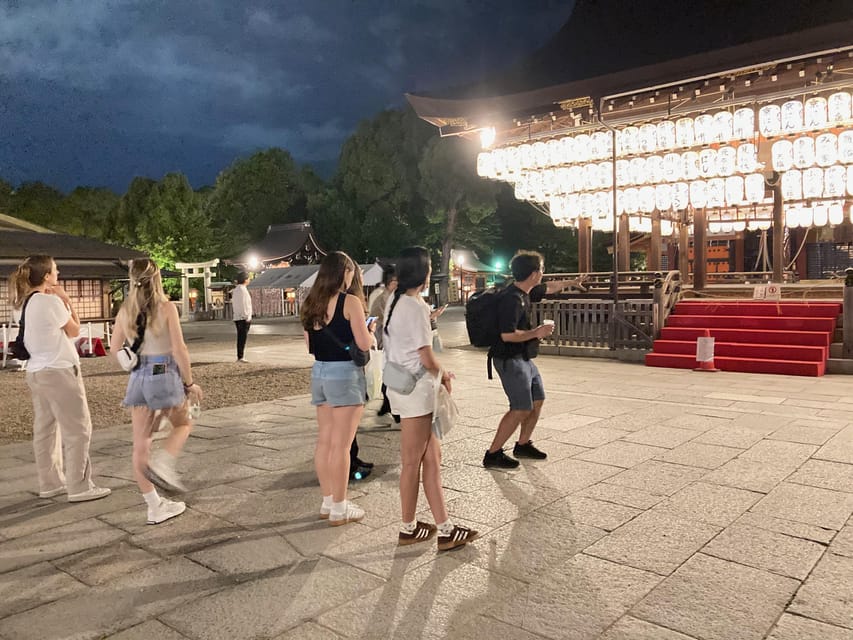
The final stop is Yasaka Shrine, where the tour ends. This major Shinto shrine has watched over Gion for more than 1,300 years, making it a fitting finish to an evening focused on the relationship between Kyoto’s sacred sites and its entertainment district.
The ending gives you a chance to see a grander religious setting after visiting the smaller Yasui Kompira-gū Shrine. That contrast is useful. You encounter different scales of worship without spending the whole evening inside formal lectures.
Yasaka Shrine is also a practical endpoint. From here, you can continue your night in Gion or make plans for dinner. The tour does not include a meal, but the guide may be able to suggest places to eat, and the small group makes it easy to ask for advice.
The route is compact and well planned, but it is not leisurely in the sense of spending half an hour at each site. The tour covers four main stops plus Gion in roughly 70 to 90 minutes. If you want long photo sessions, allow yourself another visit during daylight.
Sake, conversation, and the guide’s role
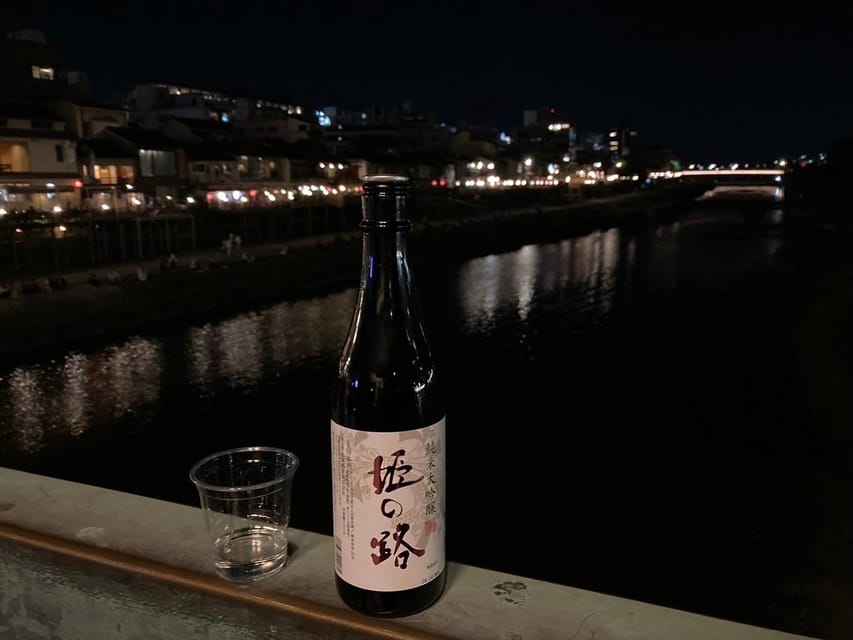
The sake is a simple but effective addition. Holding a cup while walking through lantern-lit streets makes the outing feel less formal than a standard sightseeing walk. It also gives strangers in the group an easy way to talk.
You should still drink responsibly. The tour is a walking experience, not a bar crawl, and the group needs to move through residential and sacred areas respectfully.
The guide is the most important part of the experience. Shumpei has been praised for answering a wide range of questions, from Kyoto’s past to anime, while Nick has been described as friendly, organized, and entertaining. These details suggest a flexible style rather than a fixed lecture.
That matters because your questions can shape the evening. You might ask about Geiko and Maiko customs, where to eat, what to see next, or how Shinto differs from Buddhism. The guide can also help you feel more comfortable in places that may seem intimidating to enter alone.
You should remember that guide quality can vary by departure. The activity is in English, and the group is limited to 10 people, which gives you a better chance of conversation than a large coach tour.
What $32 buys you
At $32 per person, this is a reasonable price for a short introduction to Gion. You are paying for an English-speaking guide, a planned route, photo assistance, and local sake, while also avoiding the time and uncertainty of figuring out the district alone.
The value is strongest if this is your first evening in Gion. You get an overview of the main streets and landmarks, then finish with a better sense of where you might return. The guide’s local suggestions can also help you decide what to do with the rest of your Kyoto stay.
The value is weaker if you already know Gion well or prefer to explore at your own speed. You could walk through several of these streets independently, and the tour does not include temple admission, a meal, or a long cultural demonstration.
For many people, the price is less about the sake and more about the setting and explanation. A cup of sake costs far less than $32. The useful part is having someone connect the streets, shrines, local customs, and stories in a short evening route.
Who will enjoy this walk most
I would recommend it to first-time Kyoto visitors who want an easy introduction to Gion without committing to a long tour. It also suits solo visitors and couples who like meeting a few people, asking questions, and seeing the district in a calmer mood.
Photography-minded visitors should appreciate the evening light and the guide’s help at key stops. People who want restaurant advice may also benefit from the informal conversation.
The tour is less suitable for anyone with back problems or anyone who dislikes walking on slopes and cobblestones. It is also not a good match if you want a full explanation of Geiko culture, a guaranteed Geiko or Maiko sighting, or extensive time inside temples.
Smoking is not allowed. Comfortable shoes are required, and respectful behavior is part of the experience, especially near homes and shrines.
Should you book it?
Book this walk if you want a friendly, compact introduction to Gion at night, with a small group, local sake, and enough cultural background to make the streets more meaningful. The $32 price is fair when you value a guide who can answer questions and help you navigate the district.
Skip it if you already know Gion, need a flat route, or prefer an unstructured evening. For everyone else, this is a smart first-night activity: short enough to fit around dinner, atmospheric enough to feel special, and practical enough to shape the rest of your Kyoto plans.
FAQ
Where does the Gion evening walk meet?
The meeting point is Shijo Kiyamachi. Look for a guide holding an Otatrip Guide sign between McDonald’s and Kikunoi Roan, a little south along Kiyamachi Street.
Where does the tour finish?
The walk finishes at Yasaka Shrine.
How long does the experience last?
The tour lasts 90 minutes, with the walking portion listed as approximately 70 to 90 minutes.
How much does the tour cost?
The listed price is $32 per person.
Is sake included?
Yes. A cup of local sake is included for you to enjoy during the walk.
What language is the tour conducted in?
The live tour guide speaks English.
How large is the group?
The group is limited to 10 participants.
Which places are included on the route?
The route includes Gion and Hanamikoji Street, Yasui Kompira-gū Shrine, Hōkan-ji Temple and Yasaka Pagoda, Ninenzaka, and Yasaka Shrine.
What should I bring?
Bring comfortable shoes, since the experience is a walking tour.
Is the tour suitable for people with back problems?
No. The experience is listed as unsuitable for people with back problems.
Can I cancel for a full refund?
Yes. You can cancel up to 24 hours in advance for a full refund.
Just added around Kyoto
- Private Sake Tasting in Central Kyoto with Sake Sommelier★ 5.0 · 13 reviews
- Kyoto: Izakaya Nightlife Tour with Local Guide★ 5.0 · 4 reviews
- Kyoto: Foodie Night Tour in Gion with 9 dishes + 6 Sake★ 4.4 · 26 reviews
- Kyoto: Izakaya Food Tour with Local Guide★ 5.0 · 4 reviews
- Kyoto Sake Brewery Tour★ 3.3 · 5 reviews
- Kyoto: Newly Opened Sake Tasting – Sanjo Chasuian★ 5.0 · 7 reviews
- Kyoto: Fushimi Sake District Tour with Boat Ride★ 4.6 · 10 reviews
- Kyoto: Beyond the Insider Sake Tasting Experience★ 5.0 · 30 reviews
Sake Tasting, compared.
Best of Shinjuku: Izakaya Food Tour (4 Stops, 14+ Tastings)
Read our review →
Shinjuku Local Bar and Izakaya Guided Walking Tour
Read our review →
1-Day Snow Monkeys, Zenko-ji Temple & Sake in Nagano
Read our review →
3-Hour Kyoto Insider Sake Brewery Tour with Tastings & Pairings
Read our review →

Nagano: Snow Monkeys, Zenkoji Temple & Sake Day Trip
Read our review →
Insider Sake Brewery Tour with Sake and Food Pairing
Read our review →Browse the lists this tour appears in