
REVIEW · TOKYO BOOZY TOURS
Sake Tasting Masterclass in Shinjuku (8+ Varieties with a Pro)
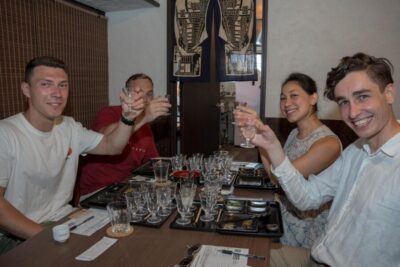
Sake makes more sense after one good tasting. This two-hour Shinjuku workshop takes you through eight or more varieties, brewing methods, labels, flavor styles, and food pairings with a sake sommelier. You also get snacks, practical buying advice, and a small-group setting where questions are easy.
I like the generous range of sake and the clear focus on useful skills. By the end, you should have a better idea of what to order in a Tokyo restaurant or what to look for in a bottle shop. I also like the friendly teaching style reported across sessions with guides such as Max, Joe, Tadashi, Megan, Cassy, Andrea, and Hawaii Joe.
The main caution is simple: this is a real drinking session, not a token sip at a museum. Some groups taste nine or ten kinds, and one first-time participant found the amount too much. Eat beforehand, drink water, and remember that sake has no spit bucket.
Key points to know before booking
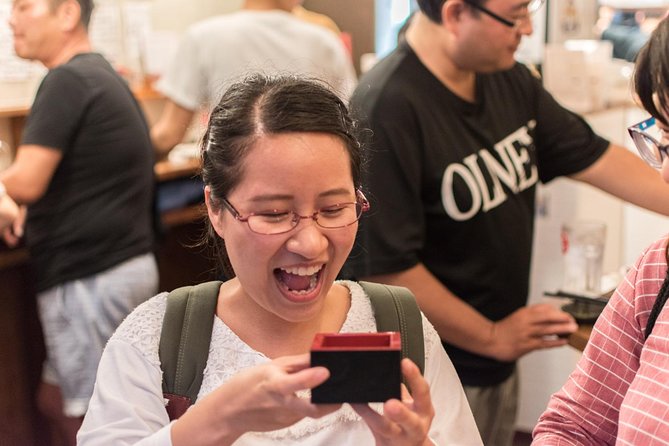
- At least six sake samples, often eight to ten: The exact selection can vary, but expect a broad tasting rather than a single style.
- Small groups capped at eight people: A group of six, or even a one-person booking, can make it easier to ask questions.
- Practical sake lessons: You learn how to read labels, compare flavor profiles, choose bottles, and order at restaurants.
- Snacks are included, but not a meal: The pairings help show how sake works with food, but you should eat before arriving.
- Held in Shinjuku at 1:00 pm: You meet at Ushinobi Shinjuku, Wagyu & Sake, in the NSK Building at 1-chōme-22-1 Hyakuninchō.
- Strong overall satisfaction: The experience has a 5 out of 5 rating from 271 ratings, with 99 percent recommending it.
What happens during the two-hour sake class
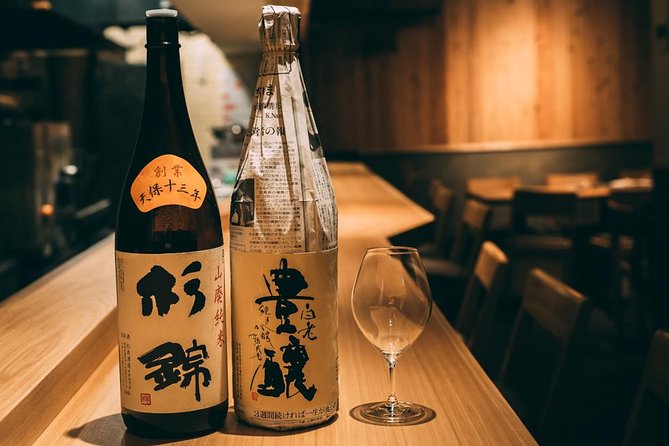
The session begins in Shinjuku, Tokyo’s central entertainment and dining district, at 1:00 pm. The meeting point is Ushinobi Shinjuku, Wagyu & Sake, located in the NSK Building, 201, 1-chōme-22-1 Hyakuninchō, Shinjuku City.
The workshop stays at the meeting point and finishes there. You do not spend the afternoon riding between breweries or restaurants. That keeps the focus on tasting and teaching, though it also means this is a classroom-style food experience rather than a walking tour of Shinjuku.
The opening section covers Sake 101. Your guide explains how sake is brewed, how production methods affect flavor, and how the drink developed in Japan. You also learn how to approach labels, which can look intimidating when you first enter a Japanese liquor shop.
The teaching is designed for beginners, but it does not stop at the basics. People who already enjoy sake can compare styles more carefully and ask about terms they have seen but never fully understood. One useful outcome is learning the language needed to describe a sake as light, full-bodied, modern, traditional, dry, or more aromatic.
More Sake Tastings in Tokyo
- Best of Shinjuku: Izakaya Food Tour (4 Stops, 14+ Tastings)
★ 5.0 · 1,863 reviews - Tokyo: Shinjuku Local Bar and Izakaya Guided Walking Tour
★ 4.9 · 1,794 reviews - Tokyo: Shinjuku Local Bar & Izakaya Crawl Tour
★ 5.0 · 890 reviews
Why tasting eight to ten styles matters
A single glass tells you very little about sake. It may be sweet, dry, fragrant, rich, clean, or gently flavored, but without comparison it is hard to know what is typical and what is unusual.
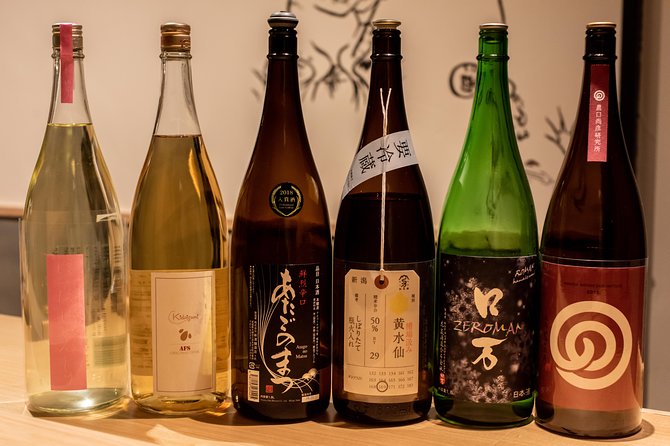
This class places several styles side by side. The stated minimum is six samples, while several sessions reached nine or ten. That variety lets you identify patterns in aroma, texture, sweetness, acidity, and finish. You create your own tasting chart, which gives you a simple record of what you liked and why.
I consider that one of the strongest parts of the experience. You are not simply told that one bottle is junmai or another is daiginjo. You get a chance to taste the difference and connect the words on the label with what is in your glass.
The selection may include rare sake, according to the details shared about the sessions, but the exact bottles are not fixed. That is good for repeat value, although you should not book expecting a specific brand or vintage.
Food pairings turn theory into something useful
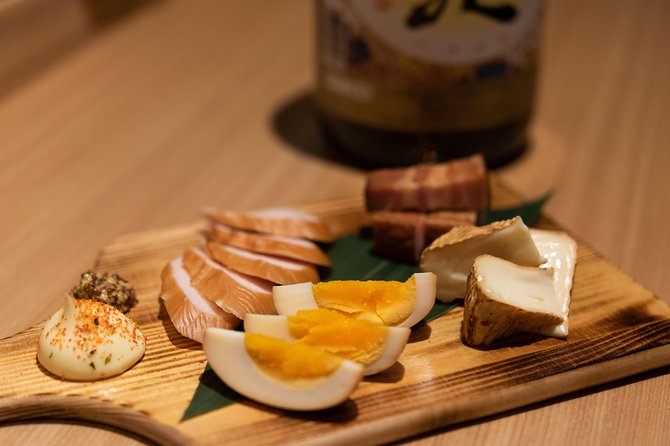
Small snacks are served alongside the sake. They are described as locally sourced and specially chosen to complement the drinks. This is not a full-size meal, so plan lunch before you arrive.
The pairings matter because sake is usually enjoyed with food, not in isolation. A particular style may taste sharper with one snack and rounder with another. Seeing that change helps you understand why a restaurant’s sake recommendation can make sense even when the bottle sounds unfamiliar.
The snacks also provide a little balance during the tasting. Still, do not treat them as enough food to prevent intoxication. Several samples over two hours can catch up with you quickly, especially if you are new to sake.
My practical advice is to eat a proper meal beforehand and have water during or after the class. The class is scheduled in the afternoon, so it can work well as a first activity before an evening meal, but do not plan a demanding attraction immediately afterward unless you know your alcohol tolerance.
The guides make or break the afternoon
The strongest praise goes to the hosts rather than to the room or the format. Max is repeatedly described as passionate, entertaining, and able to explain history, brewing, and tasting technique without making the session stiff. Joe receives similar credit for mixing clear instruction with humor and for giving useful food and restaurant suggestions around Japan.
Tadashi is praised for preparation, warmth, and practical recommendations. Megan is described as friendly and patient with questions, while Cassy is credited with making the class lively and easy to enjoy. Andrea receives praise for explaining how brewing affects body and style, and Hawaii Joe is singled out for his energy and help with choosing sake in shops and restaurants.
You should understand one limitation: the guide is assigned by the operator, so you cannot assume you will have a particular host. Some comments strongly favor Max, but a request may not guarantee his availability. The larger pattern is encouraging: the teaching style appears to be personal, relaxed, and social across different guides.
That matters in a tasting class. Technical terms can become a blur when they arrive too quickly. A warm guide who welcomes basic questions makes it easier to say that you do not understand a label or do not like a sample.
More sake tastings around Tokyo:
- Shibuya: Local Bar & Izakaya Crawl
★ 4.9 · 354 reviews - Ramen and Sushi Cooking Class with Sake Pairing Set in Tokyo
★ 5.0 · 291 reviews - Sake Omakase in Tokyo: Guided Tasting by Certified Sommeliers
★ 5.0 · 239 reviews - Tokyo: The Best of Izakaya in Shinjuku Food & Cultural Tour
★ 4.9 · 221 reviews
Small groups keep the class personal
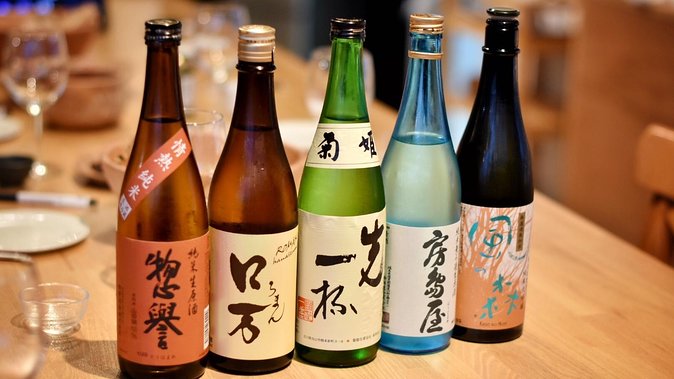
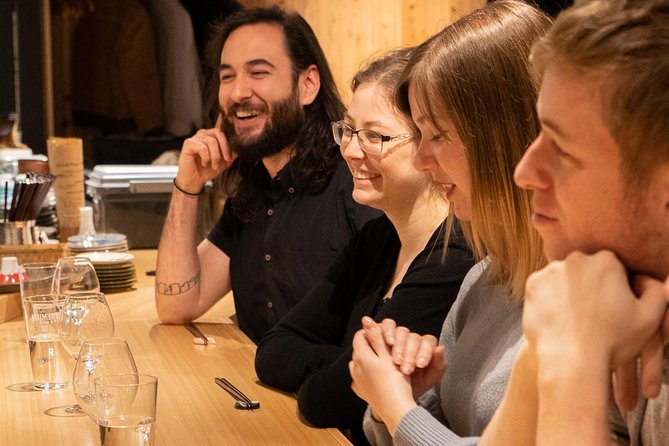
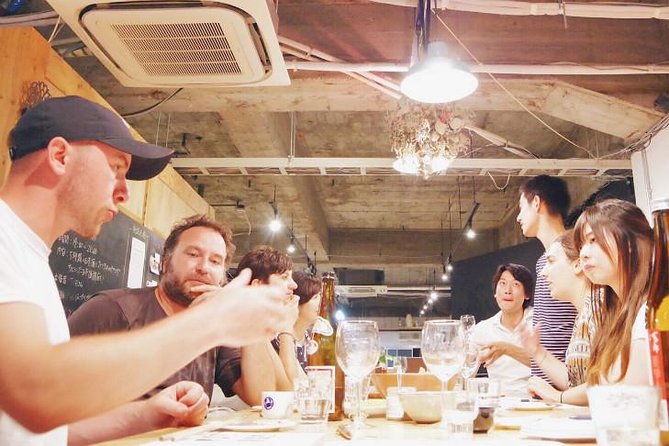
The maximum group size is eight people. That is a useful limit for this kind of workshop. You can hear the explanations, compare impressions with the people beside you, and ask questions without waiting through a long line of raised hands.
A group of six has been described as intimate and easy to manage. On at least one occasion, a person booking alone received a private tasting rather than having the session cancelled. That suggests the operator may run the experience even with very low attendance, though you should not assume every date will feel private.
The social side is part of the appeal. You may meet Japanese sake enthusiasts or other visitors interested in food and drink. If you prefer a silent, highly formal tasting, the upbeat tone may feel casual. If you like learning over conversation, it should suit you well.
The useful part: ordering and buying sake
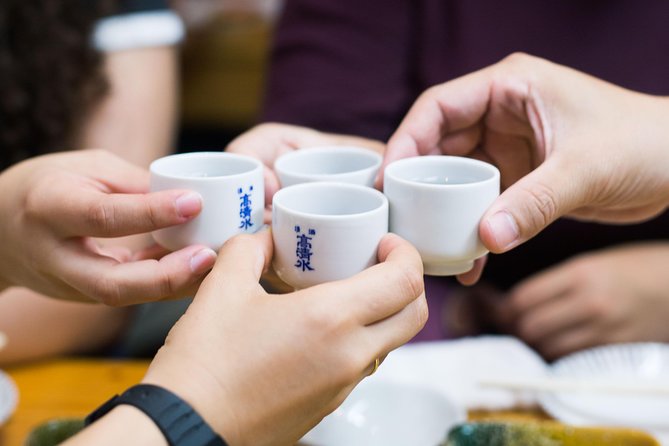
Many tasting classes leave you with a pleasant buzz and little practical knowledge. This one puts real attention on what happens after the class. You learn tips for buying sake, ordering in restaurants, and using labels to narrow down your choices.
That can be especially helpful in Japan, where a restaurant list may offer several unfamiliar names with limited English explanation. You will not become a sake expert in two hours, but you should be better prepared to ask for a style you like instead of pointing at a random bottle.
Several sessions included a take-home reference sheet. Use it as a starting point when you shop or order dinner. One particularly useful result is confidence with terms such as junmai and junmai daiginjo, which can help you make a more informed choice than simply asking for the house sake.
The class also gives you a way to describe your preferences. Saying you prefer a lighter, cleaner sake or a fuller, more fragrant style is far more useful than saying only that you like or dislike sake.
Price and value at $72.29
At $72.29 per person, this is not the cheapest way to drink sake in Tokyo. You could buy a bottle or order several small pours for less, especially if you already know what you like.
The value comes from the range and instruction. You receive beverages, snacks, a two-hour lesson, explanations from a sake specialist, and guidance that can improve the rest of your food-and-drink choices in Japan. If you are curious about sake but would otherwise order blindly, that practical help adds real worth.
The class is also more useful early in a Japan trip. A session on your first or second day can give you the confidence to choose sake at later meals. If you already have strong sake knowledge, the value depends more on the selection and the quality of conversation with your guide.
I would call the price fair for a small-group tasting with this number of samples, but only if you are comfortable with alcohol. It is poor value for someone who wants a full meal, a brewery visit, or a non-drinking cultural activity.
Location, timing, and small practical details
The experience begins at 1:00 pm in Shinjuku City and is near public transportation. Use the full meeting address rather than relying only on a general map pin: Ushinobi Shinjuku, Wagyu & Sake, NSK Building, 201, 1-chōme-22-1 Hyakuninchō.
One past booking caused confusion because the person initially went to the wrong place. Allow extra time to check the address and identify the correct restaurant and building. The activity ends back at the meeting point, so you can continue exploring Shinjuku afterward without arranging a return transfer.
There is no hotel pickup or drop-off, and transportation to other attractions is not included. That is easy to handle in central Tokyo, but you are responsible for reaching the class yourself.
The minimum drinking age is 20. If you have food restrictions, contact the operator at least one week before the date. That advance notice matters because the snacks are selected as part of the tasting rather than served as a separate meal.
Mobile tickets make the booking simple. Free cancellation is available up to 24 hours before the start time. Within 24 hours, the payment is not refunded and changes are not accepted.
Who should book this Shinjuku sake experience?
I would recommend it to a first-time sake drinker who wants a friendly introduction without having to decode a bottle shop alone. It also suits food-focused visitors, couples, solo diners, and small groups who enjoy talking while they taste.
It is a particularly smart choice if you are starting a Japan trip. The lessons about labels, flavors, and pairings can improve your choices in izakaya, restaurants, department-store food halls, and liquor shops later on.
Experienced sake drinkers may still enjoy the variety and the chance to compare bottles, especially if rare selections appear. But if you already know your preferred styles and production terms, the basic teaching may feel slow. Ask yourself if the social setting and range of samples are worth the price.
I would not choose it if you need a substantial lunch, dislike alcohol, or want to visit a sake brewery. I would also skip it if you have a packed afternoon and cannot give the class two relaxed hours.
Final verdict: a practical sake lesson with a lively edge
This Shinjuku masterclass does more than hand you a few samples. It shows you how sake is made, how styles differ, how food changes the drink, and how to make a better choice at your next meal.
The best parts are the eight to ten-sample range, small group size, and hosts who make technical material approachable. The main weakness is the alcohol load. Six samples is the minimum, and some sessions reach ten, so lunch and water are not optional advice.
Book it if you want a social, useful introduction to Japanese sake and can handle a serious afternoon tasting. Skip it if you are looking for a full meal, a brewery tour, or a quiet non-alcoholic cultural activity. For most curious food lovers, this is a smart early-trip lesson that pays off every time you order sake afterward.
FAQ
Where does the sake tasting take place?
The meeting point is Ushinobi Shinjuku, Wagyu & Sake, NSK Building, 201, 1-chōme-22-1 Hyakuninchō, Shinjuku City, Tokyo 169-0073, Japan.
What time does the experience start?
The class starts at 1:00 pm.
How long does the sake class last?
The activity lasts approximately two hours and ends back at the meeting point.
How many kinds of sake will I taste?
You will taste at least six varieties. Some sessions include eight, nine, or ten different sakes.
Are food and drinks included?
Yes. Beverages and snacks are included, but the snacks are not a full-size meal.
What is the minimum drinking age?
The minimum drinking age for this activity is 20.
Can I cancel for a full refund?
Yes, if you cancel at least 24 hours before the scheduled start time. Cancellations or changes made within 24 hours are not refunded or accepted.
Just added around Tokyo
- Tokyo: Toshimaya Sake Brewery Tour with Sake Tasting★ 5.0 · 6 reviews
- Tokyo: Sushi Cooking Class with Sake Tasting★ 4.8 · 55 reviews
- Tokyo: The Best Izakaya Tour in Shibuya★ 4.7 · 15 reviews
- Tokyo: Shinjuku Izakaya and Golden Gai Bar Hopping Tour (2h)★ 4.9 · 67 reviews
- Tokyo: Shinjuku Nightlife Tour with Karaoke and Bar Hopping★ 4.1 · 4 reviews
- Tokyo: Sushi and Ramen Cooking Class with Sake Pairing Set★ 5.0 · 81 reviews
- Tokyo: Shinjuku Hidden Japanese Bar Tour (Neon Light City)★ 5.0 · 4 reviews
- Tokyo: Shinjuku Golden Gai Bar Hopping that only locals know★ 5.0 · 5 reviews
Sake Tasting, compared.
Best of Shinjuku: Izakaya Food Tour (4 Stops, 14+ Tastings)
Read our review →
Shinjuku Local Bar and Izakaya Guided Walking Tour
Read our review →
1-Day Snow Monkeys, Zenko-ji Temple & Sake in Nagano
Read our review →
3-Hour Kyoto Insider Sake Brewery Tour with Tastings & Pairings
Read our review →

Nagano: Snow Monkeys, Zenkoji Temple & Sake Day Trip
Read our review →
Insider Sake Brewery Tour with Sake and Food Pairing
Read our review →Browse the lists this tour appears in