
REVIEW · OSAKA BOOZY TOURS
Osaka Local Bar Crawl in Dotombori & Uranamba Area
Osaka gets more interesting after dark. This three-hour walk through Dotombori and Uranamba pairs local bars with Osaka staples, temple lore, and the easy company of a small group. I like the local izakaya stops, where you may try yakitori, karaage, gyoza, sashimi, sake, and other drinks. I also like the way the route adds culture, from the Glico sign to Hozenji Temple, instead of making the night only about alcohol.
The main catch is cost clarity. The $26.53 booking price does not include drinks or dinner, and the final bill can rise sharply depending on the venues and what you order. You should treat the advertised price as the guiding fee, not the full cost of the evening.
Key points at a glance
- Starts beneath Osaka’s famous Glico sign: Your guide explains the history behind the city’s best-known neon landmark.
- Hozenji Temple adds a quiet pause: A small temple near Dotombori gives you a quick look at a calmer side of the district.
- Uranamba is the food-and-drink heart of the route: Expect local izakaya dishes such as yakitori, karaage, gyoza, and sashimi.
- Guide quality is a major strength: Guides including Yui, Hitomi, Kosuke, Lala, Naoko, Taiga, Soma, and Yuta have earned especially warm praise for their friendliness and local advice.
- You pay separately for drinks and food: Bring room in your budget, and ask about prices before ordering.
- The group can reach 15 people: That is social enough for meeting others, but not so large that the guide should lose control of the evening.
Starting beneath the Glico sign
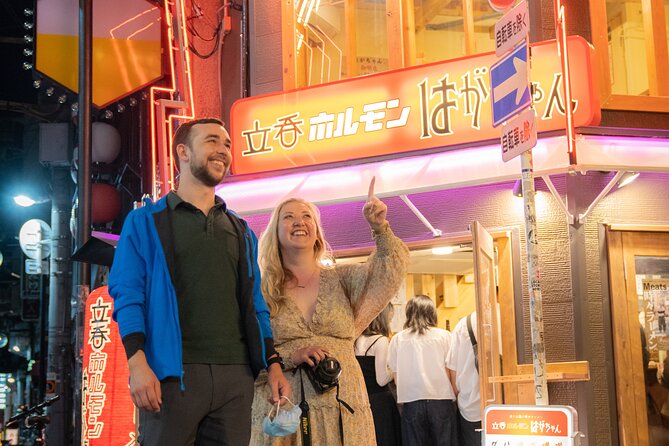
The meeting point is the Dotonbori Humanity Song Monument at 1 Chome-10 Dotonbori. From there, the walk heads toward the famous Glico running man sign, one of Osaka’s most photographed sights.
This opening works well for a first evening in the city. The Glico sign is more than a bright backdrop for photos. Your guide explains its place in Osaka’s popular culture and why it became such a lasting symbol of the area. That short talk gives the neon canyon around you a bit more meaning.
You should arrive ready to walk and eat later, rather than treating the meeting point as a full sightseeing stop. The Glico explanation is brief, but it helps you get oriented in one of Osaka’s busiest visitor districts.
The guide also sets the tone for the night. Guides such as Yui have been praised for clear English and useful neighborhood advice, while Hitomi has been praised for making even a one-person booking feel personal. English ability can vary by guide, but the strongest guide experiences add far more than directions between bars.
More Bar Crawls in Japan
- Osaka: Namba Pub Bar Crawl with a Local Guide
★ 4.9 · 424 reviews - Osaka: Bar-Hopping Night Tour in Namba
★ 4.7 · 117 reviews - 3.5h Osaka Night guided Local Bar Hopping, Sake & Karaoke
★ 5.0 · 27 reviews
Hozenji Temple and the quieter side of Dotombori
The next stop is Hozenji Temple, close to the bright signs and restaurant fronts of Dotombori. The contrast is the point. One moment you are surrounded by Osaka nightlife, and the next you are in a small temple setting that feels much calmer.
Your guide explains basic temple etiquette, why people visit Hozenji, and what makes the site important to local life. The temple stop is not a long religious tour. Think of it as a compact cultural pause before the food and drink begin.
You may also notice that the nearby streets feel closer in mood to parts of Kyoto than to the giant signs of central Dotombori. That change in atmosphere is one of the best reasons to take the walk with a guide. You could pass the temple on your own, but you might not stop or understand why it matters.
Keep your expectations measured. The temple visit is short, and one account describes only a quick photo stop at a shrine-like location. If you want a detailed temple tour, this experience will feel light. If you want a useful cultural breather between bars, it fits the evening well.
Uranamba izakaya: yakitori, karaage, and sake
The first main food stop takes you into Uranamba, an area known for local drinking spots and compact izakaya. The name refers to the area behind or around Namba, away from the broadest tourist paths. Its appeal comes from small restaurants, close tables, and a more everyday Osaka feel.
The planned food selection includes yakitori, karaage, and sake. Yakitori gives you grilled chicken in small portions, while karaage offers the crisp fried chicken Osaka-style izakaya experience many first-time visitors hope to find. Your guide also helps explain which foods pair well with particular drinks.
This pairing lesson is a useful part of the tour. Instead of ordering at random, you get some context for why salty fried foods work with beer or sake and how different drinks change the taste of a dish. The goal is not a formal tasting class. It is practical guidance you can use later in Japan.
Food portions appear to vary by route and venue. Some people have found the meal more generous than expected, with several dishes across the night. Another experience included takoyaki cooked at the table, while another found the food limited and uninspiring. That difference matters. The exact menu is not guaranteed, so do not book this as a fixed dinner with a promised number of dishes.
The takoyaki possibility is worth noting. One guide helped the group make octopus balls at the table, and another guide, Lala, prepared them especially well for the group. This kind of stop can be a lot of fun if you like hands-on food. If you prefer a full serving of grilled meat, you may find the food more snack-sized than expected.
A second Namba stop for gyoza and sashimi
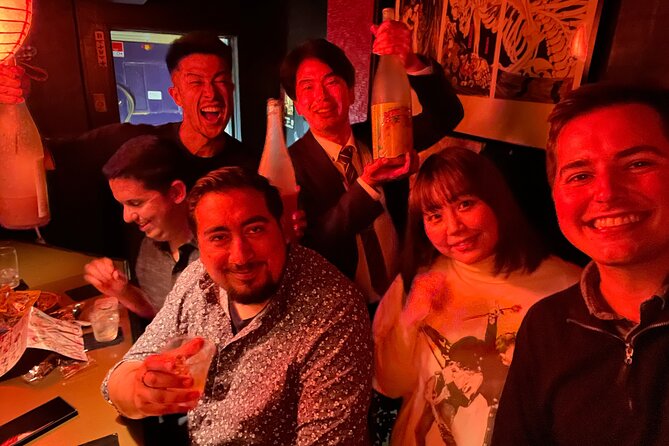
The route then continues to another local izakaya in the Namba area. The stated timing for this section is about 1 hour and 20 minutes, making it the longest food-and-drink stop in the plan.
Gyoza and sashimi are listed among the possible dishes. That gives you a wider sample of Japanese bar food than the first stop, moving from grilled and fried items to dumplings and raw fish. Drinks are also part of the stop, but they are not included in the booking price.
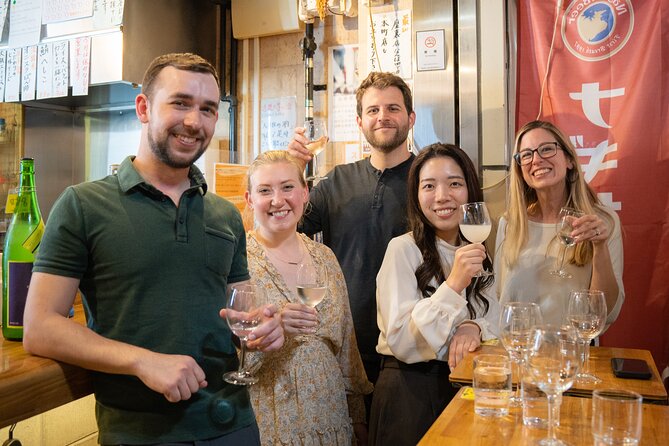
This is where the social side of the experience usually matters most. You are seated with other people, sharing dishes and talking over drinks. Several guides have been praised for making the group comfortable, offering Osaka tips, and helping people connect. A solo booking can still work well, especially if you want company for your first night.
You should arrive with an appetite. The experience is designed around eating as you drink, and the food may add up across the evening. At the same time, the word dinner can be misleading if you expect a restaurant meal with a set menu. The safer approach is to view it as a guided bar crawl with substantial snacks, then decide later if you need another meal.
More bar crawls around Osaka:
- Osaka Bar Hopping | Explore Hidden Bars & Izakayas in Namba
★ 4.7 · 18 reviews - Osaka: Unforgettable Bar Hopping in Kyobashi!
★ 5.0 · 4 reviews - Bar hopping: Create lasting memories with TOMODACHI guides!
★ 5.0 · 4 reviews - Pedal Bar Crawl of Old Town Scottsdale
★ 5.0 · 4,254 reviews
What the three-hour timing really means
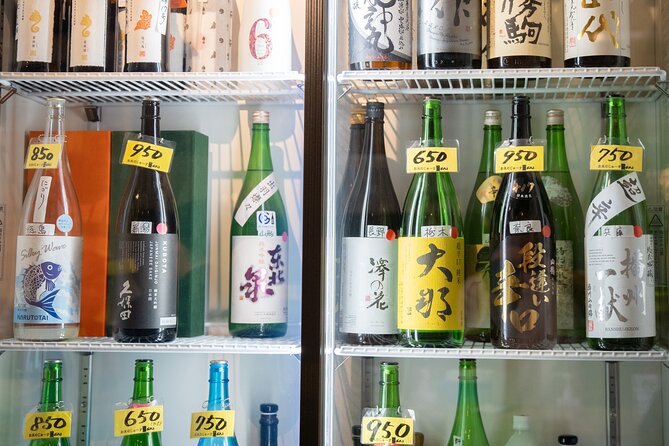
The activity lasts about three hours and ends back at the meeting point. The schedule includes the Glico explanation, Hozenji Temple, walking between areas, and time at two main izakaya stops. Individual routes can include three or four venues, according to accounts of the experience, so the exact rhythm may change.
The itinerary lists about 40 minutes at the Uranamba stop and about 80 minutes at the Namba stop. Add the walking and cultural introductions, and the three-hour estimate makes sense. You are not spending a full evening at one restaurant. You are moving from place to place, sampling small dishes, and getting a quick sense of several nightlife areas.
Some routes have included the Misono Building, a curious complex with many tiny bars. This was a highlight for several people because it offers a glimpse of Osaka nightlife that is difficult to find without local help. The building has a strange, old-fashioned feel, with very small bar rooms and a somewhat adult-nightlife atmosphere. It may not suit everyone, but it is memorable.
Do not assume every booking will include the same final bar. The stop list can change, and drink prices can vary sharply from one venue to another. Ask your guide what is included before you order at the later stops.
The real price: $26.53 is only the starting point
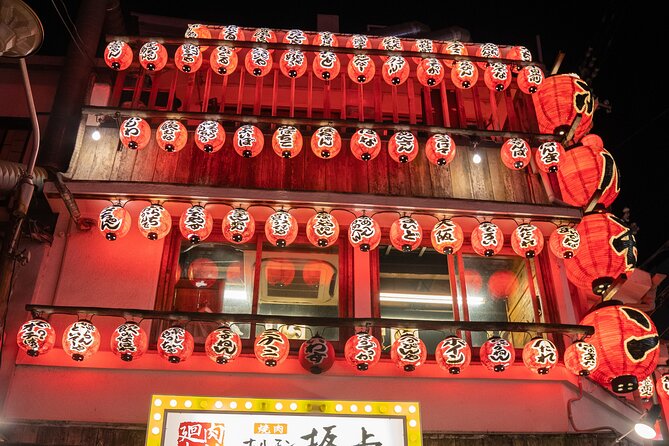
The advertised fee is $26.53 per person. That covers about three hours with a local guide, but alcoholic drinks and dinner are excluded. Admission fees are listed as free, which means there is no separate ticket charge for the temple or walking portions.
The value depends on what you want from a bar crawl. If you mainly want someone to take you to local areas, explain the food, and help you get through the first night in Osaka, the guiding fee is reasonable. A guide can save you the awkwardness of choosing a small izakaya without Japanese language skills, especially when menus are brief or unclear.
The drinks are the part that needs care. One account described paying around ¥2,000 per person at one venue, about ¥2,500 at another, and additional money at a third. Another account reported drinks costing as much as ¥3,000 each at a later bar. These figures are not a fixed tour charge, but they show how quickly the evening can become expensive.
I would set a separate drinks budget before you go. Ask what each stop normally costs, check the menu, and order at your own pace. If a drink is not included, do not assume the guide fee covers it. This is especially important at small specialty bars, where prices may be higher than at a standard izakaya.
The tour can still offer good value if you sample several foods, enjoy a few drinks, and use the guide’s neighborhood advice during the rest of your stay. It offers weaker value if you expect all food and alcohol to be included for $26.53.
Guides make or break the evening
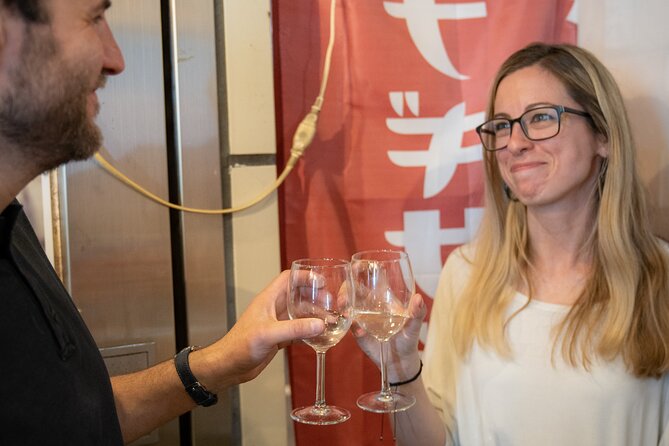
The guide is the strongest part of this experience. Yui has been praised for her English and recommendations. Hitomi has made both small and one-person groups feel welcome. Kosuke has provided useful history and cultural explanations, while Lala has added a personal touch through table-side takoyaki.
Taiga has been praised for keeping the group engaged and offering extra Osaka suggestions after the scheduled route. Naoko has been especially well received for her kindness, and Soma and Yuta have been praised for making the night social and relaxed.
That range of guide names also tells you something practical: your experience may depend heavily on who leads your departure. The best guides do not simply point out the next restaurant. They explain local customs, help with ordering, watch the group’s comfort, and suggest places you can return to later.
This is a social activity, not a private food tour. The group may include up to 15 people, so conversation and group energy are part of the value. If the group is small, you may get more personal attention. If it is full, the evening can feel more like a friendly night out with new companions.
Who will enjoy this Osaka bar crawl
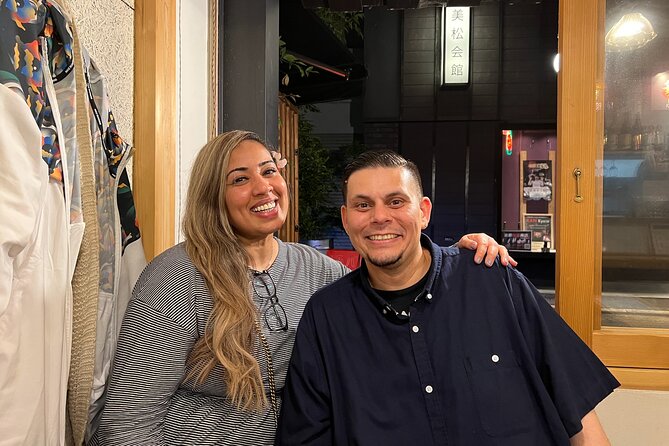
I would recommend it to you if this is your first night in Osaka and you want help getting oriented. The combination of Dotombori landmarks, Hozenji Temple, Uranamba lanes, and local bars gives you a useful first look at the city after dark.
It also suits solo visitors, couples who want an easy social evening, and people who enjoy trying several dishes rather than sitting through one long dinner. The guides’ local recommendations can help you return to the areas later on your own.
You may want another plan if you do not drink alcohol, need a fixed meal, or dislike paying separately at each venue. The tour does not include alcoholic beverages or dinner, and the food selection can change. You should also be comfortable walking between stops in busy central Osaka.
The experience is not ideal for anyone seeking a polished cocktail crawl. Its appeal is small bars, casual izakaya food, local conversation, and the odd character of places such as the Misono Building. Some venues may feel cramped or unusual. That is part of the point, but it will not suit every taste.
Small details that help you prepare
The meeting point is near public transportation, and the tour finishes where it begins. A mobile ticket is provided, and confirmation arrives when you book.
Most people can take part, and service animals are allowed. The maximum group size is 15. The activity requires a minimum number of bookings, so a cancellation for that reason brings the choice of another date or experience, or a full refund.
You can cancel for a full refund up to 24 hours before the start time. Inside that 24-hour window, refunds and changes are not accepted. Use the local Osaka time when checking the deadline.
Should you book the Dotombori and Uranamba crawl?
Book it if you want a friendly introduction to Osaka nightlife, local food guidance, and places you might not choose on your own. The best version of the evening includes a warm guide, several useful food stops, and a look at Uranamba or the Misono Building that gives you more than a standard Dotombori photo walk.
Go in with realistic expectations. Your $26.53 covers the guide and experience, not the full night of eating and drinking. Bring extra money, ask about prices, and think of the food as shared bar dishes rather than a guaranteed dinner.
For a first evening in Osaka, I think the tour is a sensible choice if you value local context and company more than a fixed menu. If you mainly want the cheapest possible drinks, explore on your own instead.
FAQ
How long does the Osaka bar crawl last?
The experience lasts about three hours, including the cultural stops, walking, and visits to local izakaya in Dotombori, Uranamba, and Namba.
Where does the tour begin?
It begins at the Dotonbori Humanity Song Monument, 1 Chome-10 Dotonbori, Chuo Ward, Osaka, 542-0071, Japan.
Where does the tour end?
The activity ends back at the meeting point.
Are drinks included in the price?
No. Alcoholic beverages are not included, so you pay separately for drinks.
Is dinner included?
No. Dinner is not included, although the route features foods such as yakitori, karaage, gyoza, sashimi, and other izakaya dishes.
How many people can join the tour?
The maximum group size is 15 people.
Can I cancel for a refund?
Yes. You can cancel at least 24 hours before the start time for a full refund. Cancellations or changes made less than 24 hours before the start time are not accepted, and no refund is provided.
Just added around Osaka
- Same Day OK! Osaka: Local Food, Izakaya & Local Bites Tour!★ 4.8 · 17 reviews
- Osaka Sake Tasting with Takoyaki Cooking★ 5.0 · 156 reviews
- Osaka: Unforgettable Bar Hopping in Kyobashi!★ 5.0 · 4 reviews
- 3.5h Osaka Night guided Local Bar Hopping, Sake & Karaoke★ 5.0 · 27 reviews
- Osaka: Okonomiyaki Cooking Class with Beer or Soft Drink★ 4.9 · 9 reviews
- Osaka: Bar-Hopping Night Tour in Namba★ 4.7 · 117 reviews
- Osaka: Cooking Class & Sake Tasting with Local Market Visit★ 4.8 · 31 reviews
- Osaka Bar Hopping | Explore Hidden Bars & Izakayas in Namba★ 4.7 · 18 reviews
Bar Crawls and Bar Hopping, compared.
Tokyo Bar Hopping Tour in Shinjuku (All-You-Can-Drink + Dinner)
Read our review →
Bar and Club Crawl to 5 Central London Venues
Read our review →
Shibuya Meltdown Nightlife Tour: All-You-Can-Drink Bar Hopping
Read our review →
Orange Bar Crawl with 5 Free Shots & VIP Club Entry
Read our review →
Osaka Bar Hopping Night Walking Tour in Namba (3 bars, 6 tastes)
Read our review →Browse the lists this tour appears in