
REVIEW · OSAKA BOOZY TOURS
Same Day OK! Osaka: Local Food, Izakaya & Local Bites Tour!
Osaka eats best after dark. This three-hour walking tour takes you from Namba Walk into local restaurants, small bars, and atmospheric side streets, with an English-speaking guide helping you order and get oriented. I especially like the small group of up to eight and the freedom to choose your own food and drinks instead of paying for a fixed menu. I also like that the route includes famous sights such as the Glico Sign, then turns toward less obvious izakayas.
The main catch is easy to miss: food and drinks are not included in the $26 price. You pay for each dish and drink as you go. That can be a real advantage if you eat lightly or have strong preferences, but it also means your final cost depends on your appetite. One other point to consider is guide style. Miki, Shehab, and Buchi earned especially warm praise for their friendly help and local recommendations, but one guide did not offer much food background, and one group had to manage ordering and payment at the final restaurant.
Key points at a glance
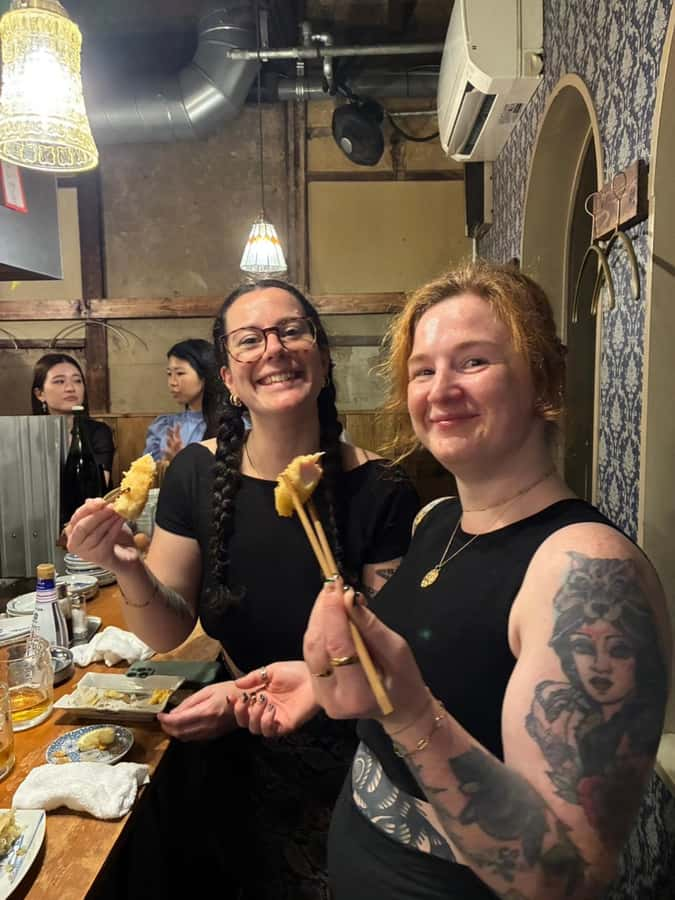
- A flexible Osaka food crawl: Choose what you want to eat and how much you want to spend.
- Three local food stops: The route includes two restaurants and a local bar, with roughly 40 to 45 minutes at each.
- Namba beyond the main drag: Walk through Ukiyo Koji, Hozenji Yokocho, and local streets around Dotonbori.
- A small English-speaking group: With a limit of eight people, the guide can respond to your tastes and food needs.
- Bring cash and comfortable shoes: The tour is on foot, and payments for food and drinks are separate.
- Good guide potential: Miki, Shehab, and Buchi were praised for friendly company, local connections, and adapting the experience to dietary needs.
Why this tour makes sense in Namba
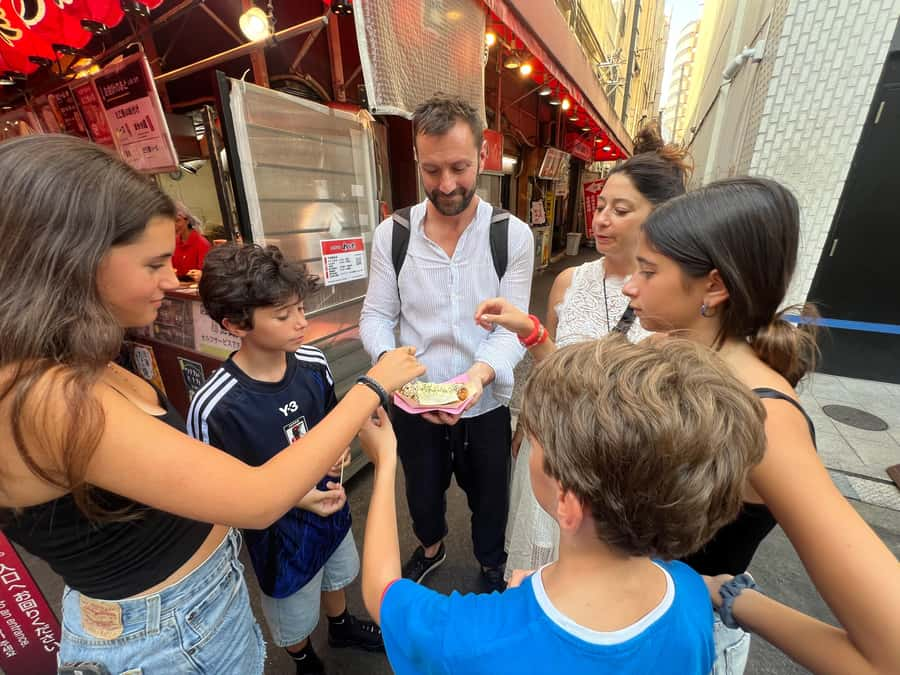
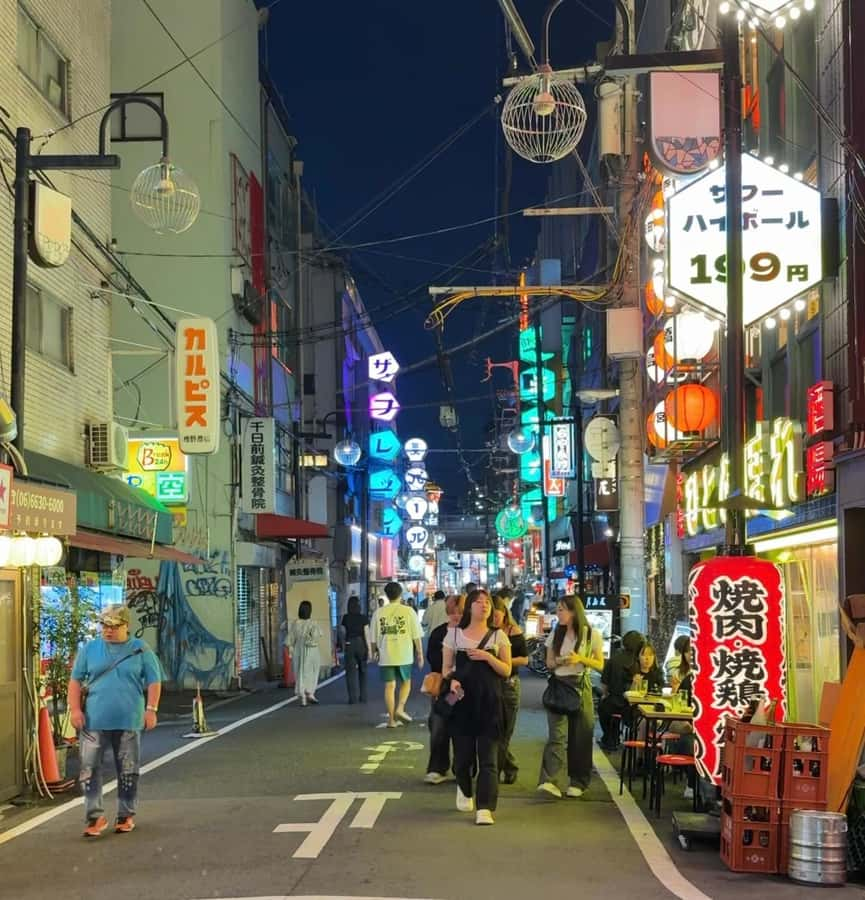
Osaka is famous for eating, but the best meal is not always found by following the biggest sign. Namba has layers. Dotonbori gives you the glowing signs and the famous Glico runner. Just a few streets away, small izakayas offer grilled food, sushi, drinks, and quick dishes in a more local setting.
That is the basic idea here. You are not signing up for a fixed tasting menu. Instead, the guide leads you into recommended places and helps shape the evening around what you want to eat. If you want takoyaki, kushiyaki, sushi, fruit mochi, or something else available that night, you can decide as you go.
I find that format useful in Osaka because appetites vary. One person may want a full dinner, while another wants only a few bites and a beer. A fixed food tour can leave either person overfed or still hungry. Here, you control the bill and the pace more closely.
The tradeoff is that the $26 fee is for the guide and walking experience, not dinner. Think of it as an introduction to Osaka’s food scene, with your actual meal added on top.
More sake tastings around Osaka:
- Osaka: Izakaya Bars Guided Walking Tour
★ 4.9 · 385 reviews - Osaka Sake Tasting with Takoyaki Cooking
★ 5.0 · 156 reviews - Osaka: Cooking Class & Sake Tasting with Local Market Visit
★ 4.8 · 31 reviews
Starting beneath Namba Walk
The meeting point is Osaka JOINER, in the underground shopping arcade called Namba Walk. Look for exit B23, not the subway area. The shop sits between a Mizuno store and a Docomo shop, and the listed coordinates are 34.66706769999999, 135.5034664.
This detail matters. Namba is a maze of underground passages, station corridors, arcades, and street exits. Give yourself extra time to find B23. If you arrive at the wrong part of the station, you may need several minutes to work out where you are.
The operator also has a physical office that works as a tourist information center. That is handy if you need local suggestions before the tour or want a friendly place to ask questions about Osaka. It gives the meeting point a useful, practical purpose beyond simply being a pin on a map.
From there, expect a short walk of about five minutes to the first restaurant.
First stop: 40 minutes with beer and local food
The opening restaurant visit lasts about 40 minutes. This is your first chance to settle into the evening, order a drink, and try local dishes with help from the guide.
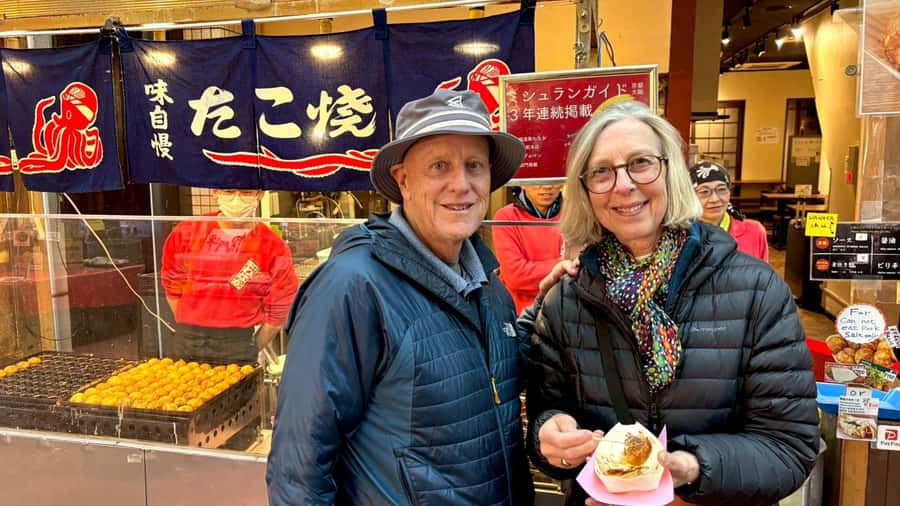
The food may include Osaka favorites such as takoyaki, the crisp outside, soft inside octopus snack that many first-time visitors associate with the city. Other food mentioned by past participants includes kushiyaki, sushi, and fruit mochi. The exact choices depend on the establishments, your preferences, and what is available that day.
This is where the tour’s flexible payment system can work well. You do not have to order every dish placed in front of you. You can ask the guide what is worth trying, then choose the amount that suits you.
A good guide can also make a small restaurant less intimidating. If menus are difficult to read or staff speak limited English, the guide can point you toward suitable choices. Miki was praised for knowing staff at some stops, which made the welcome feel more personal. Shehab was also praised for steering a family toward local specialties in family-run businesses.
Still, keep your expectations measured. The tour is not a formal cooking class, and the guide may not explain every ingredient or preparation method in detail. One experience was enjoyable but offered little background about the food. If food knowledge is important to you, ask questions early and directly.
Dotonbori, the Glico Sign, and a quick photo stop
After the first restaurant, the group walks for around five minutes to the Glico Sign in Dotonbori. You get about ten minutes for a visit, a little sightseeing, and photos.
This is Osaka’s most recognizable neon corner. The running figure above the canal is an obvious stop, but it earns its place because it helps you understand the city’s public face. Dotonbori is loud, bright, and designed to attract attention. It is the Osaka most people see first.
The stop is short, so do not expect a full tour of the district. It is mainly a chance to take the classic photo and hear some local context before moving away from the busiest section.
That contrast is part of the charm. You see the famous sign, then leave the main tourist route and continue through smaller passages.
A few more boozy trips around Osaka worth a look
- [1 Group Only] Osaka Street Food Tour for Family
★ 5.0 · 208 reviews - Best of Shinjuku: Izakaya Food Tour (4 Stops, 14+ Tastings)
★ 5.0 · 1,863 reviews - Porto Craft Beer Tour: 7 Beers + 3 Food Pairings in a Small Group
★ 5.0 · 1,725 reviews - Southern Flavors Food, Pub Crawl, and History Walking Tour
★ 4.5 · 1,623 reviews
Ukiyo Koji and Hozenji Yokocho
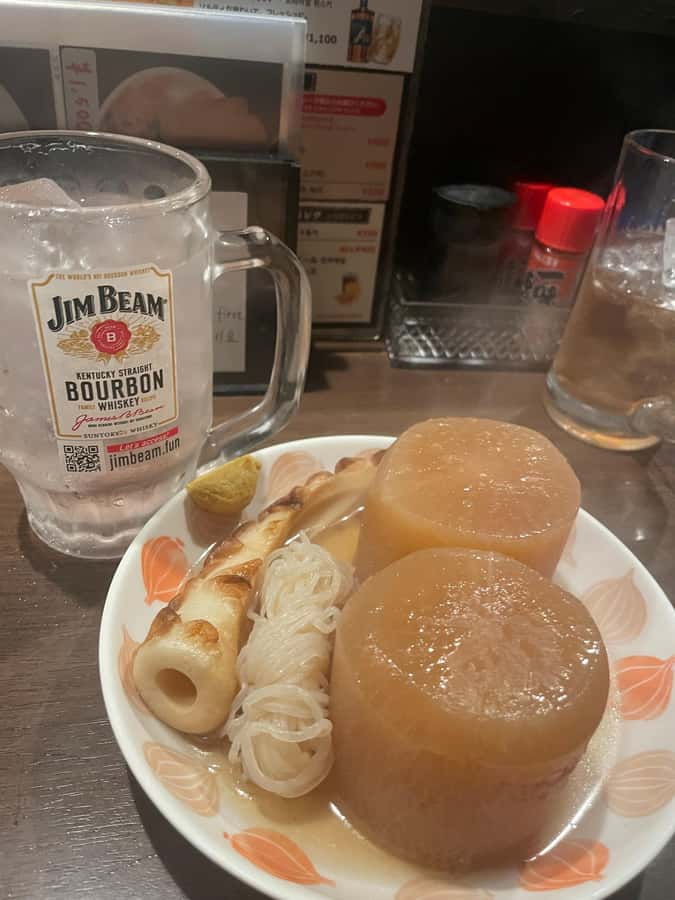
The route then visits Ukiyo Koji and Hozenji Yokocho, with about ten minutes at each. These are compact historic lanes near Dotonbori, and they feel quite different from the large signs and crowds nearby.
Ukiyo Koji is a narrow street with a tucked-away atmosphere. It is a brief stop, but it gives you a sense of how quickly Namba changes from major commercial avenue to intimate side passage.
Hozenji Yokocho brings another change of mood. Its stone-paved lane leads toward Hozenji Temple, known for the moss-covered Fudo Myoo statue. The tour information describes this as a guided visit and sightseeing stop rather than a long temple visit, so keep the timing in mind. Ten minutes is enough for a look and a few photos, not a detailed religious tour.
These short walks add value because you are not only moving from restaurant to restaurant. You are learning how the neighborhood is arranged, and you are seeing small pieces of old Osaka tucked between modern businesses.
The second restaurant: more time to order your way
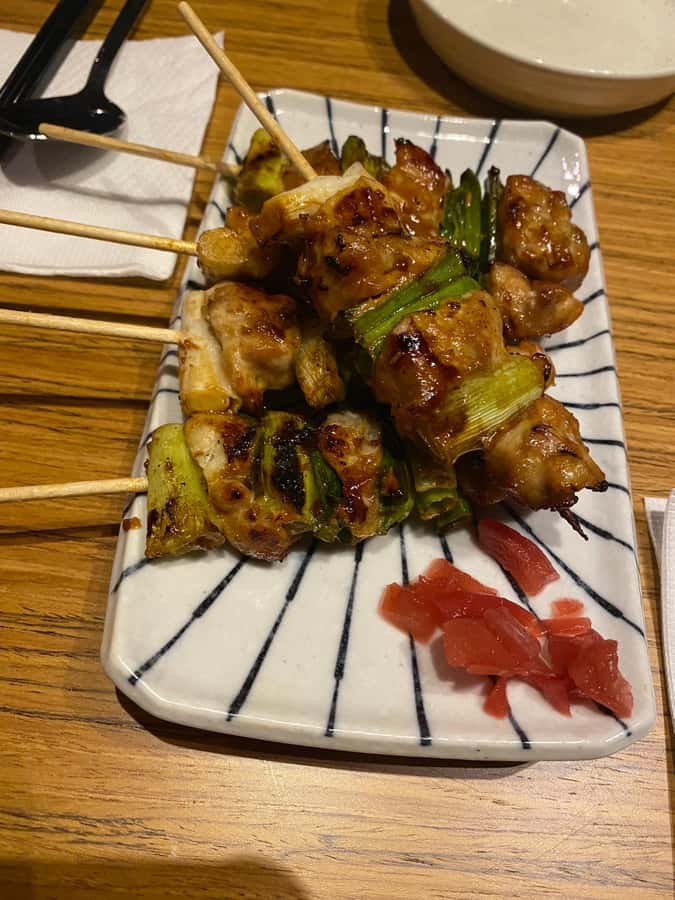
The next food stop is another local restaurant, with about 45 minutes for a visit, a beer, and food tasting. This is the longest scheduled eating stop, so you have more time to order a few dishes and talk with the guide.
If you are eating with a group, this is a useful point to share plates. One person can try sushi, another can choose grilled items, and everyone can sample without ordering a full meal. Past food choices have included takoyaki, kushiyaki, sushi, and fresh fruit mochi, although no fixed menu is promised.
The word izakaya covers a wide range of places. Some are casual restaurants with tables, while others are small drinking spots built around quick dishes. You may find a more relaxed setting here than at a standard sightseeing restaurant, but the exact feel depends on the selected venue.
I would ask about prices before ordering several dishes. Since food and drinks are extra, a quick question about portion size and cost helps prevent surprises. This is especially useful if you are watching your budget or have already eaten earlier in the day.
The local bar and the final 40 minutes
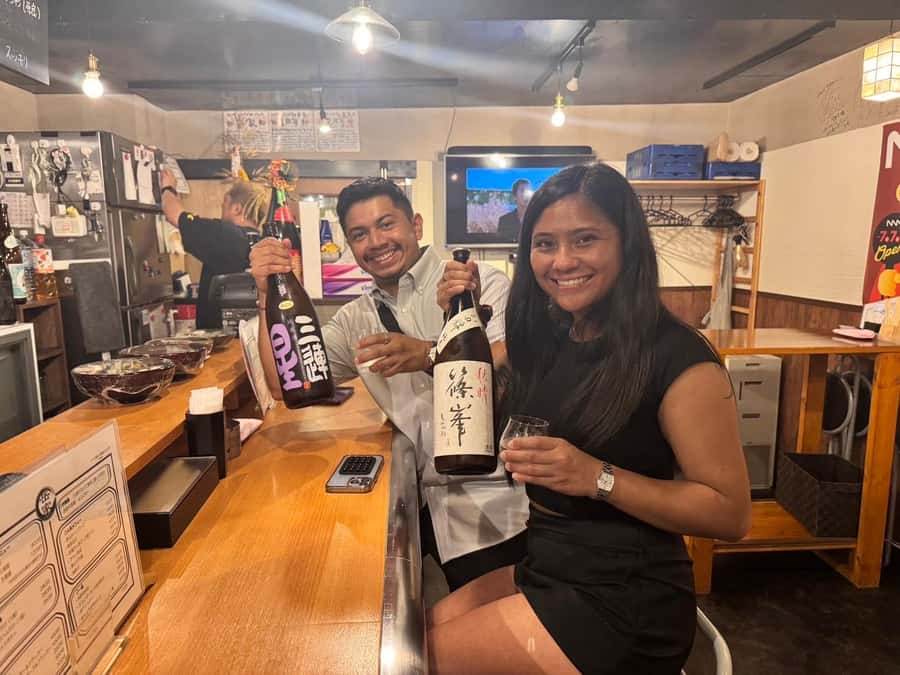
The final stop is a local bar, where you have about 40 minutes for a guided visit and food tasting. This is the part most likely to feel like a real evening out rather than a sequence of tourist stops.
Japanese bars can be social places where people eat small plates, drink, and talk after work. That everyday setting is the reason to book this experience. You are not just checking off Osaka dishes. You are seeing how food and conversation fit into local life.
The final stop also calls for a little independence. One group found that the guide left at the last restaurant, leaving the visitors to manage ordering and bills with staff who spoke limited English. That may not happen on every departure, but it is a useful warning. Keep your phone ready for translation, confirm what you have ordered, and check the bill before paying.
Another unusual point came from a solo group: the guide did not order food. The group shared with the guide, but found the situation slightly awkward. You should not assume that the guide will eat with you. The tour fee covers guiding and walking, not the guide’s meal.
What $26 really buys you
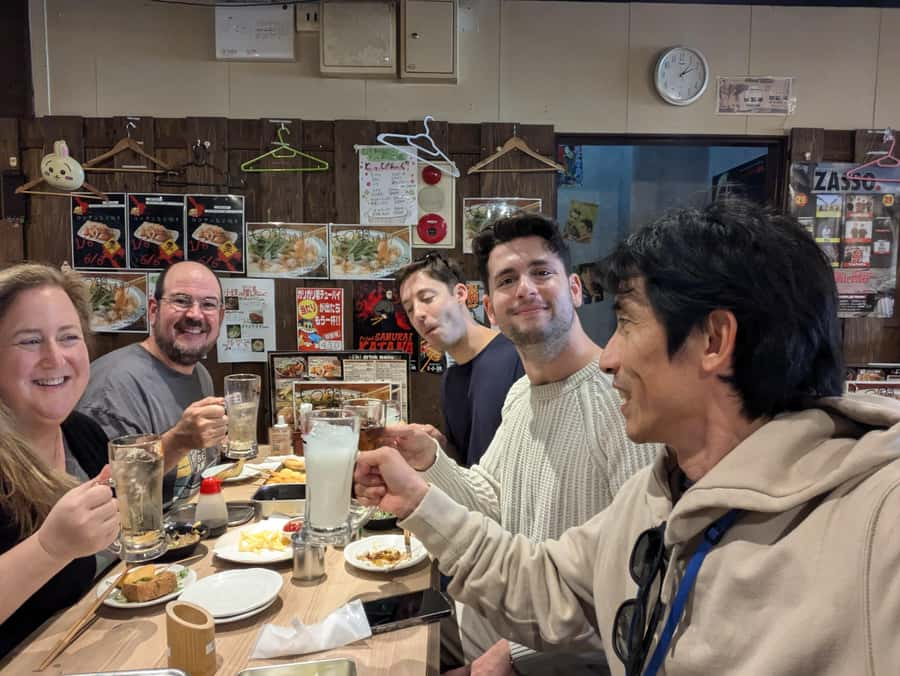
At $26 per person, this is a low-cost way to get local orientation in one of Osaka’s most food-focused areas. You are paying for an English-speaking guide, three hours of walking, access to local suggestions, and a small group rather than a private tour.
The value is strongest if you are new to Namba and want help finding places you would likely miss on your own. A guide can also make it easier to enter a small bar, understand the ordering process, and choose dishes without guessing.
The value is weaker if you expect a full dinner for $26. You will pay separately for every dish and drink. The final expense could stay modest if you order lightly, but it could rise quickly if you visit several places and sample freely.
This pricing model suits people who want control. It is less suitable for anyone who wants one clear all-inclusive price before leaving home.
Guide quality can shape the whole evening
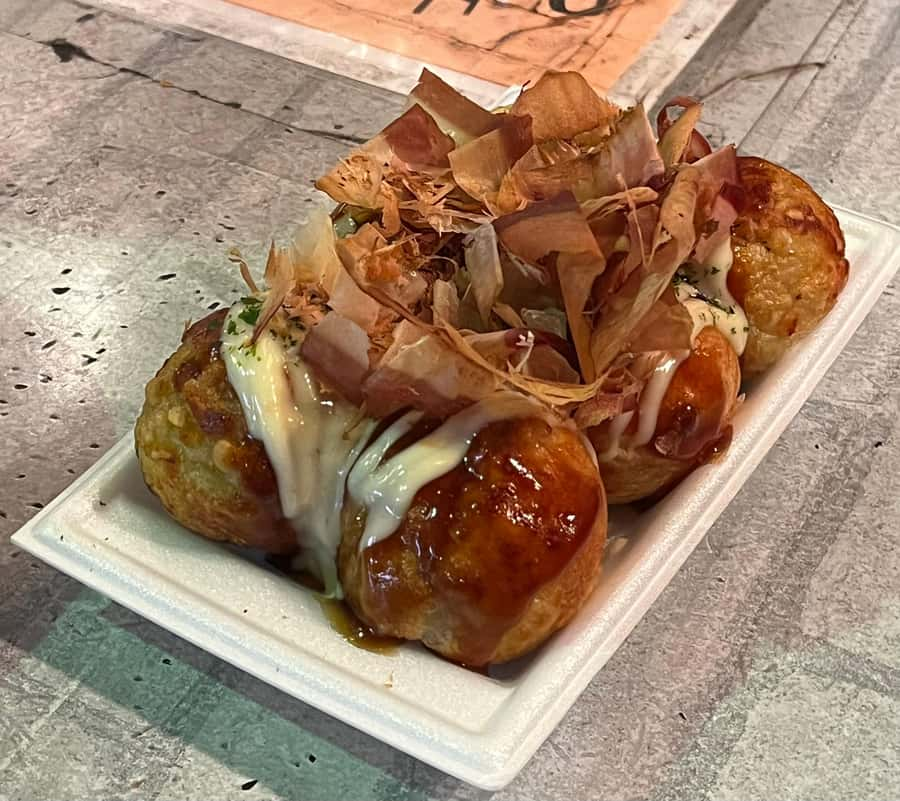
The strongest praise has gone to individual guides. Miki was described as warm, good company, and familiar with local staff. She also shared information about the area and took the group to places they would not have found alone.
Shehab received similar praise for guiding a family through several local food places and recommending specialties such as takoyaki, kushiyaki, sushi, and fruit mochi. Buchi was appreciated for adjusting the tour to suit food requirements.
Those details matter because a food crawl depends heavily on the person leading it. A friendly guide can turn an ordinary snack into a useful local lesson. A less communicative guide may simply escort you between stops.
The overall score is 4.8 from 17 ratings, which suggests a consistently strong experience so far. Still, the mixed details show why you should take an active role. Ask about dishes, explain your food limits, and confirm the final ordering arrangements.
Dietary needs, walking, and group size
The tour welcomes gluten-free and vegan food options, and a guide adapted the experience for specific food requirements. You should explain your needs before ordering, since food is selected during the tour rather than supplied through a fixed menu.
The activity is listed as unsuitable for people with lactose intolerance. That is the clearest dietary warning, so take it seriously and confirm what you can safely eat before booking.
You will walk between stops, with several sections taking about five minutes. Comfortable shoes are a must. The route is in Namba, on Osaka streets and through the underground arcade, so you should be ready for a city walk rather than a sit-down tasting.
The group is limited to eight people. That is large enough for a social evening but small enough for the guide to hear your preferences. Children under six can join free, while children seven and older pay the adult rate. The supplied information does not state the charge for six-year-olds, so check that point before booking if it applies to your family.
Wheelchair access is listed, but the route includes streets, narrow lanes, and an underground shopping arcade. If you need specific access arrangements, confirm them with the operator ahead of time.
Should you book this Osaka food tour?
I would book it if you want local guidance, prefer to choose your own dishes, and enjoy casual eating in a small group. It is especially useful early in an Osaka stay, when you can use the guide’s recommendations for later meals.
I would skip it if you want an all-inclusive food tour, a structured lesson about Japanese cuisine, or a guaranteed menu. The extra food cost needs to be clear before you reserve, and the final stop may require you to handle some ordering yourself.
Bring cash, wear comfortable shoes, and arrive early at Namba Walk exit B23. Tell the guide what you want to eat, ask about prices, and use the evening to explore beyond the main Dotonbori signs. For $26, that is a fair deal for local orientation and company, as long as you understand that dinner is paid separately.
FAQ
How long does the Osaka local food tour last?
The tour lasts three hours.
How much does the tour cost?
The listed price is $26 per person.
Are food and drinks included?
No. Food and drinks are paid for separately at the restaurants and bar.
Where does the tour meet?
It meets at Osaka JOINER in the Namba Walk underground street arcade, near exit B23. The meeting point is between the Mizuno shop and Docomo shop, not in the subway area.
What language does the guide speak?
The tour is conducted in English.
How many people can join the tour?
The group is limited to eight participants.
Is the tour wheelchair accessible?
Yes, the activity is listed as wheelchair accessible.
What should I bring?
Bring comfortable walking shoes and cash.
Can children join?
Children under six can join free. Children seven and older are charged the adult rate.
Can I cancel for a refund?
You can cancel up to 24 hours before the tour for a full refund. A reserve-now, pay-later option is also available.
Just added around Osaka
- Osaka Sake Tasting with Takoyaki Cooking★ 5.0 · 156 reviews
- Osaka: Unforgettable Bar Hopping in Kyobashi!★ 5.0 · 4 reviews
- 3.5h Osaka Night guided Local Bar Hopping, Sake & Karaoke★ 5.0 · 27 reviews
- Osaka: Okonomiyaki Cooking Class with Beer or Soft Drink★ 4.9 · 9 reviews
- Osaka: Bar-Hopping Night Tour in Namba★ 4.7 · 117 reviews
- Osaka: Cooking Class & Sake Tasting with Local Market Visit★ 4.8 · 31 reviews
- Osaka Bar Hopping | Explore Hidden Bars & Izakayas in Namba★ 4.7 · 18 reviews
- Bar hopping: Create lasting memories with TOMODACHI guides!★ 5.0 · 4 reviews
Sake Tasting, compared.
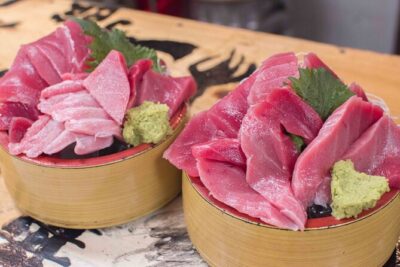
Best of Shinjuku: Izakaya Food Tour (4 Stops, 14+ Tastings)
Read our review →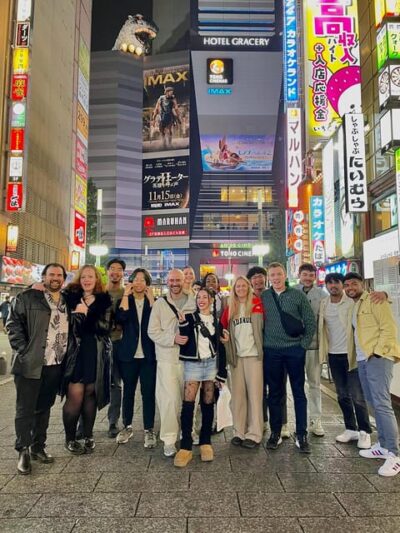
Shinjuku Local Bar and Izakaya Guided Walking Tour
Read our review →
1-Day Snow Monkeys, Zenko-ji Temple & Sake in Nagano
Read our review →
3-Hour Kyoto Insider Sake Brewery Tour with Tastings & Pairings
Read our review →
Nagano: Snow Monkeys, Zenkoji Temple & Sake Day Trip
Read our review →
Insider Sake Brewery Tour with Sake and Food Pairing
Read our review →Browse the lists this tour appears in