
REVIEW · OSAKA BOOZY TOURS
Osaka: Cooking Class & Sake Tasting with Local Market Visit
Good food makes Osaka easier to understand. This four-hour class brings you into a small cooking studio after a local supermarket visit, where you prepare niku-sui, okonomiyaki, and gyoza with an English-speaking guide. I especially like the market stop, which shows you everyday Osaka food shopping, and the practical recipes, which are simple enough to make at home. The main drawback is that the class does not offer gluten-free meals, and it may not suit anyone with serious allergies or limited mobility.
At $90 per person, the experience gives you lunch, ingredients, three canned drinks, tea, recipes, guide-led instruction, and photos sent by email. The group is limited to seven, so this feels more personal than a large demonstration class. Guides such as Chie, Eri, Emi, Akko, Ayu, and Linda have been praised for making the session relaxed, social, and easy to follow.
Key points at a glance
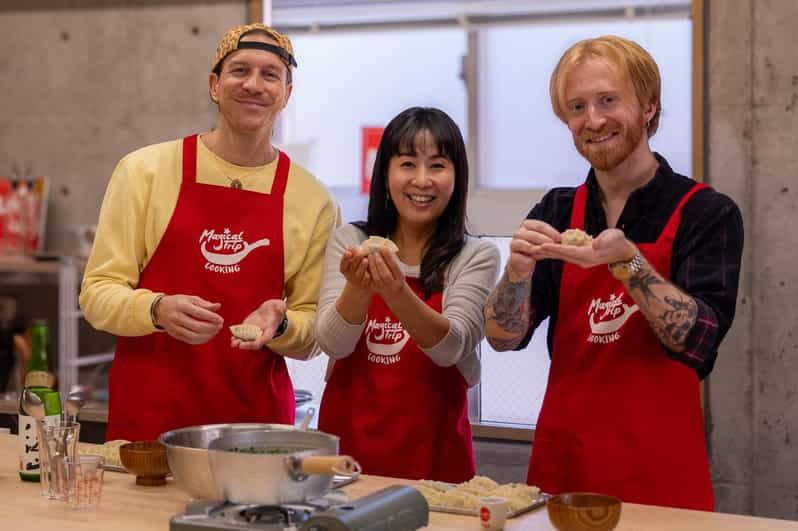
- Shop like a local: Begin at a supermarket near Minami Morimachi Station and help choose the ingredients used in the class.
- Cook three Osaka favorites: Prepare niku-sui beef soup, okonomiyaki, and handmade gyoza.
- Learn food culture along the way: Guides explain Japanese products, regional customs, and local history while you cook.
- Small-group setting: The class accepts up to seven participants, which leaves room for questions and conversation.
- Drinks are part of the meal: Three canned alcoholic or non-alcoholic drinks are included, along with tea.
- Recipes go home with you: Download the recipes afterward and try the dishes in your own kitchen.
Starting at Minami Morimachi Station
The meeting point is in front of FamilyMart, about a one-minute walk from Exit 4 of Minami Morimachi Station. That is useful in Osaka, where a clear meeting landmark can save you from wandering through a maze of station passages.
You need to arrive on time. Late arrivals cannot join the class, reschedule, or receive a refund. Give yourself extra time to find Exit 4, especially if you are still learning how Osaka’s train stations work.
The class lasts four hours, but the exact starting time depends on availability. Since you will be walking to a supermarket and then cooking, wear comfortable shoes and clothing that you do not mind wearing around food. Osaka can be very hot in summer, with temperatures reaching 40°C, while winter can fall to around -5°C, so dress for the season.
More sake tastings around Osaka:
- Osaka: Izakaya Bars Guided Walking Tour
★ 4.9 · 385 reviews - Osaka Sake Tasting with Takoyaki Cooking
★ 5.0 · 156 reviews - 3.5h Osaka Night guided Local Bar Hopping, Sake & Karaoke
★ 5.0 · 27 reviews
The supermarket visit gives the class its local feel
The first part of the experience takes place in a local supermarket. This is not just a quick ingredient pickup. Your guide helps select the food needed for the recipes and gives you a glimpse of how people in Osaka shop for an ordinary meal.
I like this beginning because supermarkets often explain Japanese food better than a polished restaurant menu. You can see the cuts of meat, vegetables, sauces, drinks, and packaged products that shape home cooking. Your guide can also answer questions about unfamiliar ingredients and explain how they are used.
The supermarket visit keeps the class connected to daily life. You are not simply handed pre-measured ingredients in a classroom. You see the food before it becomes lunch, then follow it through the preparation process.
The exact supermarket route and product selection may vary. That is part of the appeal, but it also means this section is not a formal sightseeing stop with a fixed script. Think of it as a useful introduction to Japanese groceries rather than a major market tour.
Niku-sui shows Osaka’s home-cooking side
One of the three dishes is niku-sui, a beef soup that is particularly associated with Osaka. It is less familiar to many international visitors than ramen or sushi, which makes it a good choice for a class focused on local food.
Niku-sui is warm, savory, and straightforward. The recipe uses simple ingredients, but the finished soup gives you a sense of the comforting food people might make at home. Your guide walks you through the correct method, so you are not left guessing about the order of preparation or how the flavors should come together.
This is the sort of dish you can realistically repeat after returning home. You do not need a specialist kitchen or a long list of hard-to-find products. The class aims for authentic flavor without making the recipe too fussy.
The soup also adds balance to the meal. Okonomiyaki and gyoza bring more texture and hands-on work, while niku-sui provides something warm and soothing.
Okonomiyaki puts Osaka pride on the plate
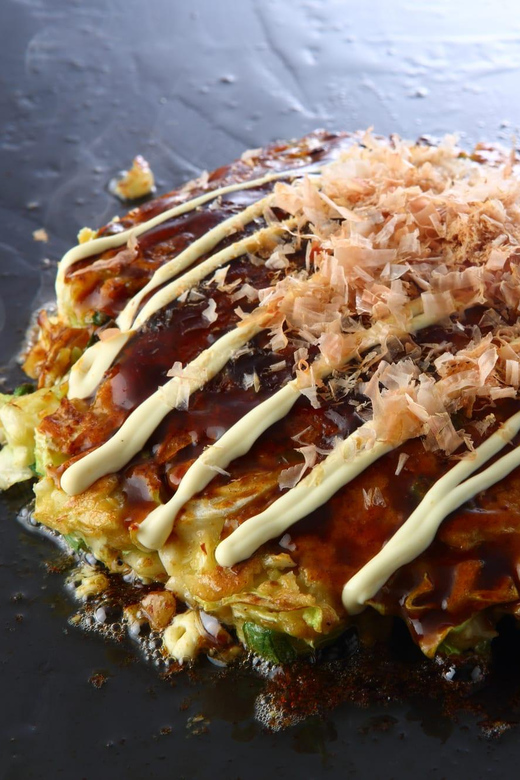
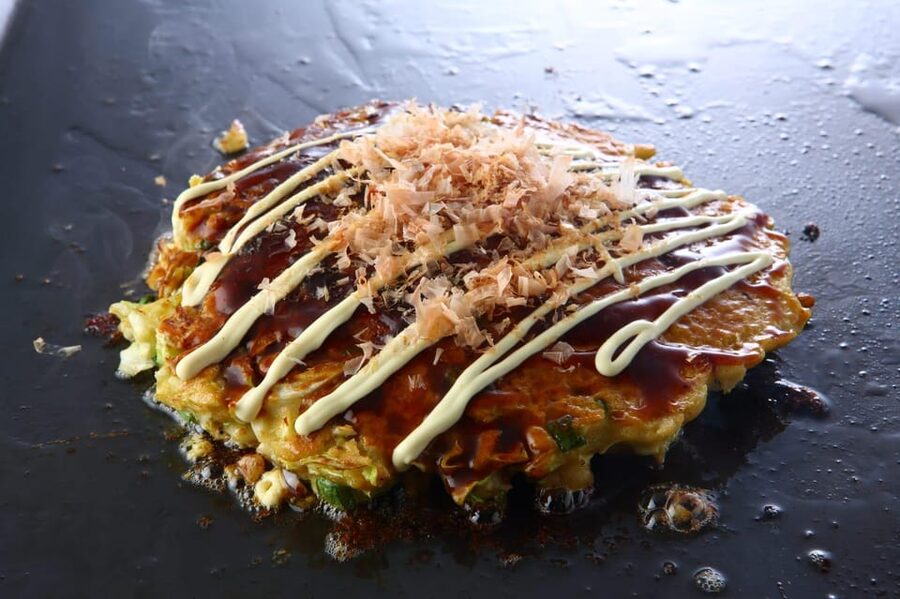
Okonomiyaki is Osaka’s famous savory pancake, and it gives you the most obvious connection to the city’s food identity. The name is often explained as meaning cook what you like, and the dish allows plenty of personal variation.
In this class, you prepare the mixture and learn the process step by step. The guide explains how to handle the ingredients and how to build the dish properly. You do not need previous cooking experience, and the small group allows you to ask for help at each stage.
I like okonomiyaki as a cooking-class dish because it is forgiving. It does not demand restaurant-level knife skills, but it still gives you a clear sense of achievement when lunch comes together. It is also easy to discuss while cooking, since each person can compare methods, textures, and favorite toppings.
Do not expect a highly specialized restaurant demonstration. This is a practical home-style lesson, designed to help you make the dish again rather than watch a chef perform complicated tricks.
More cooking and drinking classes around Osaka:
- Osaka: Okonomiyaki Cooking Class with Beer or Soft Drink
★ 4.9 · 9 reviews - Paella Cooking Class in Madrid with Bottomless Wine Pairing
★ 5.0 · 985 reviews - Taste of Spain: Tapas Cooking Class with Bottomless Wine Pairing
★ 5.0 · 414 reviews - Ramen and Sushi Cooking Class with Sake Pairing Set in Tokyo
★ 5.0 · 291 reviews
Folding gyoza turns lunch into a group activity
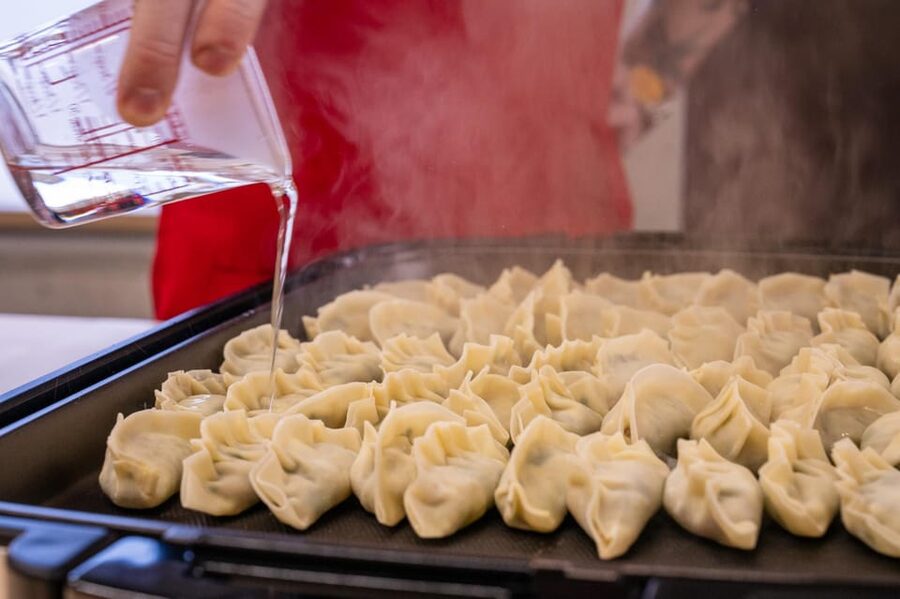
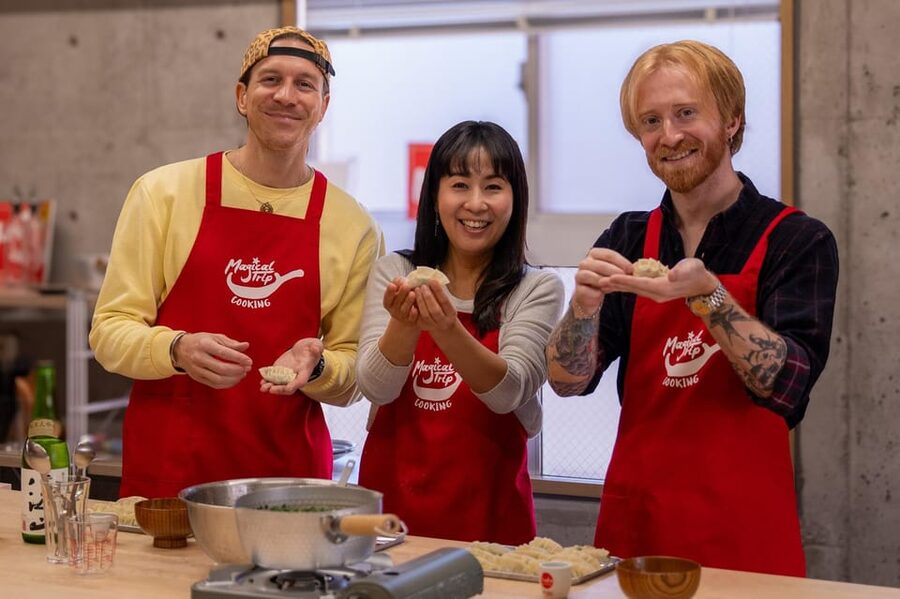
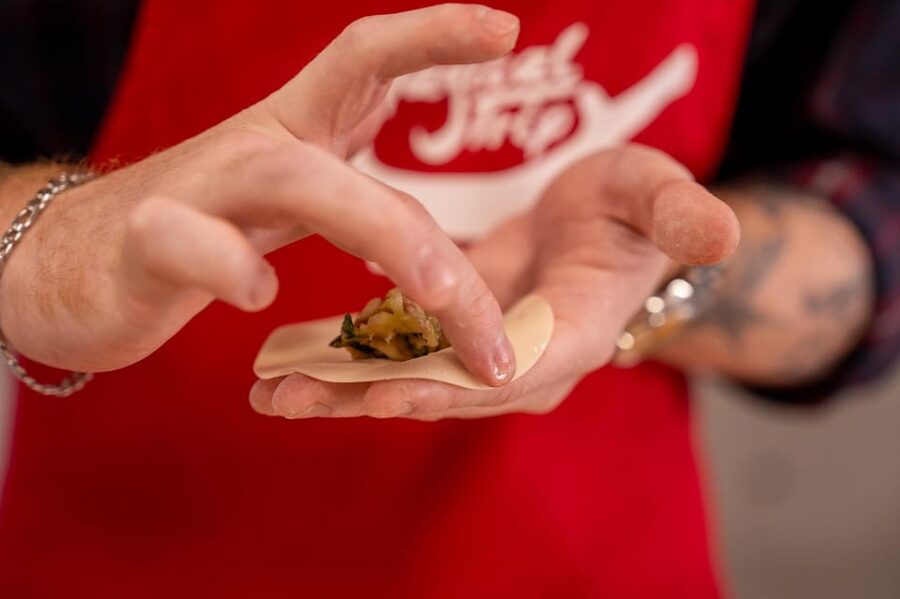
Gyoza provides the most social part of the class. You fold the dumplings yourself, which can be easy at first and surprisingly tricky once you try to make the edges neat.
That small challenge is useful. Cooking becomes a shared activity rather than a lecture. You can compare shapes, ask the guide to show the folding method again, and laugh when your first dumpling looks less tidy than expected.
The finished gyoza should have a crisp exterior and juicy filling. The point is not to produce identical restaurant dumplings. It is to learn a method you can repeat at home and to enjoy the process with the rest of the group.
For families with older children, couples, friends, and solo visitors, this is likely the most engaging part of the class. Anyone over 12 can join, since the cooking involves cutting and heat.
Drinks keep the four hours relaxed
The experience includes three canned drinks, which can be alcoholic or non-alcoholic, plus tea. Depending on your preference, you may choose sake, beer, or soft drinks. The drinks are served while you cook and eat, so they help turn the class into a shared meal rather than a strict lesson.
The sake element is modest rather than a formal tasting with a long list of pours. You should think of it as a chance to sample local alcohol during lunch and ask your guide about Japanese drinking customs. If you do not drink, the non-alcoholic option means you can still take part without feeling out of place.
This arrangement works well for mixed groups. One person can choose beer, another sake, and someone else a soft drink. Tea is also served during the experience.
Because the class includes three canned drinks, pace yourself. You are also preparing and eating a full lunch, and the cooking itself lasts several hours.
The guides make the difference
A cooking class depends heavily on the person leading it. The guides attached to this experience have a reputation for being warm, patient, and easy to talk with.
Chie has been especially praised for explaining Japanese products, regional customs, and food history while keeping the cooking simple. Eri has been appreciated for answering questions about Osaka and local culture, and for creating a calm atmosphere with background music chosen by the group. Emi has helped participants understand the correct method for all three dishes while answering general questions about Osaka.
Other guides, including Akko, Ayu, and Linda, have also added personal touches. Akko helped make the session friendly for a group of friends. Ayu shared ideas about places to visit in Osaka and Kobe. Linda even decorated the room for a Christmas booking and helped arrange a sake purchase afterward.
These details matter because the class is built around conversation. You are not only learning recipes. You are spending time with a local guide who can explain products, customs, nearby places, and the parts of Japanese food culture that are easy to miss on your own.
Guide assignments can change, so you should not book expecting one particular person. The consistent advantage is the small group and English-language format.
What the small group means for you
The class is limited to seven participants. That is a good size for hands-on cooking because the guide can watch what you are doing and correct small mistakes before they become large ones.
A group this size also makes conversation easier. You may cook with a couple, a family, a group of friends, or other solo visitors. The atmosphere described by participants has been calm and friendly rather than hurried.
Still, a small group is not the same as a private class. You will share the guide’s attention, cooking space, and meal with other people. If you want to control the pace or need extensive dietary adjustments, a private experience may be a better choice.
The setting is particularly suitable for solo visitors. Cooking gives you a natural way to meet people, and the shared meal prevents the awkwardness that can come with joining a group activity alone.
Dietary and mobility limits deserve attention
Vegetarians and vegans are welcome, but you must report dietary needs or allergies at least one day in advance. Same-day requests cannot be accommodated.
Gluten-free options are not available. The food is prepared in external kitchens, and an allergy-free meal cannot be guaranteed. Substitutions may not always be possible, although the organizers will try to compensate at other stops.
This is not the right class for anyone who needs strict control over ingredients or kitchen cross-contact. If you have a serious allergy, read the conditions carefully before booking and contact the organizer ahead of time.
The experience may include places that are difficult to access with a wheelchair or stroller. It is not recommended for people with mobility issues. Anyone who has trouble walking should consider a private tour instead.
Is $90 a fair price?
At $90, this is not the cheapest way to eat lunch in Osaka. You can find excellent inexpensive food around the city for far less.
The value comes from what surrounds the meal. You receive four hours of guide time, a supermarket visit, all ingredients, instruction for three dishes, lunch, three canned drinks, tea, photos, and recipes for later use. You also get direct contact with a local person who can answer questions about Osaka while you cook.
I think the price is reasonable if you want an activity rather than simply a meal. It is especially good value for someone who plans to make Japanese food at home, since the recipes continue to be useful after the trip.
The value is weaker if you dislike cooking, already know these dishes well, or want a formal sake tasting with many varieties. This is a friendly food lesson with drinks, not a specialist culinary seminar.
Free cancellation is available up to 24 hours before the experience, and you can reserve now and pay later. Those policies help if your Osaka schedule is still changing, but the strict late-arrival rule remains important.
Who should book this Osaka cooking class?
I would recommend it to visitors who want to slow down and spend time with a local guide. It suits couples, families with children over 12, groups of friends, and solo visitors who enjoy shared activities.
It is also a smart choice for repeat visitors to Osaka. If you have already seen Dotonbori and the major sights, cooking niku-sui, okonomiyaki, and gyoza gives you a more ordinary view of the city.
You should also book if you want recipes that are realistic for a home kitchen. The class focuses on easy methods and common ingredients instead of showy techniques.
I would hesitate if you need gluten-free food, have a serious allergy, use a wheelchair or stroller, or dislike alcohol-centered social settings. The class includes non-alcoholic drinks, but cooking, chatting, and sharing a meal are central to the experience.
Should you book it?
Book this experience if you want to eat Osaka food and understand how it is made. The supermarket stop, three practical recipes, small group, and friendly guides give the four hours a clear purpose.
The strongest reason to go is the mix of everyday life and hands-on cooking. You leave with a full meal, photos, recipes, and a better sense of the products behind Osaka’s food culture. Just arrive early, report dietary needs in advance, and remember that this is a relaxed home-cooking class rather than a formal culinary school or dedicated sake tasting.
FAQ
Where does the cooking class meet?
The meeting point is in front of FamilyMart, about a one-minute walk from Exit 4 of Minami Morimachi Station in Osaka.
How long does the experience last?
The cooking experience lasts four hours. Starting times vary, so you need to check availability when booking.
What dishes will I make?
You will prepare niku-sui beef soup, okonomiyaki, and gyoza.
Are drinks included?
Yes. The experience includes three canned alcoholic or non-alcoholic drinks, plus tea. Options may include sake, beer, soft drinks, or other beverages.
Is the class suitable for vegetarians and vegans?
Vegetarians and vegans can join, but you must provide your dietary information at least one day in advance. Gluten-free options are not available.
Can children join the experience?
Anyone over 12 can join because the cooking includes cutting and heating.
What happens if I arrive late?
Late arrivals cannot join the experience, reschedule, or receive a refund. The class starts on time.
More Shopping Tours in Osaka
- Manavgat River Cruise, Waterfalls and Market Tour from Belek
★ 4.0 · 41 reviews - “Discover Hahndorf: Wine, Cheese, Beer, Shops & Lunch Day Trip”
★ 5.0 · 38 reviews - Self-Guided Craft Beer Tour (Explore Old Market)
★ 4.5 · 19 reviews - Bristol: Old Market Self-Guided Craft Beer Tour
★ 4.6 · 11 reviews
More Market and Tasting Walks around Osaka
- Cancun Taco Tour, Local Beer and Night Market with Transportation
★ 5.0 · 816 reviews - Interactive Paella & Market: Bottomless Wine & Rambla Views
★ 5.0 · 376 reviews - Tokyo Washoku 4-hour Cooking Class: From Market to Table
★ 5.0 · 253 reviews - Manavgat Cruise & Grand Bazaar w/Lunch and Unlimited Drinks
★ 3.8 · 71 reviews
Just added around Osaka
- Same Day OK! Osaka: Local Food, Izakaya & Local Bites Tour!★ 4.8 · 17 reviews
- Osaka Sake Tasting with Takoyaki Cooking★ 5.0 · 156 reviews
- Osaka: Unforgettable Bar Hopping in Kyobashi!★ 5.0 · 4 reviews
- 3.5h Osaka Night guided Local Bar Hopping, Sake & Karaoke★ 5.0 · 27 reviews
- Osaka: Okonomiyaki Cooking Class with Beer or Soft Drink★ 4.9 · 9 reviews
- Osaka: Bar-Hopping Night Tour in Namba★ 4.7 · 117 reviews
- Osaka Bar Hopping | Explore Hidden Bars & Izakayas in Namba★ 4.7 · 18 reviews
- Bar hopping: Create lasting memories with TOMODACHI guides!★ 5.0 · 4 reviews
Sake Tasting, compared.
Best of Shinjuku: Izakaya Food Tour (4 Stops, 14+ Tastings)
Read our review →
Shinjuku Local Bar and Izakaya Guided Walking Tour
Read our review →
1-Day Snow Monkeys, Zenko-ji Temple & Sake in Nagano
Read our review →
3-Hour Kyoto Insider Sake Brewery Tour with Tastings & Pairings
Read our review →

Nagano: Snow Monkeys, Zenkoji Temple & Sake Day Trip
Read our review →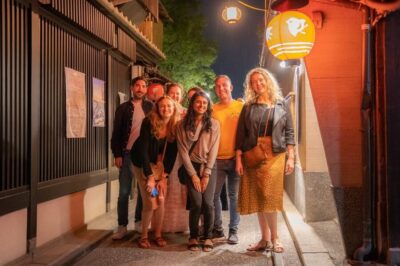

Insider Sake Brewery Tour with Sake and Food Pairing
Read our review →Browse the lists this tour appears in