
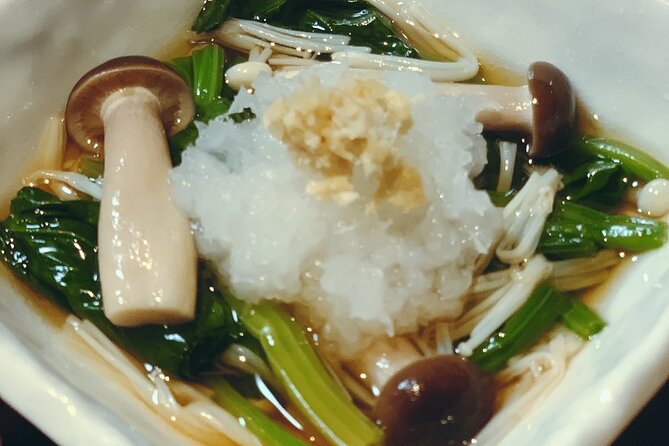
REVIEW · KYOTO BOOZY TOURS
Izakaya Style Cooking Class
Good food tells you how people live. This three-hour Kyoto class introduces you to izakaya cooking, from making dashi to seasoning small dishes served at casual Japanese pubs. I like the hands-on format and the chance to take home recipes you can actually repeat. The main consideration is that the menu changes with seasonal ingredients, so you cannot count on cooking every dish listed in the description.
The class costs $71.63 per person, with dinner, ingredients, an apron, and an English-speaking instructor included. That is fair value for a half-day activity, especially since you eat what you prepare and receive practical instruction rather than simply watching a chef work. One small surprise to avoid: extra drinks such as sake may cost more, so ask about the price before accepting one.
What makes this Kyoto cooking class special
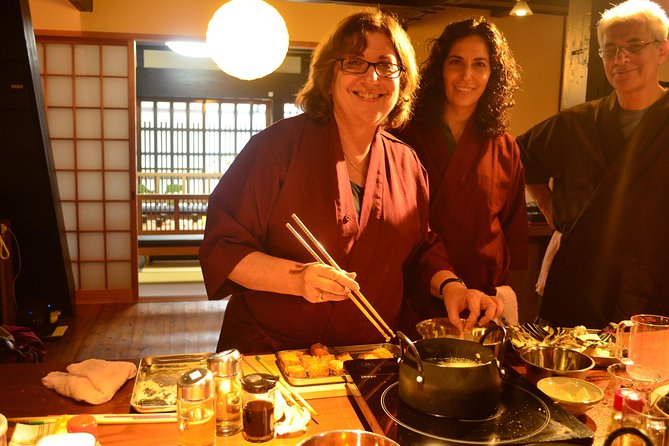
- You make dashi from scratch, learning the basic stock behind many Japanese soups and sauces.
- The menu can include six dishes, with examples such as spinach with sesame sauce, yellowtail teriyaki, mushroom tempura, vegetable chowder, and rice with vegetables.
- The class takes place in a traditional wooden house, giving the lesson a more local setting than a modern demonstration kitchen.
- You cook and eat dinner together, so the class feels like a shared meal, not only a technical lesson.
- Recipes go home with you, making the experience useful after your Japan trip ends.
- The group is capped at eight people, with hands-on help from the English-speaking cooking team.
Izakaya cooking beyond sushi and teriyaki
Izakaya is often explained as the Japanese answer to tapas, but that comparison only gets you partway there. These casual places serve small plates with drinks, and the food can range from quick vegetable dishes to grilled fish, fried items, soups, and rice.
The class gives you a look at this less familiar side of Japanese food. You are not limited to making sushi rolls or a familiar teriyaki dish. Instead, you work with sauces, stock, vegetables, fish, fried ingredients, and everyday seasonings that appear in Japanese homes and informal restaurants.
The story behind izakaya adds useful context. Its roots are often linked to the 18th century, when rice was taxed and used for sake production. During the Edo era, sake shops began offering food as well as drinks, encouraging customers to stay longer. That practice helped shape the izakaya culture found throughout Japan today.
This background matters because it explains the food. Izakaya dishes are made for sharing, conversation, and a relaxed evening rather than a formal meal with fixed courses. The class follows that same spirit.
More Sake Tastings in Kyoto
- 3-Hour Kyoto Insider Sake Brewery Tour with Tastings & Pairings
★ 5.0 · 917 reviews - Kyoto: Izakaya Bars Guided Walking Tour
★ 4.9 · 815 reviews - Kyoto: Insider Sake Brewery Tour with Sake and Food Pairing
★ 5.0 · 704 reviews
Starting at 2pm in a Kyoto wooden house
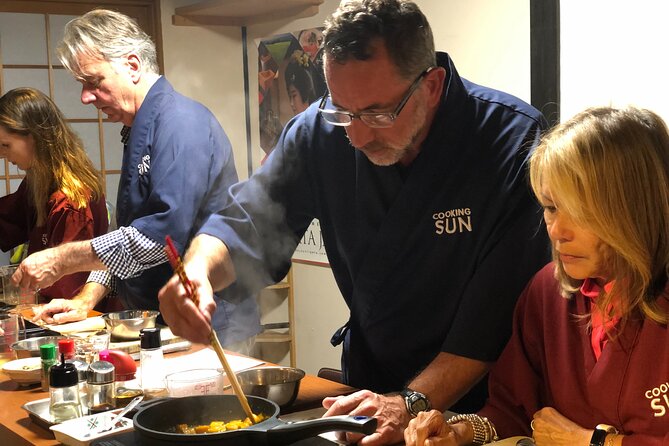
Your afternoon begins at 2pm at Cooking Sun Kyoto, located at 679 Funayacho in Kyoto’s Shimogyo Ward. The cooking studio is described as a traditional wooden house, which gives the setting a distinctly Kyoto feel before you even pick up a knife.
The meeting point is near public transportation, but hotel pickup and drop-off are not included. Plan to reach the address on your own and allow extra time to find the entrance. The studio location is provided at booking, so check your confirmation carefully before setting out.
Starting at 2pm works well with a sightseeing day. You can visit a temple or market in the morning, have a light lunch, and then spend the afternoon cooking. Since dinner is part of the class, you should avoid eating a large meal beforehand.
The group limit is eight people per booking and eight participants maximum for the activity. That is small enough for the instructor to watch your technique and answer questions. It is still a group lesson, so you should expect to share the kitchen space and work at the class pace rather than move through recipes entirely on your own.
Learning dashi and Japanese seasoning techniques
The most valuable part of the class is likely the instruction on dashi. This Japanese soup stock gives many dishes their savory base, and learning how it is prepared helps you understand why Japanese food can taste full without relying on heavy sauces.
You also learn how Japanese seasonings work together. The class focuses on techniques and ingredients rather than simply handing you a recipe card. That means you can ask why a particular sauce is used, how different condiments change a dish, or how to reproduce a flavor at home.
Several class participants praised the clear explanations of sauces and seasonings. That is especially useful for first-time cooks, since Japanese ingredients can be unfamiliar even when the preparation itself is simple.
The instruction is designed for mixed skill levels. You do not need to be an experienced cook, and the class can also keep a serious home cook interested. Younger family members have been able to follow along as well, making this a good shared activity for families with children.
From chef demonstration to your own cutting board
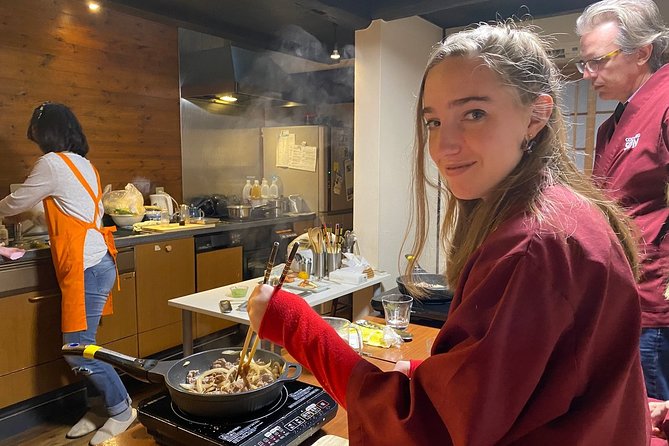
The class begins with an introduction to the ingredients and cooking methods. Your English-speaking instructor demonstrates each step, then you try the preparation yourself with guidance nearby.
That order is important. You first see the technique, then use your own knife and cooking area while the lesson is still fresh. The instructors also prepare ingredients in advance where appropriate, which leaves more time for making several dishes instead of spending the whole afternoon peeling and chopping.
Past menus have included dishes such as:
- Spinach with sesame sauce
- Teriyaki yellowtail
- Vegetable chowder
- Mushroom tempura
- Rice with vegetables
- Seasonal salads, soups, pasta dishes, or mochi desserts
These are examples, not a fixed promise. The menu changes according to seasonal ingredient availability. Some classes have made six dishes, while other menus have included pumpkin soup, cucumber salad, pasta, and mochi. If you have your heart set on a specific dish, ask before booking.
The menu variety is one of the class’s strongest points. You can learn several small preparations in one session and see how Japanese cooking balances vegetables, fish, soup, rice, sauces, and dessert. The tradeoff is that the pace may feel quick when the group moves from one recipe to the next.
More sake tastings around Kyoto:
- Kyoto Sake Brewery & Tasting Walking Tour
★ 5.0 · 623 reviews - 1.5-Hour Kyoto Insider Sake Experience with 7 Tastings & Pairings
★ 5.0 · 297 reviews - Kyoto: Insider Sake Experience with 7 Tastings and Snacks
★ 5.0 · 266 reviews - Kyoto: Afternoon Japanese Izakaya Cooking Class
★ 4.9 · 241 reviews
Sitting down to eat what you prepared
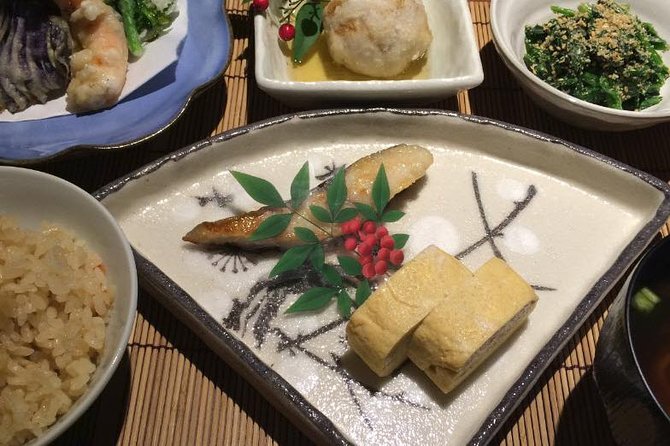
After the cooking is finished, everyone sits down to eat the food for dinner. This gives the lesson a satisfying finish and lets you judge the results while the flavors and techniques are still clear in your mind.
The meal is not an extra stop after the class. It is the final part of the activity, and all ingredients for cooking are included. You should arrive hungry, since several dishes can add up to a substantial dinner.
The shared meal also gives you time to speak with the other participants and ask the instructor follow-up questions. This is a good moment to ask for restaurant tips or suggestions for what to do after the class. The experience specifically encourages you to request local recommendations before leaving.
Drinks require a little care. Dinner is included, but the general inclusions do not promise every beverage. One person was offered sake and later learned it cost 600 yen per glass. There is no problem with paying for an extra drink, but you should confirm the price before accepting it.
What the instructors do well
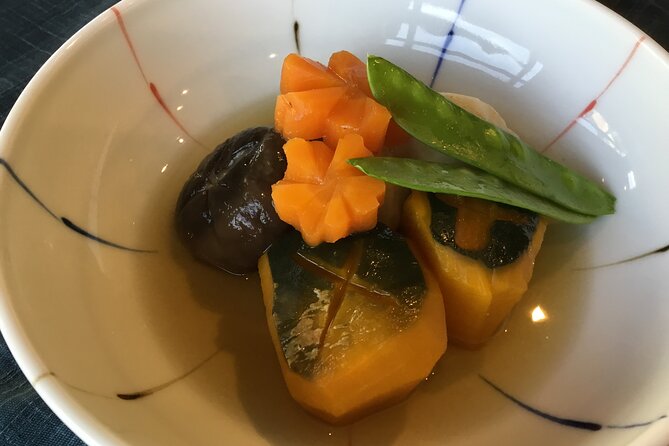
The cooking team receives strong praise for organization, patience, and clear teaching. The practical advantage is easy to see: ingredients are ready when you need them, cooking areas are cleaned quickly, and instructors move around the room to help people who need an extra hand.
Some classes are led by two instructors, while others have had three women working together. Keiko and her team have been singled out for making the class relaxed, clear, and welcoming. The exact staff lineup may vary, but the teaching style is built around teamwork rather than one chef performing at the front of the room.
That matters in a cooking class. A demonstration can look easy until you try it yourself. Here, you can ask about knife work, sauces, utensils, or substitutions as you cook. The staff also handles dietary requests when they are notified ahead of time.
The class has been especially well received by people with allergies and by vegetarians. Still, you should provide your dietary requirements at booking rather than waiting until you arrive. The menu can change, and early notice gives the kitchen time to prepare properly.
Is $71.63 good value?
At $71.63 per person, this is not the cheapest meal in Kyoto. It is also more than you would pay for a casual bowl of noodles or a set meal. The comparison is not quite fair, since you are paying for instruction, ingredients, dinner, an apron, and a three-hour activity.
The real value is in the skills you take home. You learn dashi, Japanese seasonings, several home-style dishes, and ways to use unfamiliar ingredients. You also receive recipes, so the experience can continue in your own kitchen.
The price works best for you if you want an active food experience rather than another restaurant meal. It is also a sensible choice on a rainy afternoon or for a family looking for something everyone can do together.
The value is weaker if you mainly want to eat traditional Japanese food without cooking. In that case, Kyoto offers many simpler and cheaper options. You should also remember that drinks beyond the included meal may cost extra.
Who should book this class?
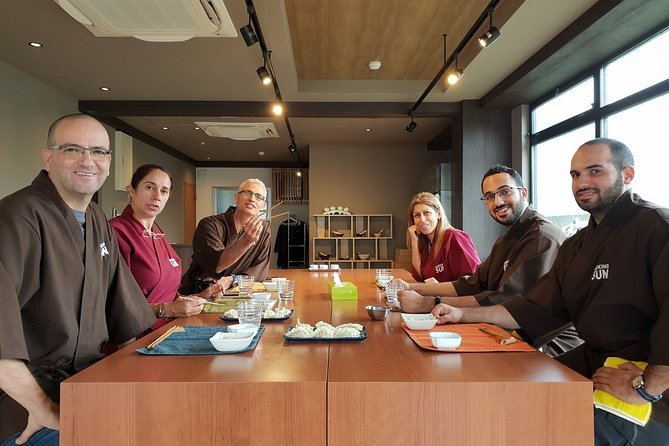
I would recommend it to first-time visitors who want to understand Japanese food beyond the most familiar dishes. It suits curious home cooks, couples, families, and solo participants who enjoy meeting people around a shared table.
It is also a good choice for cooks at different skill levels. Beginners receive step-by-step help, while experienced home cooks can pay attention to seasoning combinations, Japanese utensils, and preparation methods.
Families should note that children have successfully taken part, including children around 10 and 12 years old. The class is instructional, so very young children may not enjoy every part of a three-hour session, but the format can work well for older children who like food and hands-on activities.
You may want to skip it if you need a strictly fixed menu, dislike group cooking, or have complex dietary restrictions that require absolute control over every ingredient. The staff can accommodate some allergies and vegetarian needs, but you should discuss your requirements before booking.
Practical details before you reserve
The experience lasts about three hours and ends back at the meeting point. You receive an apron, but hotel transportation is not provided, so plan your route to Cooking Sun Kyoto in advance.
The activity is near public transportation and allows service animals. Confirmation is provided when you book, and a maximum of eight people can take part.
Free cancellation is available if you cancel at least 24 hours before the 2pm start time. Cancellations made inside that window are not refunded, and changes within 24 hours are not accepted. The cut-off follows Kyoto local time.
The class has a 4.9 rating from 219 ratings, with 99 percent recommended. Those numbers fit the experience described by the class format: organized instruction, generous food, friendly teaching, and recipes that are realistic to repeat at home.
Should you book the Izakaya Style Cooking Class?
Yes, if you want a useful and social introduction to everyday Japanese cooking. The strongest reasons to go are the dashi lesson, the chance to prepare several dishes, the included dinner, and the recipes you can use after returning home.
I especially like that the class does not treat Japanese cuisine as sushi alone. You get a better sense of how soups, vegetables, fish, sauces, rice, and small shared dishes fit into ordinary Japanese eating.
Book it with three points in mind: the menu is seasonal, the class is hands-on rather than purely demonstrational, and extra drinks may not be included. If those conditions suit you, this is one of the more practical food activities you can add to a Kyoto itinerary.
FAQ
Where does the izakaya cooking class take place?
The class takes place at Cooking Sun Kyoto, 679 Funayacho, Shimogyo Ward, Kyoto, 600-8466, Japan.
What time does the class start?
The class starts at 2pm.
How long does the experience last?
The cooking class lasts approximately three hours.
Is dinner included?
Yes. Dinner made during the class is included, along with the ingredients used for cooking.
Are drinks included?
The listed inclusions cover dinner and cooking ingredients, but not all drinks. A sake drink was charged at 600 yen per glass in one reported instance, so ask about drink prices before accepting them.
Is the class taught in English?
Yes. An English-speaking cooking instructor leads the class.
How many people can attend?
The activity has a maximum of eight travelers, and each booking can include up to eight people.
Can I request vegetarian or allergy-friendly food?
You should provide specific dietary requirements when booking. The cooking team has accommodated vegetarian diets and allergies, including celiac needs.
Is hotel pickup included?
No. Hotel pickup and drop-off are not included. You travel to and from the cooking studio yourself.
Can I cancel for a full refund?
Yes, if you cancel at least 24 hours before the experience start time. Cancellations made less than 24 hours before the start are not refunded.
More Workshops in Kyoto
- Bruges: Belgian Waffle-Making Workshop with Beer Tasting
★ 4.9 · 960 reviews - Paella Workshop with Bottomless Sangria in Central Madrid
★ 5.0 · 763 reviews - The Waffles ‘n Beer Workshop in Bruges Centre
★ 5.0 · 429 reviews - York: Chocolate Bar Making Workshop at York Cocoa Works
★ 4.7 · 401 reviews
More Cooking and Drinking Classes around Kyoto
- Paella Cooking Class in Madrid with Bottomless Wine Pairing
★ 5.0 · 985 reviews - Taste of Spain: Tapas Cooking Class with Bottomless Wine Pairing
★ 5.0 · 414 reviews - Ramen and Sushi Cooking Class with Sake Pairing Set in Tokyo
★ 5.0 · 291 reviews - Tokyo Washoku 4-hour Cooking Class: From Market to Table
★ 5.0 · 253 reviews
Just added around Kyoto
- Private Sake Tasting in Central Kyoto with Sake Sommelier★ 5.0 · 13 reviews
- Kyoto: Gion Evening Walk with Hidden Gems, Geisha & Sake★ 5.0 · 41 reviews
- Kyoto: Izakaya Nightlife Tour with Local Guide★ 5.0 · 4 reviews
- Kyoto: Foodie Night Tour in Gion with 9 dishes + 6 Sake★ 4.4 · 26 reviews
- Kyoto: Izakaya Food Tour with Local Guide★ 5.0 · 4 reviews
- Kyoto Sake Brewery Tour★ 3.3 · 5 reviews
- Kyoto: Newly Opened Sake Tasting – Sanjo Chasuian★ 5.0 · 7 reviews
- Kyoto: Fushimi Sake District Tour with Boat Ride★ 4.6 · 10 reviews
Sake Tasting, compared.
Best of Shinjuku: Izakaya Food Tour (4 Stops, 14+ Tastings)
Read our review →
Shinjuku Local Bar and Izakaya Guided Walking Tour
Read our review →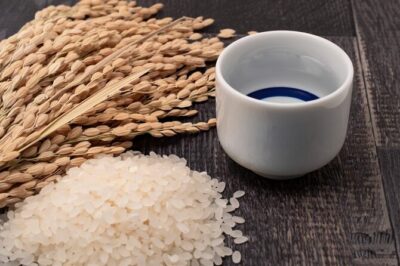
1-Day Snow Monkeys, Zenko-ji Temple & Sake in Nagano
Read our review →
3-Hour Kyoto Insider Sake Brewery Tour with Tastings & Pairings
Read our review →

Nagano: Snow Monkeys, Zenkoji Temple & Sake Day Trip
Read our review →

Insider Sake Brewery Tour with Sake and Food Pairing
Read our review →Browse the lists this tour appears in